Listening First: Leadership Skill That Can Transform Kuwait Vision 2035
This article highlights the shift from traditional one-way government communication to a more inclusive, multi-way model essential for Kuwait’s Vision 2035. The author argues that effective communication starts with listening, which builds trust, strengthens institutions, and enhances public engagement. She outlines how storytelling, transparency, and self-aware leadership can shape a more human-centered government. The piece concludes by calling for a national culture of dialogue where individuals, civil society, and the private sector collaborate to shape Kuwait’s future.

What If Better Government Communication Starts Not with Talking — But with Listening?
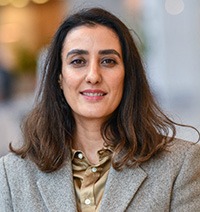
By Sarah Al Sabah
Special to The Times Kuwait
In government, communication is often understood as the message we deliver. We focus on what we need to announce, explain, or clarify. But real communication does not begin with talking. It begins with listening.
In my work with teams across the public sector, I always start with one question: Who are you as a person? Not the title. Not the role. The human being.
When people understand their values, their motivations, and their strengths, they communicate differently. They become clearer. They become more empathetic. They lead with more purpose. This is exactly what Kuwait needs today as we move toward Vision 2035.
Our national transformation is not only digital or economic. Our national transformation is deeply human.
Listening Builds Trust: Trust is the foundation of strong public institutions. It grows when people feel heard. It grows when concerns are acknowledged and when communities see that their input matters. Listening turns communication into a relationship instead of a broadcast. But even two-way communication is no longer enough for the world we live in today.
To succeed under Vision 2035, the public sector must embrace participatory multi-way communication. This is a system where information flows in all directions and invites co-creation. The government speaks to people. People speak to the government. Communities speak to each other. All the while co-creating through in-person consultation, AI tools, social media interactions and surveys. In the evolving digital age we live in, all of this happens within an environment that supports openness, feedback, and shared problem-solving.
Participatory multi-way communication turns the public from passive recipients into active participants. Transforms ministries from authorities into partners. It strengthens social cohesion by connecting voices across communities, ages, and sectors.
At its core, participatory multi-way communication recognizes one truth. A nation moves forward when the conversation is shared. Progress comes not from talking at people but from speaking with them.
Storytelling Creates Connection: Facts inform people. Stories move them. Government communication must explain policies clearly, but it must also communicate the meaning behind decisions. Storytelling builds connection and helps people understand the purpose of national reforms.
Countries that excel in public-sector communication, including the UAE, Singapore, and Estonia, rely on narrative as much as information. Kuwait can do the same by using stories that reflect our identity, our values, and our aspirations.
Transparency Strengthens Credibility: In a fast digital environment, silence creates speculation. Transparency has become essential. Clear and timely communication signals confidence and respect for the public. It helps citizens feel included in national progress rather than distant from it.
Transparent institutions do not wait for moments of crisis. They speak early. They speak clearly. They speak consistently.
Self-Awareness Makes Leaders More Authentic: Communication reflects leadership. Self-aware leaders understand the weight of their words and the tone of their message. They recognise the impact of their decisions on people’s daily lives. This emotional intelligence is a modern leadership requirement. It strengthens teams. It builds resilient institutions. It creates trust.
Self-awareness as a principle guided my recent conversation on the Journey to the Summit podcast, where we discussed how knowing oneself leads to better, more authentic communication. The same applies to institutions. The more they understand their identity and purpose, the clearer their message becomes.
From Broadcasting to Engaging: Kuwait stands at a moment of opportunity. Vision 2035 can only succeed when people feel part of the journey. Communication must evolve from sending messages to encouraging participation. Engagement is no longer a tool. It is an expectation.
Countries that lead in governance today share one common feature. They treat communication as a national asset. They build systems that allow every voice to matter and every insight to contribute. Kuwait can do the same.
Vision 2035 Happens One Conversation at a Time: National visions become reality when people feel seen, heard, and included. Strong communication is not a press release or a campaign. It is a continuous dialogue that grows trust and strengthens connection.
Government communication is not only about providing information. It is also about igniting a national conversation about the kind of country we want to build and the role each of us plays in shaping our nation. Individuals, the private sector, and civil society all contribute to this shared vision.
Communication becomes a tool of impact and influence. It guides actions, attitudes, and behaviors. It also reflects them back to decision-makers in a way that translates public sentiment into meaningful progress.
Transformation begins with a simple question: Who needs to be heard?
The answer to that question shapes policies, institutions, and national progress.
Real communication starts with listening. It starts with empathy. It starts with the human connection at the heart of every successful society.
Editor’s Note: In this op-ed, Sarah F. Al-Sabah explores how listening, not speaking, can become Kuwait’s most powerful tool for public-sector transformation. As the country advances toward Vision 2035, she argues that trust, leadership, and effective governance begin with multi-way communication that includes citizens, institutions, and communities. Her perspective is informed by her work in government strategic development and her recent appearance on the Journey to the Summit podcast.