Leading HCLTech Into a New Era of Digital Transformation
“Empowerment, accountability and entrepreneurship are at the core of leadership at HCLTech. Every leader must feel empowered to innovate and challenge the status quo.” — HCLTech Chairperson Roshni Nadar Malhotra
The Times Kuwait Report
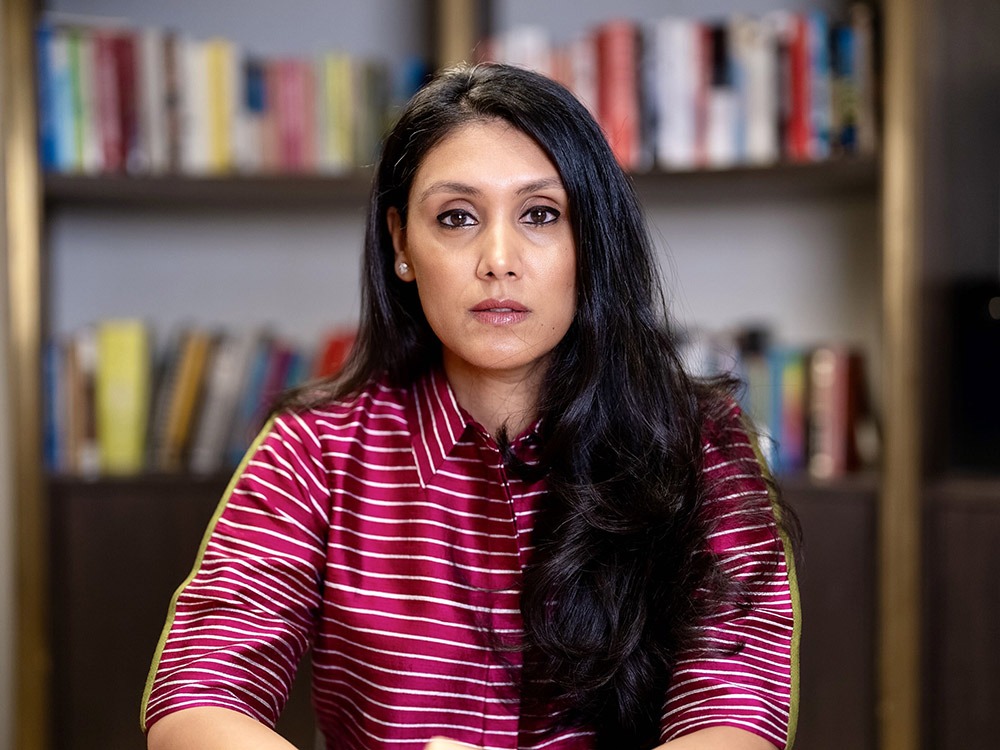
Roshni Nadar Malhotra is the Chairperson of HCLTech, a global technology organization delivering a wide range of digital, AI, cloud, and engineering services that help enterprises transform and reimagine their businesses for the digital age.
Since taking over from her father, the pioneering IT leader Shiv Nadar, she has guided the company’s evolution into a next-generation multinational technology corporation. Under her leadership, HCLTech has grown to annual revenues of over US$14.2 billion, a workforce of 226,600, and a presence in more than 60 countries.
In 2024, she was featured for the eighth consecutive year in Forbes’ “The World’s 100 Most Powerful Women” list. Earlier this year, Brand Finance named HCLTech the world’s fastest-growing IT services brand in its “2025 Global 500 and IT Services Top 25” report.
Roshni Nadar Malhotra is also the Founder and Trustee of The Habitats Trust, an organization dedicated to protecting India’s natural habitats and indigenous species to build and conserve sustainable ecosystems. Before joining HCL, she worked as a news producer and earned her MBA from the Kellogg School of Management.
During her brief visit to Kuwait earlier this month to attend the Indian Business and Professional Council Awards Night function, she spoke with The Times Kuwait about her company and its role in shaping the global IT landscape, India as a digital powerhouse, and her personal interests.
As the first woman to lead a listed IT company in India, what leadership principles guide your decision-making at HCLTech?
At HCLTech, our leadership philosophy is rooted in empowerment, accountability, and entrepreneurship. I work closely with the Board to provide a strategic roadmap, ensuring that our teams execute it while maintaining the highest levels of corporate governance and transparency.
My focus is on creating an environment where every leader and employee feels empowered to take initiative, innovate, and challenge the status quo, which I believe is central to sustaining growth and relevance in a dynamic industry.
The world is rapidly moving toward AI-led businesses. What role is HCLTech playing in shaping the global AI landscape?
HCLTech has been an early adopter of AI, building a comprehensive, full-stack AI portfolio that enables our clients to deploy AI at scale and stay ahead of the curve. AI is now an integral part of every client engagement. For the second quarter of fiscal year 2026 (FY2025-26) our AI revenue reached $100 million, reflecting the depth of our strategy. We are investing proactively in transforming our services, even if it disrupts existing revenue streams, while simultaneously upskilling both our employees and clients.
In addition, we are developing proprietary AI solutions that leverage hyperscaler platforms, and have formed strategic partnerships across the ecosystem to deliver end-to-end solutions with measurable business impact. This ensures that our approach is not only innovative but also sustainable and practical for real-world challenges.
How do you see India evolving as a global digital powerhouse in the next 10 years?
India is already a digital powerhouse, thanks to world-class STEM talent and progressive government policies. We have top global IT services brands, a vibrant startup ecosystem, and the country is emerging as a hub for global capability centers.
The next decade presents opportunities to build more high-value digital intellectual property (IPs) and expand advanced manufacturing capabilities. For example, HCL Group’s joint venture with Foxconn to establish an advanced Outsourced Semiconductor Assembly and Test (OSAT) unit, aligns with the government’s Make in India and Digital India vision. By leveraging these strengths, India is positioned to move up the value chain in both services and manufacturing, cementing its role as a global leader in technology and innovation.
How can India bridge the digital gap in education, especially in underserved communities?
India has made significant progress in bridging the digital divide, with over 700 million internet users today and transformative use cases in education, healthcare, and payments reaching even rural areas. The government is actively driving digital inclusion, and initiatives, under the corporate social responsibility (CSR) mandate, which have seen many private enterprises, foundations, and NGOs contribute to bridging gaps in access and quality.
At HCLFoundation, we have impacted more than 7.5 million lives over the last 15 years, transforming hundreds of rural schools with digital learning tools and mainstreaming thousands of children into formal education. We have introduced robotics and ICT-enabled classrooms in 41 government schools across the state of Uttar Pradesh in India, and delivered digital literacy and STEM education through mobile labs that rotate across 72 government schools, benefiting thousands of students in grades 6 to 10.
The next big leap is integrating digital tools with existing infrastructure and scaling solutions through strong Public-Private Partnerships. With sustained collaboration, I am confident India can emerge as a global role model for inclusive digital education.
What skills do you think future leaders in the IT industry must develop to stay relevant?
Leaders today operate in a highly complex environment with technological, geopolitical, economic, and cultural variables constantly shifting. Agility is critical—leaders must be willing to learn and unlearn rapidly, maintain humility, and disrupt their own thinking to stay ahead. Understanding emerging technologies like AI, encouraging cross-cultural collaboration, and aligning business strategy with societal impact are all essential skills for sustainable leadership.
What advice do you give to young women aspiring to leadership roles, especially in male-dominated industries?
Opportunities are expanding, but what matters most is the hunger and readiness to show up, take risks, and embrace responsibility. Organizations, including HCLTech, are creating pathways for leadership, but growth requires commitment, courage, and persistence from individuals themselves. Every challenge is also an opportunity to develop resilience and influence meaningful change.
If you could change one thing about the global perception of Indian companies, what would it be?
India is often seen primarily as a source of skilled manpower, but today, the narrative is shifting. Indian companies are leading in technological innovation, digital services, and high-value IP creation. Startups and investments in deep tech are rapidly reshaping global perceptions. The world should recognize India not just as a cost-effective hub, but as a center of technological prowess and innovation.
You transitioned from a media career to leading a global technology company. What influenced that shift?
While I began my career in media, I was always clear about my aspiration to contribute to HCLTech.
Completing an MBA and moving into HCL allowed me to combine strategic leadership with the opportunity to shape an institution of global significance. Beyond business, I find tremendous satisfaction in our philanthropic initiatives, such as education and digital inclusion programs, which allow me to create meaningful impact alongside driving organizational growth.