Kuwaiti banks issue 7.37 million cards as digital payments surge and cash use declines
With the total number of cards exceeding the country’s population, the data indicates that many customers hold multiple cards or accounts — a reflection of high financial engagement and a well-developed banking culture.
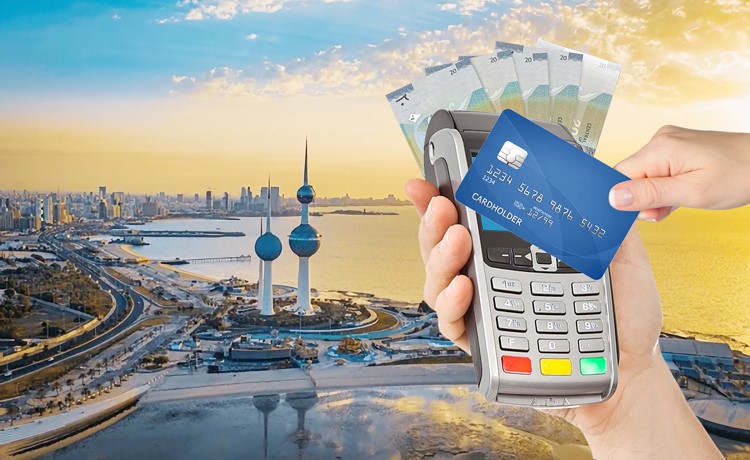
- The number of point-of-sale (POS) devices used for electronic payments grew by 8,680 units year-on-year, reaching 109,229 devices by September 2025, compared to 100,549 a year earlier. This nearly 9% rise indicates expanding commercial activity and economic growth, as new projects and businesses adopt digital payment systems in retail, services, and hospitality sectors.
- The number of ATMs recorded a decline, falling to 2,344 machines by the end of September 2025, down from 2,711 the previous year — a clear sign of the shift away from cash-based transactions toward a more digitally integrated financial environment.
By the end of September 2025, Kuwaiti banks have issued 7.37 million bank cards, marking a 10.6% annual increase equivalent to 707,300 new cards compared to 6.66 million at the same time last year.
This notable growth, according to official data, underscores Kuwait’s progress in the expansion of banking services to wider segments of society.
With the total number of cards exceeding the country’s population, the data indicates that many customers hold multiple cards or accounts — a reflection of high financial engagement and a well-developed banking culture, reports Al-Anba daily.
The surge also highlights the ongoing digital transformation in consumer financial behavior, as electronic payments and mobile banking applications become an integral part of everyday life.
The increasing reliance on digital tools has reduced dependence on cash transactions, enhancing efficiency, transparency, and oversight within the financial system.
Competition among local banks has further fueled this growth, driven by innovative digital products, loyalty rewards, and simplified digital account openings.
These developments align with Kuwait’s broader vision to establish a modern financial ecosystem, support financial technology, and ensure equitable access to banking services in line with the Sustainable Development Goals.
Breaking down the figures, credit cards — which provide spending limits — rose by 6.6%, or 107,100 cards, bringing the total to 1.73 million active credit cards by the end of September 2025, up from 1.62 million the previous year. Meanwhile, debit cards, linked directly to customers’ account balances, grew by 12%, or 600,200 cards, to 5.64 million, compared to 5.04 million a year earlier.
In parallel, the number of point-of-sale (POS) devices used for electronic payments grew by 8,680 units year-on-year, reaching 109,229 devices by September 2025, compared to 100,549 a year earlier. This nearly 9% rise indicates expanding commercial activity and economic growth, as new projects and businesses adopt digital payment systems in retail, services, and hospitality sectors.
The wider adoption of POS systems has also made transactions faster and more convenient, encouraging small and medium enterprises to embrace cashless solutions — a key step in Kuwait’s journey toward a fully digital economy. The expansion reflects renewed confidence in the domestic market and a rebound in retail activity, which remains a vital contributor to economic diversification and job creation.
Meanwhile, the number of ATMs in Kuwait recorded a decline, falling to 2,344 machines by the end of September 2025, down from 2,711 the previous year — a clear sign of the shift away from cash-based transactions toward a more digitally integrated financial environment.