Kuwait moves to tighten cooperative oversight, protect funds and simplify services
Ministry of Social Affairs is advancing a broad reform programme for cooperative societies, combining legislative changes, tighter financial oversight, digital monitoring and simpler services, while new rules are being introduced for temporary appointments, investment kiosks and accountability.

- Six charities and six public-benefit association face dissolution
- 50 percent of the kiosks will be allocated to small-business entrepreneurs
- Ministry iworking on a unified visual identity for cooperative societies
- Less waiting, fewer procedures, fewer visits and better-quality services.
- Reducing unnecessary administrative complexity while preserving legality, transparency and equality
The Ministry of Social Affairs is moving ahead with a wide-ranging reform programme for Kuwait’s cooperative sector aimed at strengthening governance, improving management, protecting shareholders’ funds and making services faster and easier for citizens.
Social Affairs Minister Dr Amthal Al-Huwailah said the ministry is reviewing the cooperative law to establish a more modern framework for management, supervision and accountability. The reforms are also intended to strengthen the economic and social role of cooperative societies.
A key part of the reforms concerns temporary appointments and interim boards. Recent ministry rules link such appointments to competence, performance and accountability, with temporary managers and boards expected to work against measurable targets rather than simply hold positions.
Al-Huwailah also disclosed that the ministry is studying a new round of referrals to the Public Prosecution involving alleged financial and administrative violations at some cooperative societies. The ministry is also preparing new regulations governing investment kiosks inside cooperative central markets.
Cooperatives will have to prepare distribution plans and secure the required approvals and licences before offering the spaces for investment. Under the proposed arrangements, contracts will be awarded to the highest investment offer among bids that meet the required conditions, while at least 50 percent of the kiosks will be allocated to small-business entrepreneurs.
Existing kiosks will be given three months to review and regularise their status under the new rules. Digital monitoring is another major part of the reform programme. The ministry is working on an integrated platform to document cooperative activities, including expenses and suppliers, with the aim of improving transparency and strengthening the ministry’s ability to monitor financial and administrative operations.
The ministry has also submitted the names of six public-benefit associations and six charitable foundations for dissolution and liquidation. Separately, six public-benefit associations were dissolved by ministry decisions in August, with their assets and documents placed under procedures for liquidation.
For citizens, the ministry says its “open-door” approach will continue, with complaints and requests accepted through channels including the government’s Tawasul platform, ministry service centres, appointments, email, telephone and other direct communication channels.
However, Al-Huwailah stressed that direct access to officials does not mean bypassing regulations. A citizen may bring a delayed or unclear case to the ministry’s attention, but the final decision must remain based on the law and the person’s actual entitlement.
The ministry is also reviewing administrative procedures to reduce repeated paperwork, unnecessary signatures and multiple visits. The objective is to use digital systems to shorten the process while maintaining the necessary legal and supervisory safeguards.
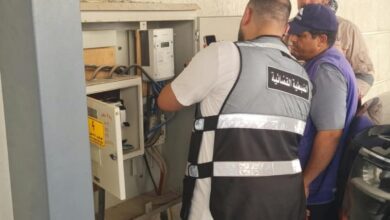
Field visits are being used as another tool for reform. According to Al-Huwayla, direct visits can reveal practical problems that may not appear in official reports and can help identify procedures that can be shortened, reorganised or digitised.
The ministry is also working on a unified visual identity for cooperative societies, covering building facades, entrances, signs, service areas and other facilities. The aim is to create a more consistent and organised environment for shareholders and visitors.
The broader reform drive comes alongside new regulation of Kuwait’s charitable and humanitarian sector, with stronger requirements for governance, transparency and financial oversight.
Al-Huwailah said the overall objective is not simply to issue more decisions, but to produce improvements that citizens can actually experience, less waiting, fewer procedures, fewer visits and better-quality services.
The minister has also emphasised two principles for ministry officials: the door should remain open to citizens, but it should never be opened at the expense of the law, fairness or equal treatment.
Al-Huwailah said the ministry will measure the success of its reforms by their practical impact on citizens, particularly whether transactions take less time, require fewer visits and become easier to understand and complete. She also stressed that simplifying procedures does not mean bypassing regulations, but rather reducing unnecessary administrative complexity while preserving legality, transparency and equality.