Kuwait at 65: From independence to global influence — A nation’s journey of sovereignty, unity, and progress

Every year on February 25, the State of Kuwait commemorates its glorious independence and the dawn of its sovereignty, marking the end of British protection and the beginning of a triumphant journey towards progress, development, and leadership.
This journey was shaped by the forefathers under the wise leadership of their ancestors. That day in 1961 represents a pivotal moment in Kuwait’s history, as it marked the bridge the country crossed from British protection, which had lasted for several decades, to an era of freedom and sovereignty.
This period saw Kuwait steadily progress towards consolidating its national identity, strengthening unity among its citizens, achieving independence, and initiating its modern renaissance.
As Kuwait celebrates its 65th National Day this Wednesday, Kuwaitis proudly recall the sacrifices made to transform Kuwait into an oasis of security and safety, and a beacon of progress and prosperity.
They affirm that the journey of independence, which began more than six decades ago, continues to pursue its aspirations and achieve new milestones. Kuwait began its first National Day celebrations in June 1962 with a grand military parade held at the old airport near Darwazat al-Buraissi.
The parade was attended by a large number of officials and citizens amidst an atmosphere of joy and celebration. On that momentous day, the late Amir, Sheikh Abdullah Al-Salem, delivered a speech in which he said, “Kuwait welcomes the first anniversary of its National Day with hearts full of joy and happiness for the honor and dignity that God has bestowed upon its people, and with spirits full of determination to move forward in building this nation and working with unwavering resolve to achieve for its citizens the advancement, prosperity, and social justice for all.”
The country gained its independence on June 19, 1961, with the signing of the independence document and the abrogation of the protection agreement with Britain.
Then, on May 18, 1964, a decree was issued merging the National Day with the Accession Day, commemorating the accession of the late Amir, Sheikh Abdullah Al-Salem Al-Sabah, to the throne, which falls on February 25th of each year.
The decision to combine the celebration of Independence Day with the anniversary of the late Emir Sheikh Abdullah Al-Salem Al-Sabah’s accession to the throne stems from practical and climatic reasons, based on a wise vision to take advantage of the mild weather during February.
This allows citizens and residents to participate more actively in public celebrations and various outdoor events, rather than enduring the intense summer heat that Kuwait typically experiences in June
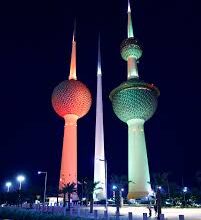
Kuwait celebrates this day with festive displays throughout the country, where streets and buildings are adorned with flags and colorful lights.
Military parades and national marches take place, in addition to entertainment and cultural events and fireworks that illuminate the Kuwaiti sky. Families gather to celebrate the spirit of unity and solidarity that characterizes Kuwaiti society.
Since 1962, Kuwait has been working to strengthen its political system by establishing a Constituent Assembly tasked with drafting a constitution for a system of government based on democratic principles that are compatible with Kuwait’s realities and aspirations.
Among the most notable achievements of the Constituent Assembly was the draft constitution, which was approved by the late Emir Sheikh Abdullah Al-Salem Al-Sabah in November 1962, thus ushering the country into a phase of constitutional legitimacy, as the first legislative elections were held on January 23, 1963.
Over the past 65 years, Kuwait has achieved remarkable accomplishments across all sectors, guided by forward-looking plans that recognized the needs of the country and its people for development and progress. Kuwait has also played a pivotal role in the regional and international issues it has undertaken.
Furthermore, Kuwait has become a focus of global attention in humanitarian aid, having been committed since its independence to assisting, particularly during crises and disasters.
Humanitarian work has become a defining characteristic of the nation, and the late Emir, Sheikh Sabah Al-Ahmad Al-Jaber Al-Sabah, may God have mercy on him, was honored by the United Nations in September 2014 with the title “Humanitarian Leader” and Kuwait was designated a “Humanitarian Center.”
Since its independence, Kuwait has pursued a balanced foreign policy, embracing openness and communication, guided by faith, friendship, and peace, and aiming for human development and economic prosperity for its people.
This policy is implemented within a framework of cooperation with regional and international organizations, supporting their efforts, aspirations, and objectives.
Under the wise leadership of His Highness the Amir Sheikh Mishal Al-Ahmad Al-Jaber Al-Sabah, may God protect him, and His Highness the Crown Prince Sheikh Sabah Khaled Al-Hamad AlSabah, may God protect him, Kuwait continues its tireless efforts to pursue development, reconstruction, and stability, as well as contributing to cooperation with sisterly and friendly nations to achieve security and peace throughout the world.
Today, 65 years after independence, National Day remains an occasion to renew loyalty and allegiance to the nation and its wise leadership, and to take pride in the achievements Kuwait has made throughout its history and its continued progress in building, development, and prosperity
— KUNA