By S A H Rizvi
Chief of Bureau, New Delhi
The Times Kuwait
Eminent Indian jurist and Supreme Court advocate Aman Sinha has described the India–EU Free Trade Agreement (FTA) as a pivotal strategic milestone for India. It grants unparalleled access to one of the world’s largest and most affluent consumer markets while bolstering the nation’s long-term economic resilience and growth architecture.
Concluded on January 27, 2026 — after nearly two decades of negotiations (relaunched with fresh momentum in 2022) — this landmark pact, widely hailed as the “mother of all deals,” transforms global trade uncertainties into concrete opportunities.
Sinha emphasized that the agreement significantly boosts Indian exports, attracts higher foreign investment, creates jobs, and empowers Micro, Small, and Medium Enterprises (MSMEs), reinforcing India’s emergence as a confident, mature, and proactive force in international trade.
He highlighted the profound strategic importance of the timing and context: “In an era of volatile global commerce — marked by sudden policy reversals, escalating protectionism, and disruptions from major economies — India faced a stark choice: passively absorb the turbulence or actively reshape the landscape to its advantage. India decisively chose the latter, demonstrating remarkable foresight and adaptability.”
Sinha credited Prime Minister Narendra Modi’s leadership as instrumental. Rather than resorting to reactive or defensive measures like short-term retaliation, India pursued a broader, forward-looking economic vision.
“By prioritizing sustained engagement with reliable, stable partners like the EU and negotiating with a clear focus on India’s enduring national interests, the government converted external pressures into strategic leverage,” he added. “This disciplined form of economic statecraft turns trade headwinds into durable advantages, positioning India more securely in a fragmented global order.”
For nearly 20 years, India-EU trade talks languished amid regulatory complexities, differing priorities, and periodic political hesitations. Progress remained elusive until decisive political direction injected fresh impetus.
Under the present leadership, negotiations were conducted with patience, persistence, and strategic clarity — recognizing that truly sustainable agreements require careful construction, not hasty concessions.
The result is no diluted compromise but a meticulously calibrated framework that decisively opens markets while safeguarding domestic sensitivities.
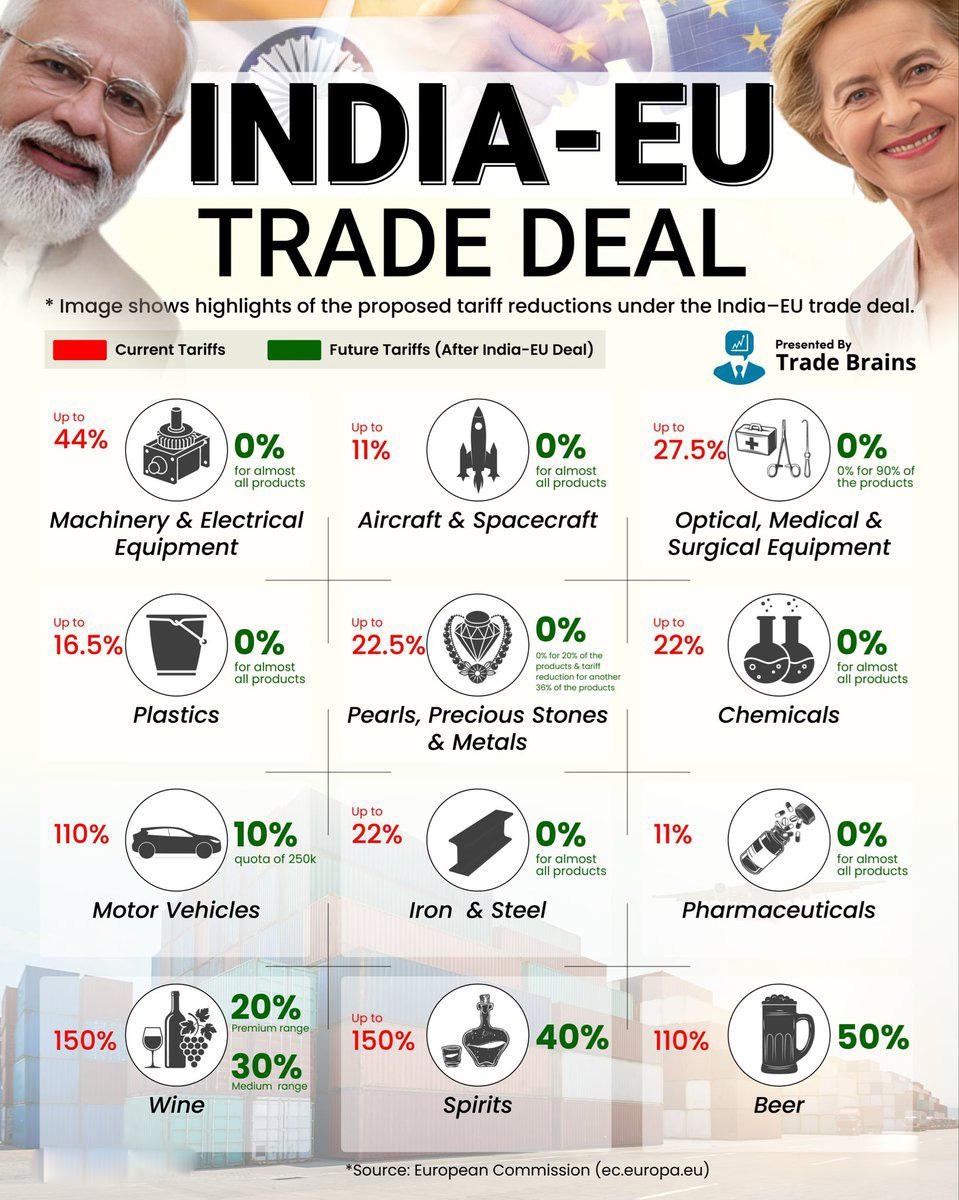
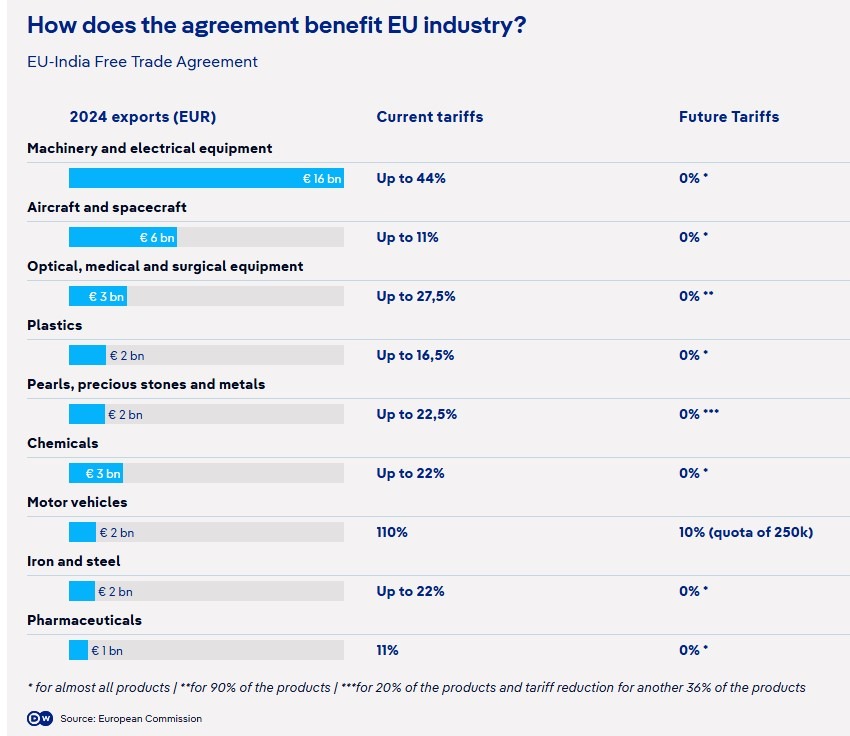
Key provisions include duty-free or reduced-tariff access for over 99% of India’s exports by value (covering vital labor-intensive sectors such as textiles, leather, footwear, gems and jewellery, tea, coffee, spices, marine products, and more), phased implementations where necessary, and protections for vulnerable areas.
This balanced structure promises enhanced competitiveness, inclusive growth, and deeper integration into global value chains.
In essence, Sinha said, the India–EU FTA exemplifies visionary economic diplomacy: it not only counters immediate challenges but lays a robust foundation for India’s ambitious journey toward becoming a developed economy by 2047.
By forging deeper ties with the EU — a bloc embodying stability, innovation, and vast consumer demand — India secures diversified pathways to prosperity in an unpredictable world.
This agreement is more than a trade deal; it is a testament to strategic judgement, resilience, and the transformative power of purposeful global engagement, the apex court lawyer concluded.