India and Kuwait: Partners in Progress, Prosperity and Peace
H.E. Paramita Tripathi, Ambassador of India to the State of Kuwait
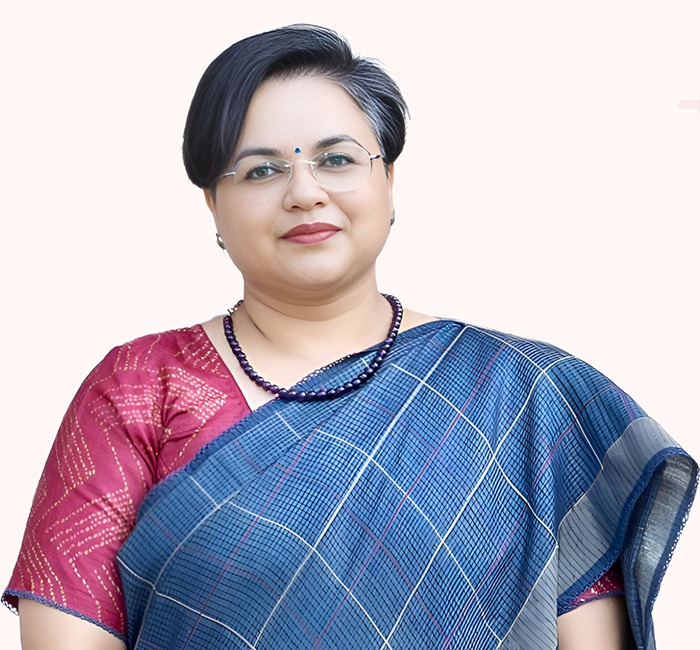
As India celebrates its 77th Republic Day today, 26 January 2026, it is a joy and a privilege to reach out to my fellow Indians in Kuwait and to our Kuwaiti brothers and sisters, who have always welcomed us with such warmth. This special day, which marks the birth of our Republic based on the ideals of justice, liberty, equality, and fraternity, belongs not only to those in India but also to every Indian heart beating across the world, including the vibrant Indian community that calls Kuwait home.
I take this opportunity to express my profound gratitude to His Highness the Amir of the State of Kuwait, Sheikh Meshal Al-Ahmad Al-Jaber Al-Sabah, His Highness the Crown Prince, Sheikh Sabah Al-Khaled Al-Hamad Al-Mubarak Al-Sabah, and His Highness the Prime Minister, Sheikh Ahmed Abdullah Al-Ahmad Al-Sabah, for their patronage and support for a strong India-Kuwait Strategic Partnership.
Republic Day and the enduring legacy of ‘Vande Mataram’
Today, we celebrate not just a date on the calendar, but the enduring idea of India that came alive with the adoption of our Constitution on 26 January 1950. Seventy-seven years after our Constitution came into force, India’s tryst with democracy is stronger and more confident than ever before. As we mark Republic Day, we honor the framers of our Constitution, and the millions of Indians representing ‘we the people’ who give it life, meaning, and strength every day.
We all know that India’s Independence in 1947 came after a long struggle during which the song ‘Vande Mataram’ composed by Shri Bankim Chandra Chattopadhyay became the voice of India’s freedom struggle. It was adopted as India’s national song on 24 January 1950 by the Constituent Assembly. As we celebrate 150 years of ‘Vande Mataram’ let us be reminded of not only how we won our freedom, but also of how we must safeguard it.
India continues firm on its upward growth and development trajectory
The story of India is one of aspiration, confidence, and steady transformation, despite a challenging global environment. India remains one of the fastest-growing major economies, with annual GDP growth above 6 percent and quarterly growth reaching 8.2 percent in 2025. India is now the world’s fourth-largest economy, charting a confident course toward becoming the third largest by 2030, with GDP projected at US$7.3 trillion.
India is rapidly expanding its capacity in areas such as smartphone production, semiconductors, and medical equipment, making it an attractive alternative to traditional manufacturing hubs. In pharmaceuticals, India remains a global leader in generics and is scaling up production in high-value areas such as biotechnology and vaccines, reinforcing its role as a key player in global healthcare.
Across India, new expressways, airports, metro systems, and logistics corridors are transforming the way people live and work, while enhancing investment and employment. Government of India’s flagship initiatives, such as Make in India, Digital India, and Atmanirbhar Bharat, are boosting manufacturing, supporting startups, and bringing digital services to citizens, from real-time payments through UPI or Unified Payments Interface to new e-commerce and governance platforms.
India’s science and technology achievements have brought special pride, with the successful Chandrayaan-3 soft landing near the Lunar South Pole and advanced preparations for the Gaganyaan human spaceflight mission. India is deepening its role in climate action, expanding renewable energy capacity, and leading the International Solar Alliance, of which Kuwait is a member, while reaffirming its commitment to achieve net-zero emissions by 2070.
India’s growing global role
The ancient philosophy of ‘Vasudhaiva Kutumbakam’ (the world is one family) remains the guiding star of India’s foreign policy, with democracy, pluralism, and unity in diversity forming the traditional ethos of Indian society. India believes in the principle of strategic autonomy and follows a path of multi-alignment.
India’s global engagement has continued to gain depth and respect, including its successful G20 Presidency, which helped amplify the voice of the Global South and brought the African Union into the grouping as a permanent member. India’s reputation as a reliable first responder in humanitarian crises has reinforced its credibility on the world stage.
Through sustained leadership in fora such as the United Nations, G20, BIMSTEC, and BRICS, India has emerged as a credible bridge between regions and perspectives. India has been working closely with partners globally, in the Gulf, Asia, Indo-Pacific, Europe, Africa, and the Americas, on issues ranging from trade and technology to energy security and climate resilience.
This outward engagement is guided by the belief that global challenges, whether pandemics, climate change, or supply-chain disruptions, require cooperative solutions. India’s growing economic weight and youthful demography have reinforced its role as a trusted and responsible stakeholder in shaping a more balanced, multipolar world.
India–Kuwait: A friendship nurtured over generations
The friendship between India and Kuwait is a story written over centuries by traders, sailors, scholars, and families on both shores of the Arabian Sea. Centuries ago, dhows made from Indian wood sailed to Kuwait carrying textiles, spices, and wood, and returned with pearls, dates, horses, and stories that still live in the memories of older generations here. I have seen many paintings and heard many of these wonderful stories from my dear Kuwaiti friends in their diwaniyas and homes, which display treasures and artefacts from Al-Hind or India.
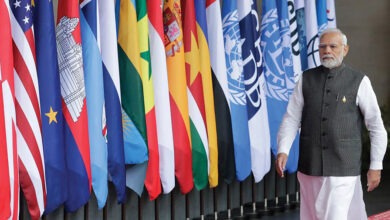
This goodwill has been energised most recently by the historic visit of Prime Minister Shri Narendra Modi to Kuwait in December 2024, the first by an Indian Prime Minister in 43 years. During this visit, the bilateral relationship was elevated to a Strategic Partnership, and a broad agenda with new areas of cooperation was agreed upon, including trade, investment, energy, defence, food security, science and technology, education, and people-to-people ties, under a new mechanism of Joint Commission for Cooperation (JCC).
Today, India–Kuwait trade exceeds US$10 billion annually, with India being among Kuwait’s top trading partners and Kuwait a key energy supplier to India. Diversifying beyond oil, there is growing collaboration in petrochemicals, food security, healthcare, infrastructure, and the digital economy, aligning closely with India’s Viksit Bharat 2047 and Kuwait’s Vision 2035.
Indian public and private sector companies, including TCIL, LIC, Tata Group, Larsen & Toubro, Megha Engineering, Kalpataru Projects International, Shapoorji Pallonji Group, and WIPRO, have established a strong presence in Kuwait. Kuwaiti investments in India, through entities such as the Kuwait Investment Authority (KIA), Public Institution for Social Security (PIFSS), and private business groups, span capital markets, logistics, industry, and hospitality, reflecting deepening economic engagement.
Recent years have witnessed a surge in cultural cooperation and people-to-people ties. Kuwait Radio runs a Hindi-language program catering to the large Indian community. The 11th International Day of Yoga in June 2025 was held at Salmiya Boulevard, with over 1,500 participants. Kuwaiti royal Sheikha Shaikha Al-Sabah was awarded the Padma Shri in early 2025 for her efforts in promoting Yoga. In May 2025, the Indian Embassy and Kuwait’s National Council for Culture, Arts and Literature (NCCAL) hosted an exhibition at the National Library to commemorate 250 years of friendship, showcasing rare documents and historical artifacts.
Kuwaiti achievements and shared aspirations
Kuwait is on an inspiring path of renewal and reform under the leadership of His Highness the Amir, Sheikh Meshal Al-Ahmad Al-Jaber Al-Sabah, and His Highness the Prime Minister, Sheikh Ahmed Abdullah Al-Ahmad Al-Sabah.
Vision 2035, with its focus on diversifying the economy, modernising infrastructure, and creating a knowledge-based society, resonates strongly with India’s own development aspirations. In these efforts, Indian companies, professionals, engineers, doctors, teachers, and skilled workers are proud to be partners, bringing experience from India’s own modernisation journey.
The Indian community a living bridge
The Indian community of over one million in Kuwait is at the heart of this special partnership, serving as a living bridge between our countries. From hospitals and schools to banks, businesses, construction sites, and IT firms, Indian professionals and workers contribute daily to Kuwait’s growth story while remaining deeply connected to their roots. Indians lead the workforce community in Kuwait, with around 0.9 million workers, about 30 percent of Kuwait’s total workforce, thus serving as an important partner in Kuwait’s development story while reinforcing strong people-to-people ties.
Indian schools in Kuwait, now numbering over two dozen and educating more than 50,000 children, symbolise this bond of hearts and minds, nurturing future generations who feel at home with both Indian and Kuwaiti cultures. The community’s charitable initiatives, cultural festivals, and support networks, whether during the pandemic, in emergencies, or in everyday life, showcase the best of Indian values in their adopted home. Kuwait, for its part, has extended generosity and understanding to Indian residents, and both Governments remain productively engaged on issues of welfare, labour rights, and consular facilitation.
We, the Embassy, place our highest priority on the welfare and well-being of the Indian Community in Kuwait. I thank all community associations, professional bodies, cultural groups, and members of the Indian community for joining hands with the Embassy to ensure and enhance the welfare of the community and to strengthen the India-Kuwait Strategic Partnership.
Looking ahead with confidence
As we mark this significant occasion, the path ahead for India–Kuwait relations is full of promise. The Strategic Partnership, the Joint Commission for Cooperation, and the agenda set during Prime Minister Shri Narendra Modi’s visit provide a clear roadmap for deeper cooperation across a wide range of areas.
Future high-level exchanges will help sustain this momentum, ensure regular reviews, and open new opportunities for businesses, professionals, investors, researchers, and students in both countries.
The successes of India and Kuwait in the years ahead will be greater when our two hands work together in harmony: one from the shores of the Arabian Sea, the other from the Gulf, joined in friendship, trust, and shared aspiration.
On this joyous occasion, I once again extend my warmest greetings to the leadership and the friendly people of Kuwait and to all Indians in Kuwait, with a heartfelt wish that our Strategic Partnership continues to flourish for the benefit and prosperity of the people of India and Kuwait.
Jai Hind! Vande Mataram!