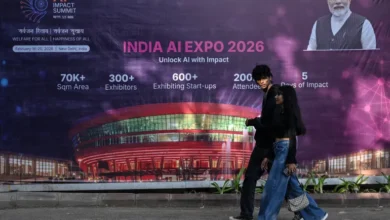
India aims to become top AI superpower as Modi outlines inclusive, human-led strategy
AI will transform -- not replace -- jobs, says Modi as India pushes global leadership in technology, calls AI a ‘civilizational turning point’, urges human-centric global governance
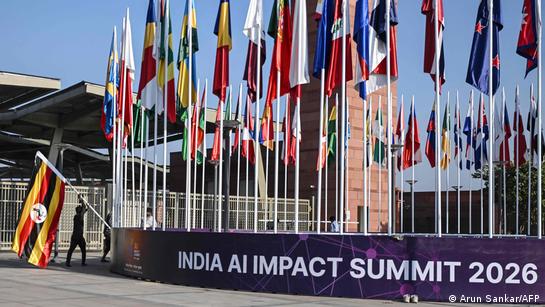
- India is using the India AI Impact Summit in Delhi to underline its ambition to become a global force in artificial intelligence. Long seen as an IT outsourcing hub, the country is now seeking a leading role in AI development and adoption.
- With a vast population producing enormous amounts of data, a young talent pool and growing infrastructure incentives, India aims to strengthen its position in the global AI race.
- New rankings show the country performing far better in AI readiness and adoption than its investment levels suggest — raising the question of how quickly it can close the gap with the US and China.
Describing artificial intelligence (AI) as standing at a “civilizational inflection point,” capable of dramatically expanding human capability, Indian Prime Minister Narendra Modi stressed that AI development must remain deeply human-centric and aligned with global development goals.
In a text interview with Asian News International (ANI) published as India hosts a major AI summit — the first such global gathering held in the Global South — Modi outlined India’s strategy to position itself as a responsible global leader in artificial intelligence.
He said AI should not merely drive innovation but deliver equitable outcomes, guided by the principle of “welfare for all, happiness for all,” emphasizing that technology exists to serve humanity rather than replace it.
Modi highlighted the government’s IndiaAI Mission, which aims to ensure AI systems reflect national values while advancing inclusive economic growth. According to him, mindful adoption of AI can address deep developmental challenges, bridge urban-rural divides, and expand access to opportunities.
India is already deploying AI solutions across critical sectors. In healthcare, AI tools are assisting early detection of diseases such as tuberculosis, epilepsy, and diabetic retinopathy at primary health centers. In education, AI-powered personalized learning platforms in Indian languages are helping students in rural and government schools receive customized academic support.
The dairy cooperative Amul is using AI to support 3.6 million women dairy farmers by providing real-time guidance on cattle health and productivity, demonstrating how technology can empower grassroots communities.
AI applications are also expanding into agriculture through crop advisory systems, soil analytics, and weather intelligence, while heritage projects are using AI to digitize and interpret ancient manuscripts.
“At a time when the world fears AI may deepen inequality, India is using it to dissolve divides,” Modi said.
The Prime Minister acknowledged persistent concerns surrounding AI bias, particularly those linked to gender, language, and socio-economic backgrounds. India’s linguistic and cultural diversity, he noted, creates unique challenges, as systems trained primarily on English or urban datasets may fail rural or regional users.
To address this, India is focusing on building diverse datasets, expanding AI development in regional languages, and encouraging academic research on fairness and algorithmic bias. Modi stressed that tackling AI risks requires global cooperation and shared governance frameworks.