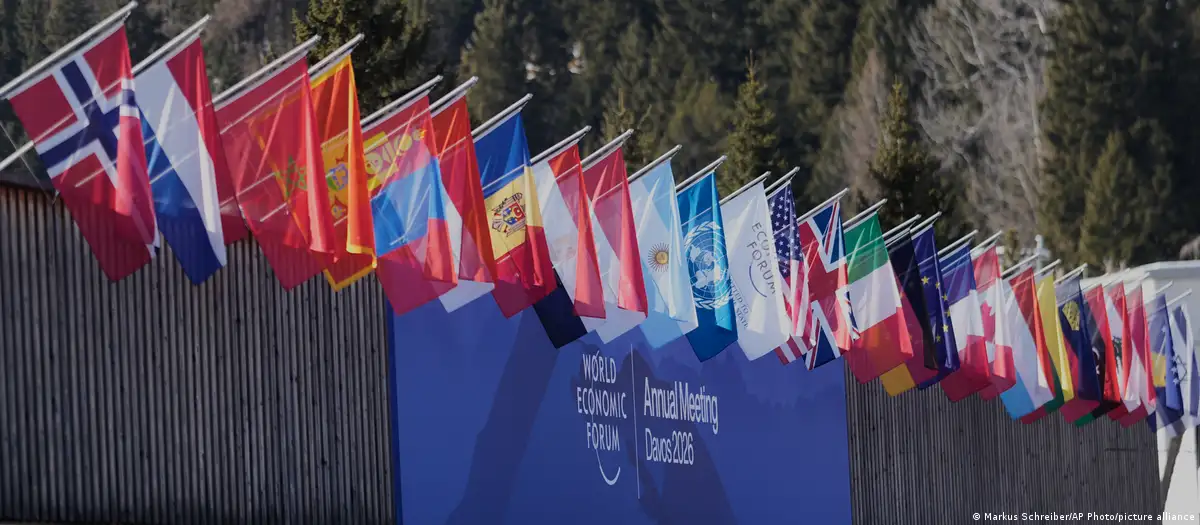
European leaders took center stage at the World Economic Forum (WEF) in Davos on Tuesday, a day ahead of the expected arrival of US President Donald Trump, whose renewed tariff threats linked to Greenland are looming large over the annual gathering.
The 2026 forum is unfolding amid growing transatlantic unease, with Trump’s push to impose tariffs on eight European countries deepening diplomatic tensions between Washington and its allies. European officials have warned that such measures risk triggering a damaging trade confrontation at a time of heightened global uncertainty.
European Commission President Ursula von der Leyen and French President Emmanuel Macron were among the key figures addressing delegates, alongside Chinese Vice Premier He Lifeng and Canadian Prime Minister Mark Carney, whose governments have also faced friction with the Trump administration, DW.COM reports.
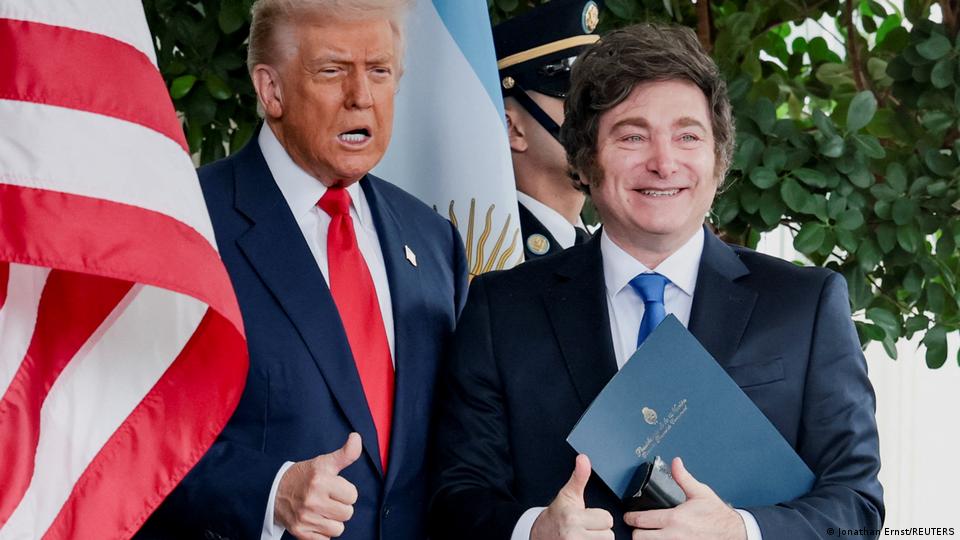
Trump’s presence is expected to dominate the week, with a large US delegation already in Davos promoting an “America First” agenda that has unsettled the global economic order long championed by the WEF. The US president is scheduled to deliver a speech on Wednesday and participate in further events on Thursday.
On the sidelines of the forum, von der Leyen reiterated the need to “unequivocally respect” the sovereignty of Greenland and Denmark, stressing that the issue is of critical importance to transatlantic relations. She underlined that trade and investment ties between the EU and the US remain a major shared asset, warning that tariffs would undermine mutual economic interests.
German Chancellor Friedrich Merz said he expects to meet Trump during the forum to discuss Greenland and broader European security concerns, noting that while the strategic importance of the Arctic should not be dismissed, the current threat assessments do not justify escalating tensions.
As discussions continue, European leaders are weighing possible countermeasures, while protests outside the venue highlighted opposition to militarization, global inequality and the influence of major powers. With geopolitical rivalry and trade disputes rising, Davos 2026 is shaping up as a critical test of dialogue between Europe and the United States.
Spanish Prime Minister Pedro Sánchez may withdraw from Wednesday’s program following the deadly train crash in Córdoba, potentially leaving a gap in the schedule. Nevertheless, the day is set to feature high-profile appearances by US President Donald Trump and Argentine President Javier Milei. Discussion panels will also tackle pressing economic questions, including whether China’s economy has fully emerged from its slowdown and whether Russia can sustain a wartime economy.
Uncertainty also surrounds Thursday’s address by Syrian President Ahmad al-Sharaa, amid continuing political developments in Syria. His appearance comes as the Syrian government announced a new ceasefire agreement with the Syrian Democratic Forces only days earlier.
Despite this, Thursday’s agenda includes speeches by Israeli President Isaac Herzog, Finnish President Alexander Stubb and German Chancellor Friedrich Merz.
Friday’s program will culminate with a flagship session on the “Global Economic Outlook,” scheduled an hour before the forum’s closing statement at noon local time. The panel will bring together European Central Bank President Christine Lagarde and International Monetary Fund Managing Director Kristalina Georgieva, underscoring the forum’s focus on global economic stability and growth.