From desert to oasis, seasonal rains breathe new life into Kuwait’s barren lands
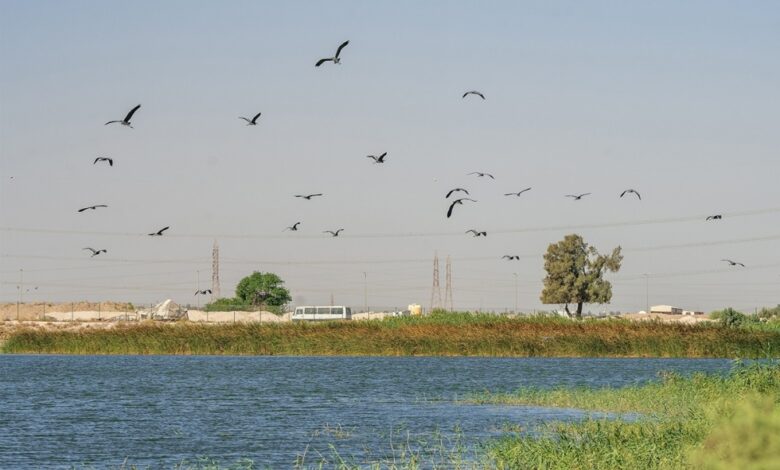
- The sight of Kuwait’s deserts turning green, even temporarily, serves as both a symbol of renewal and a call to action — proving that with thoughtful water management, nature and sustainability can coexist even in the harshest environments.
In a recurring spectacle across parts of Kuwait, once-barren stretches of desert have been transformed into lush green landscapes following seasonal rains that form pools of water is some areas.
These natural phenomena, far from being destructive, have rejuvenated the land — nourishing the soil, expanding vegetation cover, and highlighting the potential of water collection as an environmental asset.
Along the road leading to Al-Farda Market in the Al-Sulaibiya area toward Kabd, rainwater has pooled into shallow basins, turning the surroundings into a striking green expanse dotted with wild herbs and thriving vegetation.
Amid Kuwait’s typically arid terrain, this burst of greenery stands as a vivid reminder of nature’s power to renew itself.
The phenomenon traces back to the heavy rains and floods that struck Kuwait in November 2018, which revitalized vast stretches of parched soil.
In the years since, the construction of earthen dams and rainwater retention basins has helped conserve runoff, allowing water to seep slowly into the ground — fostering the growth of desert trees and supporting the natural cycle of regeneration.
Despite Kuwait’s short rainy season, experts emphasize that harnessing rainwater intelligently can yield lasting environmental and economic benefits.
The country has long championed sustainability and anti-desertification measures, evident in the creation of nature reserves such as the Sabah Al-Ahmad, Jahra, and Al-Khuwaisat Reserves.
Acting Director General of the Environment Public Authority (EPA) Nouf Behbehani told KUNA that the agency is intensifying efforts to protect green areas and plant life, particularly after seasonal rains.
She noted that ongoing fencing projects across the country aim to preserve vegetation cover, prevent overgrazing, and help replenish groundwater reserves.
These efforts, she added, are part of Kuwait’s broader strategy to promote environmental sustainability and combat desertification — a major national challenge.
Behbehani also revealed that the EPA is coordinating with key institutions, including the Ministry of Public Works, the Ministry of Electricity and Water, and the Kuwait Municipality, to maximize the use of rainwater and align with the goals of the “New Kuwait 2035” vision.
Meanwhile, Jenan Behzad, Secretary-General of the Kuwait Environment Protection Society, described rainwater harvesting as a “strategic solution” to address water scarcity in arid regions. She highlighted its importance in capturing and storing rainfall for agricultural and environmental use, thereby reducing surface runoff, mitigating flood risks, and supporting groundwater recharge.
Behzad underscored the significance of Kuwait’s natural valleys and plains — including Wadi Umm Al-Rumam, Wadi Al-Batin, and Al-Dabdaba Plain — as natural catchment areas that flourish during the winter rainy season. Historical floods in 1967, 1997, 2009, 2013, and 2018 have demonstrated their environmental value.
She also pointed to the seasonal “Khabari” waters and the “Jalai’a” karst, where prolonged water presence sustains vegetation throughout the year, forming self-sustaining ecosystems in the desert.
The sight of Kuwait’s deserts turning green, even temporarily, serves as both a symbol of renewal and a call to action — proving that with thoughtful water management, nature and sustainability can coexist even in the harshest environments.
Follow The Times Kuwait on
X, Instagram and Facebook for the latest news updates