Five-year Schengen Visa drives strong Kuwaiti demand for France, says Ambassador
France continues to lead as the preferred Schengen destination for Kuwaiti travelers, driven by strong demand and new five-year multiple-entry visa facilities, as officials urge early applications amid rising travel volumes and seasonal pressure on appointments.
The Times Kuwait Report
-
- As travel demand continues to grow, French officials encouraged applicants to plan early and follow official procedures to ensure smooth processing, reaffirming France’s position as one of the most preferred destinations for Kuwaiti travelers — whether for tourism, education or medical treatment.
- Five categories are exempt from appointment requirements: emergency medical cases, military personnel on official missions, diplomatic passport holders, students, and spouses of French citizens.
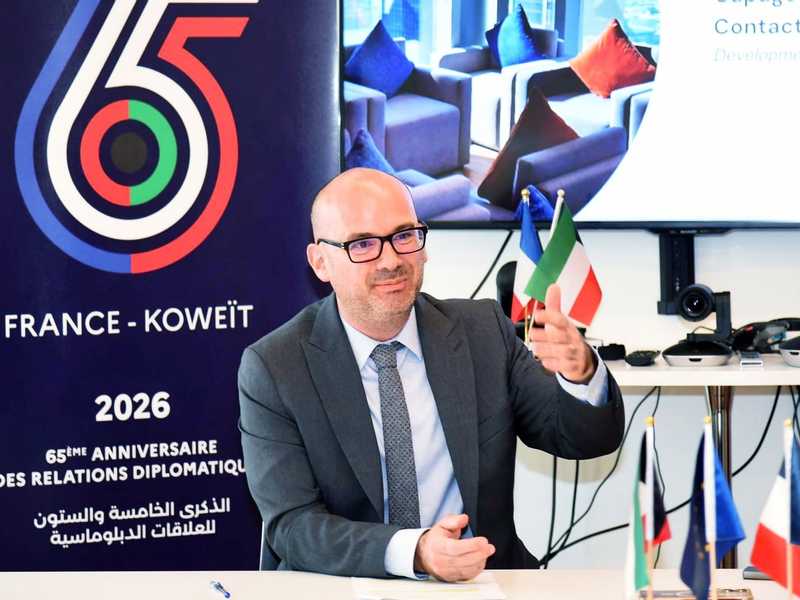
The French Ambassador to Kuwait, H.E Olivier Gauvin, said France continues to rank as the leading travel destination for Kuwaitis and residents within the Schengen area, reflecting sustained and growing demand despite changes in European visa regulations.
Speaking during a press conference held at the French Embassy, attended by representatives of the visa service provider Capago International and the embassy’s consular section, the ambassador outlined the latest developments in Schengen visa procedures and new European travel systems.
Strong Demand Despite Regulatory Changes
Ambassador Gauvin revealed that the embassy received approximately 41,000 visa applications in 2022, rising to 42,000 in 2023, before stabilizing at around 36,000 applications annually during 2024 and 2025.
He explained that the slight decline does not indicate reduced travel interest but is linked to the implementation of the European “Cascade” regulation introduced in 2023.
Under this system, Kuwaiti citizens can obtain a five-year multiple-entry Schengen visa directly, provided their passports remain valid for the required period plus three additional months. The measure represents a major facilitation, eliminating the need for gradual visa extensions previously required in some cases.
The embassy currently processes around 150 visa applications daily, with the number rising to nearly 300 files per day during peak summer travel periods. Increased seasonal demand can extend appointment waiting times to four weeks or more, while application processing may take up to one month.
Very Low Rejection Rate for Kuwaitis
The ambassador highlighted the strong level of confidence in Kuwaiti applicants, noting that rejection rates for Kuwaiti citizens remain extremely low at just 0.2 percent, compared to an overall rejection rate of approximately 2.6 percent for all nationalities in 2025.
He clarified that Schengen short-stay visas allow travelers to remain within the Schengen zone for up to 90 days within any 180-day period, stressing that overstaying beyond this limit is not permitted.
France also continues to welcome Kuwaiti students pursuing higher education, with applications for long-stay visas beginning through the Campus France office at the French Institute in Jabriya before moving to the visa application stage.
Official Application Channel Only
Ambassador Gauvin emphasized that the only authorized entity for submitting visa applications is the official Capago center, operating in coordination with the embassy.
He warned applicants against intermediaries or offices claiming to accelerate procedures for additional fees, stressing that such services do not influence processing time or visa decisions.
Applicants must first complete their application electronically through the France-Visas platform, then book an appointment to submit documents in person and provide biometric data, including fingerprints and photographs.
Children under 12 years old and applicants whose fingerprints were registered within the past 59 months are exempt from biometric collection for short-stay visas. However, fingerprint validity may expire before a five-year visa ends, requiring re-registration during future applications.
Early Applications Recommended
The ambassador advised travelers to submit applications up to six months before their intended travel dates to avoid seasonal congestion. Improvements to the appointment system, including online prepayment, have helped reduce missed bookings and improve appointment availability.
He also stressed that travelers must apply through the embassy of the country that represents their main destination or longest stay within the Schengen area. Failure to do so may lead to questioning by border authorities upon arrival.
Requirements for Each Trip
For every journey, visa holders must present proof of accommodation, valid travel insurance, evidence of sufficient financial means, and a return ticket. The Cascade five-year visa applies exclusively to Kuwaiti citizens, while other nationalities must apply separately for each visit.
Regarding passport renewal, Gauvin explained that a valid visa remains usable in an expired passport, provided travelers carry both the old and new passports during travel.
Special Procedures for Domestic Workers and Medical Travel
The ambassador noted that visas for accompanying domestic workers depend on the worker’s nationality rather than the employer’s and require additional documentation, including employment contracts, insurance coverage and proof of compliance with French labor regulations.
Travel to France for medical treatment is also permitted under specific procedures when treatment costs are officially covered by the Kuwaiti government. France remains one of the leading medical destinations for Kuwaiti patients seeking specialized healthcare.
Appointment Rules and Exempt Categories
Arun Yamani, Director of Operations at the Capago International, stressed that entry to the center is strictly by prior appointment, with applicants allowed to arrive only within 15 to 20 minutes of their scheduled time. Intermediaries and service agents are not permitted to enter, except for premium appointment holders.
However, five categories are exempt from appointment requirements: emergency medical cases, military personnel on official missions, diplomatic passport holders, students, and spouses of French citizens.
New European Travel Systems
Ambassador Gauvin also highlighted two newly introduced European systems affecting travelers:
The Entry and Exit System (EES), implemented in October 2025, digitally records the entry and exit of non-EU travelers through biometric data collection.
The European Travel Information and Authorization System (ETIAS), expected to launch by the end of 2026, will require prior electronic travel authorization for visa-exempt travelers.
As travel demand continues to grow, French officials encouraged applicants to plan early and follow official procedures to ensure smooth processing, reaffirming France’s position as one of the most preferred destinations for Kuwaiti travelers — whether for tourism, education or medical treatment.