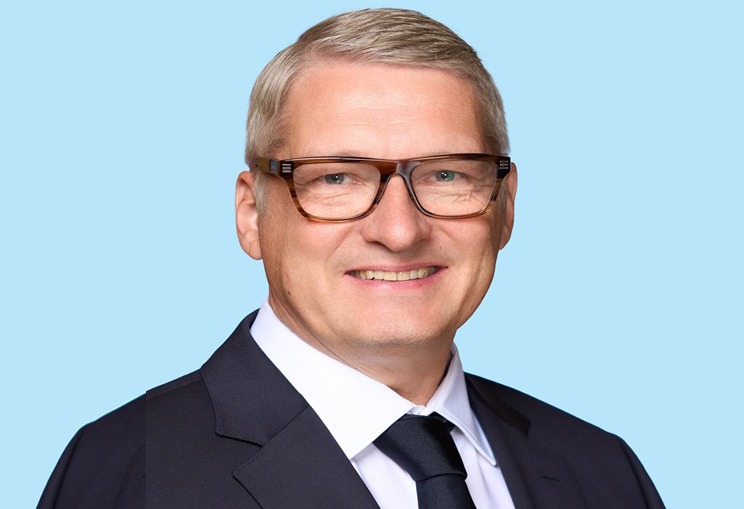
Finnish Ambassador Juha Mustonen says education, innovation, resilience and trusted partnerships are bringing Finland and Kuwait closer.
By Reaven D’Souza
Executive Managing Editor
The Times Kuwait
Happiness, in Finland, is not something to chase. It is something to build. That philosophy may offer one of the most intriguing explanations for why Finland has once again been named the world’s happiest country for the ninth consecutive year in the 2026 World Happiness Report.
Finland’s approach describes this achievement as the result of an “infrastructure of happiness”: a society shaped around trust, education, equality, nature, work-life balance, security and the freedom to make meaningful choices.
At the heart of this philosophy is the Finnish sauna, a tradition that offers more than relaxation. It provides a space to step away from daily pressures, disconnect from the outside world and reconnect with oneself and others. This distinctly Finnish understanding of well-being offers an interesting window into a country whose relationship with Kuwait is now entering a broader and more ambitious phase.
From education and lifelong learning to digital transformation, cybersecurity, critical infrastructure, investment and tourism, Finland and Kuwait are exploring new areas of cooperation while building on more than five decades of diplomatic relations.
Speaking to The Times Kuwait, Finnish non-resident Ambassador to Kuwait based in Doha H.E. Juha Mustonen said the upcoming visit of Finnish Deputy Foreign Minister and Under-Secretary of State for International Trade Jarno Syrjälä reflects the growing momentum in bilateral relations and the desire to translate longstanding friendship into new areas of practical cooperation.
A relationship built on shared principles
Finland and Kuwait established diplomatic relations in 1969, and Ambassador Mustonen describes the relationship as one founded on mutual respect, trust and friendship. He also points to 1990 as a defining moment, when Finland supported Kuwait’s sovereignty following the Iraqi invasion through international legal frameworks and diplomatic engagement.
Following Kuwait’s liberation, Finland contributed to the country’s recovery and environmental rehabilitation, while bilateral cooperation gradually expanded into education, health, technology and innovation.
Today, the relationship is broadening further. “While trade and education remain important pillars of our relationship, we are increasingly seeing cooperation expand into areas such as security, technology, innovation, resilience and investment,” Mustonen said.
He believes the timing is particularly relevant as Kuwait pursues its Vision 2035 agenda while Finland brings expertise in many of the sectors supporting that transformation.
Education: the foundation of Finland’s success
Education remains one of the strongest bridges between the two countries. Finland’s education experience, according to Mustonen, aligns closely with Kuwait Vision 2035, particularly its emphasis on creativity, lifelong learning and human capital development.
“Finland prioritizes problem-solving, innovation and student-centered education,” he said, noting that these approaches can help prepare young people for the skills required in a rapidly changing economy. The Finnish model also places importance on cooperation between educational institutions, government and industry. This ecosystem approach, he said, can help connect education, innovation and workforce requirements.
Mustonen sees considerable scope for cooperation beyond the Finnish early childhood education methods that have already established a presence in Kuwait. Potential areas include teacher training, professional development, curriculum modernization, digital learning, vocational education and closer links between education and industry.
He also sees opportunities for stronger university and research partnerships, student exchanges, researcher mobility and joint academic programmes.
“The human dimension is equally important,” he said, emphasizing that people-to-people connections can create lasting relationships, mutual understanding and trust.
Technology must serve people
As both countries pursue digital transformation, the Ambassador sees considerable potential for cooperation in artificial intelligence, educational technology, digital skills and lifelong learning.
Finnish expertise in educational technology, AI-enabled learning, cybersecurity education and workforce reskilling could complement Kuwait’s digital transformation agenda, he said.
But Finland’s experience also offers a broader lesson: technology itself is not the answer. “Technology alone does not transform education,” Mustonen said. Its real impact comes when it empowers teachers, engages learners and develops skills relevant to the future.
He stressed that AI and digital tools should be viewed as enablers rather than ends in themselves, with successful education systems continuing to emphasize teacher capacity, critical thinking, creativity and lifelong learning.
From security to resilience
Another emerging area of cooperation is comprehensive security and national resilience. inland’s approach is based on the understanding that resilience is a collective responsibility involving government, the private sector, academia and citizens.
For Kuwait, Mustonen identifies preparedness, critical infrastructure protection, cybersecurity and continuity of essential services as areas where cooperation could be particularly relevant.
“Resilience is not only about security agencies,” he said. “It is about building trust, strong public-private partnerships and a culture of shared responsibility.” The Finnish approach also recognizes that resilience depends on the ability to anticipate, respond to and recover from disruptions.
At the same time, Mustonen stresses that cooperation should be a two-way exchange. Recent developments in the Middle East, he noted, have highlighted Kuwait’s own experience in operating in a complex and rapidly changing regional environment, including its agility, crisis management, diplomacy and ability to maintain continuity amid uncertainty.
Critical infrastructure at the centre
Among the areas being explored are telecommunications, cybersecurity, security of supply, civil protection and critical infrastructure. Mustonen sees particular immediate momentum around critical infrastructure because it brings many of these areas together.
“Today, resilience depends not on a single technology, but on the ability to protect essential services, maintain connectivity and ensure continuity under any circumstances,” he said.
The Finnish delegation accompanying the Deputy Foreign Minister includes companies and institutions with expertise in telecommunications, defence, digital security, space systems and nuclear and radiological safety.
Among the Finnish companies participating are Nokia, Patria, Temet and ReOrbit.”
Mustonen also highlighted the potential role of Finland’s Radiation and Nuclear Safety Authority (STUK), particularly in regulation, safety oversight, emergency preparedness and capacity building.
Kuwait as a gateway to the GCC
The Ambassador believes Kuwait’s strategic location, regional connectivity and Vision 2035 ambitions could make the country an attractive partner for Finnish companies seeking opportunities in the wider Gulf.
He said Finland’s companies have expertise that could complement Kuwait’s priorities in digital transformation, economic diversification, critical infrastructure and resilience. At the investment level, the focus is currently on facilitating contacts and identifying areas of mutual interest.
Potential opportunities include innovation, digitalization, resilience and human capital development, while Finland itself offers Kuwaiti investors access to a technology and innovation ecosystem encompassing areas such as deep technology, renewable energy, digital infrastructure and advanced technologies.
Mustonen also sees opportunities for greater Kuwaiti participation in Finland’s technology and startup ecosystem, particularly in AI, cybersecurity, digitalization and advanced technologies.
Tourism: discovering a different Finland
Beyond business and government-to-government cooperation, Mustonen sees tourism as an important way to strengthen people-to-people relations. Finland offers Kuwaiti travellers the Northern Lights, thousands of lakes and the Midnight Sun, but the Ambassador believes there is much more to discover.
Safety, cleanliness, sustainability, high-quality services, luxury accommodation, wellness experiences, family activities, shopping, design and Nordic cuisine all form part of the Finnish tourism proposition.
For Kuwaiti visitors accustomed to extensive international travel, Finland can offer something markedly different: space, nature, privacy and the opportunity to disconnect from everyday pressures while remaining within a modern and welcoming society.
The growing “coolcation” trend, he noted, is also creating new interest in destinations offering milder climates, clean air and natural surroundings. And perhaps this brings the story back to where it began happiness.
Finland’s appeal is not simply about what visitors can see. It is also about what they can experience: tranquility, nature, simplicity and time to slow down.
A new chapter in bilateral relations
For Mustonen, the current momentum in Finland–Kuwait relations is being driven by a combination of strong historical ties and shared ambitions for the future. “In an increasingly uncertain world, countries are placing greater emphasis on resilience, critical infrastructure and trusted partnerships,” he said. “Finland and Kuwait share many of these priorities.”
The two countries are therefore moving beyond a relationship traditionally centred on trade and education toward a wider partnership encompassing technology, innovation, investment, security and resilience.
For Mustonen, success would ultimately be measured not simply by agreements signed during a visit, but by what follows. He hopes to leave Kuwait with stronger relationships, a better understanding of each country’s priorities and concrete ideas for future cooperation.
“If this visit leads to new partnerships, follow-up discussions and long-term engagement between Finnish and Kuwaiti institutions and companies,” he said, “I would consider it a very successful outcome.”
More than five decades after diplomatic relations were established, Finland and Kuwait appear to be looking toward a relationship shaped increasingly by knowledge, innovation, resilience and people-to-people connections.
And perhaps Finland’s own experience offers an additional idea worth considering: that the strongest societies are built not only around economic or technological infrastructure, but also around the less tangible infrastructure of trust, well-being, community and human connection.