Finance Ministry signs protocol with four regulators to strengthen tax information exchange
. . . strengthens global compliance; boost tax data sharing framework
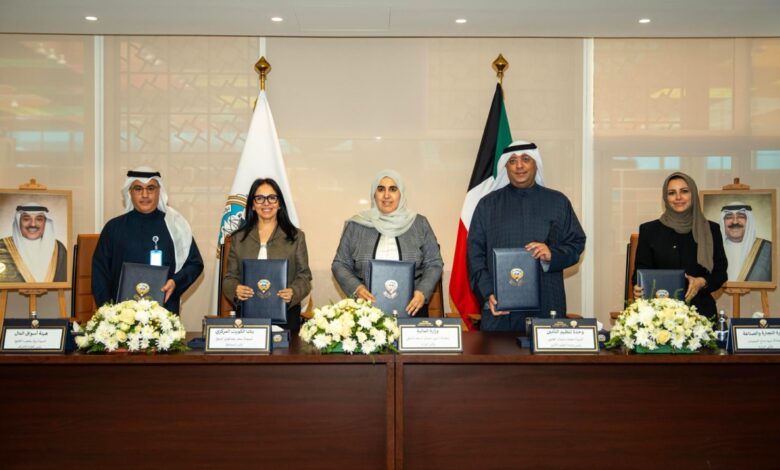
The Ministry of Finance has signed a cooperation protocol with four regulatory bodies to enhance the exchange of information for tax purposes, in line with efforts to strengthen institutional coordination and implement the provisions of Decree Law No. 6 of 2024 and its executive regulations.
The agreement was signed by the Undersecretary of the Ministry of Finance, Asil Al-Munaifi, alongside the Undersecretary of the Ministry of Commerce and Industry, Marwa Al-Jaidan, the Deputy Governor of the Central Bank of Kuwait, Sahar Al-Rumaih, the Head of the Supervision Sector at the Capital Markets Authority, Ziad Al-Faleej, and the Head of the Insurance Regulation Unit, Mohammed Al-Otaibi, reports Al-Rai daily.
The protocol seeks to organize and coordinate cooperation between the Ministry of Finance and the participating regulatory authorities to ensure effective implementation of information exchange agreements for tax purposes.
It also aims to strengthen compliance with relevant international standards, thereby enhancing tax transparency and supporting Kuwait’s readiness for periodic evaluations conducted by the Global Forum on Transparency and Exchange of Information for Tax Purposes in cooperation with the Organization for Economic Co-operation and Development.
Speaking on the occasion, Al-Munaifi said the signing of the protocol reflects the Ministry’s commitment to reinforcing institutional integration with supervisory authorities to ensure the effective application of legislation and to achieve the highest levels of compliance with international standards governing tax information exchange.
The Ministry noted that the protocol represents an important step toward consolidating inter-agency cooperation and strengthening governance mechanisms related to information sharing. It added that the move underscores Kuwait’s commitment to internationally approved standards and practices, while serving the broader public interest and reinforcing the country’s standing in global transparency assessments.