Eradicating Gender Violence, a Deep-Rooted Social Scourge
The Times Kuwait Report
Violence against women and girls is a global social scourge that has persisted and escalated across wide settings, from schools, workplaces and public spaces to the privacy of homes, and from real world to the online world. Despite continued efforts by international organizations, governments, businesses, academia, civil society organizations, and individuals, the menace of gender-based violence (GBV) remains prevalent and deeply pervasive.
In Kuwait, while the authorities have introduced legislative and institutional reforms, and supported social efforts to combat GBV, challenges persist. The Domestic Violence Law enacted in 2020, created a national committee to develop policies against domestic violence and establish shelters, a hotline, and legal assistance for victims of violence, including allowing women to obtain restraining orders against their abusers.
However, several provisions in the Domestic Violence Law have shortcomings. For instance, the law also does not set penalties for domestic violence as a crime itself, and it excludes former partners and those in relationships outside of marriage. Moreover, since the issue of domestic violence is often considered a private family matter, this leads to significant under-reporting. Activists and experts have also cited the continued lack of legal resources and shelters for survivors as issues exacerbating the problem.
Also, in March this year, the government enacted other significant reforms to the 1960 Penal Code, including repealing Article 153, which had allowed for reduced sentences in ‘honor killings’. Additional key changes include the repeal of Article 182, which allowed perpetrators of kidnapping to avoid punishment by marrying their victim, and amendment to the Personal Status Law that raised the minimum marriage age to 18 for both sexes. Nevertheless, in certain aspects of the law, such as in relation to marriage and divorce, women and men are still not deemed equal.
The recent reforms are part of a broader push by the government to strengthen gender equality in the country. While some of the personal status laws are based on religious laws and are socially contentious, it is laudatory that Kuwait remains committed to amending its laws to align them with international standards, and to conform to treaties and conventions the country has ratified on gender and human rights.
During this year’s International Day for the Elimination of Violence against Women (IDEVAW), observed annually on 25 November, Kuwaiti Sociologists Association convened a forum titled ‘Faces of Silent Violence’, to highlight the invisible, yet deeply pervasive gender based violence that prevails, and its impact on women, families, and society. The forum emphasized that violence against women is not merely an individual act, but rather a deeply rooted social phenomenon, influenced by family, education, economic, cultural, and political factors.
Many of the speakers at the forum highlighted social pressures—fear of stigma, overbearing shame, or social diktats that maintain suffering in silence is a virtue, and that women are responsible for ensuring family cohesiveness—compel women victims to remain silent. But this silence comes at a significant cost to the mental and physical well-being and personal development of victims, and perpetuates generational patterns of suppression and silence.
Addressing the gathering, Fatima Al-Ruwaieh, head of the Women and Children Committee at KSA, described silent violence against women as particularly cruel because it operates unseen, eroding women’s well-being while remaining hidden from public view. She explained that these suppressed emotions manifest as internalized stress and burnout, turning women into silent victims of psychological and emotional strain. She urged for actionable solutions to build a society where wisdom prevails over anger, and safety and stability are guaranteed for all.
On a related note, in early September this year, the United Nations Special Rapporteur on violence against women and girls, Reem Al-Salem, paid an official visit to Kuwait. Special Rapporteur is an independent human rights expert, appointed by the United Nations Human Rights Council to assess, lend support, and offer recommendations on specific human rights issues.
In her end-of-mission statement, Al-Salem welcomed Kuwait’s legal and institutional frameworks for preventing and responding to violence against women and girls, and the recent reforms it has made, including adoption of the 2020 Domestic Violence Law and the reforms in 2025 of the Penal Code. She also expressed appreciation for changes to Personal Status Law on the minimum age of marriage.
However, she noted that despite important legal strides in these directions, the current institutional architecture for the prevention and response to discrimination and violence must be reviewed and adjusted in order to effectively address gaps in implementation and enforcement. She emphasized that the priority must be to focus on survivors of violence by creating better conditions for them to come forward to report violence, and to pursue steps to obtain justice, protection, and support for them.
“Laws are only as good as they are implemented, so while it is great to see that progress is being made in designing new laws and amending existing ones, the critical thing is the progress being made in implementing these laws, and putting in place better mechanisms to implement them. I know that this will take a bit of time, but if the political will is there, then we are already halfway through,” said Al-Salem.
Offering her support and expertise in the field of human rights to enhance Kuwait’s efforts on safeguarding the rights of women and girls, the special rapporteur encouraged the government to build on progress achieved so far, by implementing further reforms aimed at combating all forms of violence against women and girls, including sexual harassment and digital violence.
Addressing violence in the digital realm is particularly significant, considering its growing threat to women and girls on online platforms. While official statistics on digital violence in Kuwait are lacking, a recent survey of Kuwaiti female journalists found that 54.2 percent reported receiving threats of humiliation, or being publicly humiliated. While under-reporting on this issue is to be expected, this figure is in alignment with a broader regional study, which showed that 60 percent of women internet users in Arab states experienced online violence in 2024.
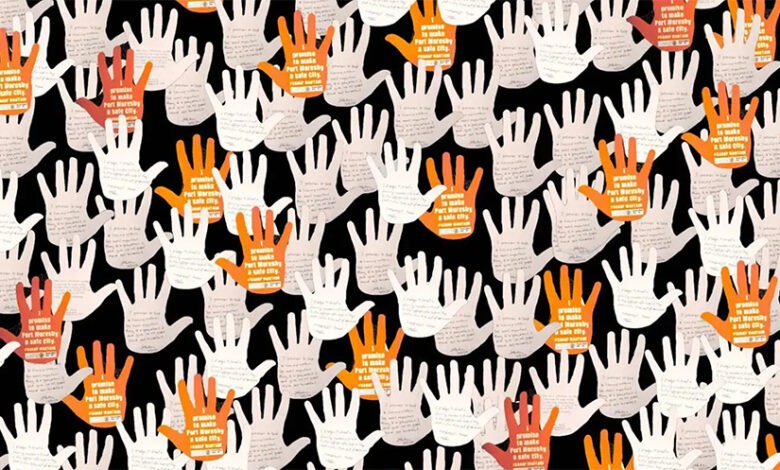
Aptly the theme for this year’s IDEVAW, as well as the multi-year UNiTE campaign, ‘16 Days of Activism to End Gender-Based Violence’, centers around ending digital violence against women and girls. The campaign aims to mobilize all of society to urge governments to end impunity for GBV through laws that penalize it. The campaign also calls on technology companies to ensure the safety of their platforms, and for civil society organizations and individuals everywhere to raise their voices for legislative and institutional changes, and to support victims of GBV.
Reports by UN Women show that the impact of digital violence extends beyond the online world, causing real world harm, with devastating social, economic and psychological harm. Digital violence is not an inevitable price we pay for progress; it is a perversion of progress, a travesty of justice, a denial of gender equality, and an abuse of human ingenuity. It is nothing but a heinous form of violence, where perpetrators hide behind anonymity and act with impunity due to existing structural inequalities, and the deafening silence of society.
We need to turn data on digital violence into action, and advocacy into policy. We need punitive and preventive measures to weed out perpetrators and abusers, as well as steps to raise awareness, provide supportive and rehabilitative resources to victims. Together we need to call for an end to all forms of violence, especially those directed against women and girls online, so that everyone can freely and safely access the digital space and make it a tool of empowerment and equality.