- Europe faces its deepest post-Cold War economic crisis as high energy costs, industrial decline, and geopolitical pressures collide. EU loans to Ukraine intensify financial risks amid rising social unrest and US-China strategic competition.
- Rising social unrest and regional inequalities highlight the limits of Europe’s political ambitions amid strict regulations for domestic producers versus lenient rules for imports.
- Europe’s strategic vulnerability grows as US-China competition deepens, with Chinese control of critical industrial inputs and fragmented EU policies leaving the continent dependent and exposed.
- Europe emerges from 2025 confronting a structural economic crisis more severe than any experienced since the end of the Cold War.
At the December EU summit, leaders pledged €90 billion in loans to Ukraine for 2026–2027, despite Kyiv grappling with a war-torn economy, a fiscal deficit exceeding 20 percent of GDP, and no credible timeline for recovery.
Analysts warn this open-ended support deepens Europe’s exposure to financial risk at a time when its economic foundations are already fragile.
The continent faces multiple pressures: high energy costs following the transition from Russian pipeline gas to pricier LNG, declining competitiveness in energy-intensive industries, and a weakening euro.
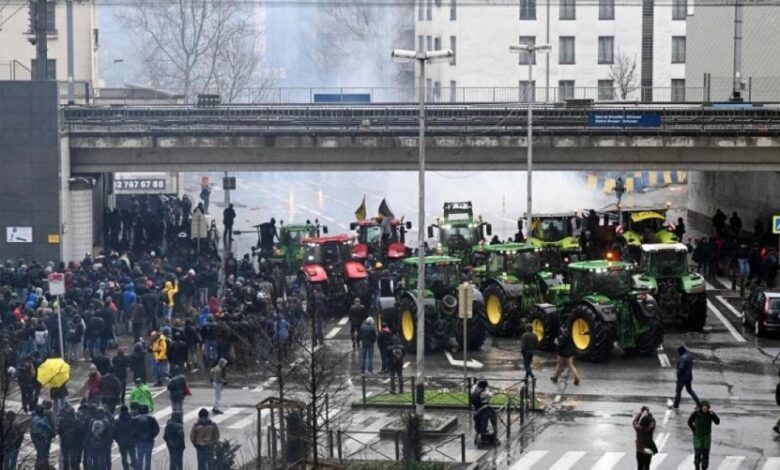
Social unrest is rising, particularly among farmers across Poland, France, Belgium, Germany, Spain, and Portugal, who face strict regulatory standards while imports benefit from more lenient rules.
This disparity has widened regional inequalities and exposed the limits of Europe’s political ambitions relative to its economic capabilities.
Europe’s structural challenges are compounded by the intensifying US-China strategic competition. While the United States pursues a doctrine of strategic denial, restricting China’s access to critical technologies and incentivizing supply chain relocation, China leverages its industrial dominance to redirect exports and deepen its industrial presence in Europe.
The electric vehicle and battery sectors highlight Europe’s vulnerability: China controls critical raw materials and over two-thirds of battery production, leaving Europe dependent on imported inputs even as domestic production grows.
European policy responses, from countervailing duties on Chinese EVs to the Zero Industry Act and Critical Raw Materials Act, remain fragmented and lack enforceable mechanisms.
Analysts argue that without a unifying European doctrine that integrates industrial policy, technological strategy, and investment screening, Europe risks remaining a buffer zone in the US-China confrontation rather than an independent strategic actor.
The continent now faces three strategic paths: incremental adjustments and managed continuity, which prolongs decline; closer alignment with US strategies, risking economic friction with China; or the creation of a genuine EU doctrine of sovereignty, requiring coordinated industrial, technological, and investment policies.
Analysts warn that only the latter offers a realistic path to reversing structural decline and preserving Europe’s economic and geopolitical weight. Without decisive action, Europe is poised to drift toward reduced global influence under mounting external pressures.