Economic Turbulence, Societal Adaptation Define 2025

The Times Kuwait Report
The year 2025 was marked by global trade tensions, catastrophic climate related events, continuing conflicts, as well as breakthroughs in health, sciences, and technology. The Russo-Ukrainian, and Sudan civil wars continued in 2025, while the nearly two-year conflict in Gaza thankfully drew to a close in October. The year also saw internal political crises and social dissatisfactions that spread out into the streets, in many countries.
New advancements in artificial intelligence (AI) raised both cheers and fears about its potential, as AI evolves from a tool that assists humanity to become an utility that works alongside people, transforming how they use and interact with technology. And, on the political front, if elections are an insignia of democracy, then this form of governance thrived in 2025 with nearly 60 parliamentary and presidential electoral exercises taking place around the world.
The first-quarter milestone of the 21st century was in short a complex and chaotic year of geopolitical shifts, natural and man-made calamities, economic turmoils, and scientific advances. On a personal level, amid the uncertainties that defined 2025, people navigating the difficulties, adapted and found purpose amidst despair. They learned lessons from losses, embraced resilience, and cherished the small joys that life brought.
Here we look at some of the major events that shaped the past year, including the continuation and escalation of major armed conflicts, as well as social, economic and political upheavals. We also spotlight positive elements that underline the unwavering human spirit to persevere and push limits, even against the greatest odds, finding courage in moments of doubt, and transforming hardship into growth and purpose. As 2025 transitions to a new year, it leaves behind significant challenges, but also offers hope and strength for 2026.
January:
1: Poland assumes the rotating presidency of the European Union for the first-half of the six-month period before passing it on to Denmark. Regionally, Kuwait took over the year-long presidency of the Gulf Cooperation Council. Kuwait’s period at the helm was marked by key breakthroughs in advancing GCC integration, boosting regional security, and raising the GCC status at regional and international levels.
6: Indonesia becomes the tenth member to join BRICS, the intergovernmental organization named after its early members, Brazil, Russia, India, China, and South Africa. Other members in the bloc include Egypt, Ethiopia, Iran, and the United Arab Emirates.

7: A 7.1 magnitude earthquake strikes Tibet, killing at least 126 people, while another 338 are injured. On the same day, Greater Los Angeles experiences the most destructive wildfires in its history, exposing the limits of traditional fire-fighting tactics.
10: The European Copernicus Climate Change Service reports that 2024 was the world’s hottest year on record, and the first calendar year to pass the 1.5°C of global warming, a threshold set by the Paris Climate Conference in 2015.
February:
4: China announces export controls and increased tariffs on certain American imports in retaliation for Donald Trump’s imposition of tariffs on Chinese goods.
17: A series of ongoing nationwide protests are held in Indonesia following the enactment of legislation increasing military involvement in government roles.
18: Egypt announces the discovery of Thutmose II’s tomb by a joint British-Egyptian team, the first royal tomb to be discovered since Tutankhamun’s in 1922. It is the 15th and final pharaoh tomb from the Eighteenth Dynasty of Egypt to have been found by archeologists.
March
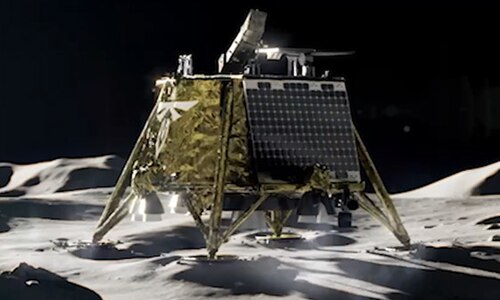
2: Firefly Aerospace, a private US space tech company becomes the first commercial venture to successfully land on the Moon with no technical issues, with its Blue Ghost Mission 1.
20: Kirsty Coventry from Zimbabwe is elected as the 10th President of the International Olympic Committee (IOC) during the 144th IOC Session in Greece. She is the first woman and the first from the African continent to hold this post.
21: South Korea experiences one of its worst wildfires in modern history; over 87,000 hectares of land are destroyed in South Gyeongsang Province, killing at least 32 people.
28: A 7.7-magnitude earthquake occurs in Myanmar, resulting in 5,413 killed and 11,402 injured
April
1: Fram2, a private crewed space flight mission launches aboard a SpaceX Falcon 9 rocket, becoming the first crewed spaceflight to enter a polar retrograde orbit.
2: US President Donald Trump issues sweeping trade tariffs on many countries, including a 10 percent baseline tariff for all imports, plunging global trade in turmoil.
13: Expo 2025, the six-month long global exhibition opens in Osaka, Japan. It is the second time that Japan is hosting the expo after the initial one held in 1970.
21: Pope Francis, head of the Catholic Church since 2013, dies at the age of 88. The pope’s funeral five days later is attended by delegations from 164 countries, including 82 leaders, and 250,000 members of the public.
May:
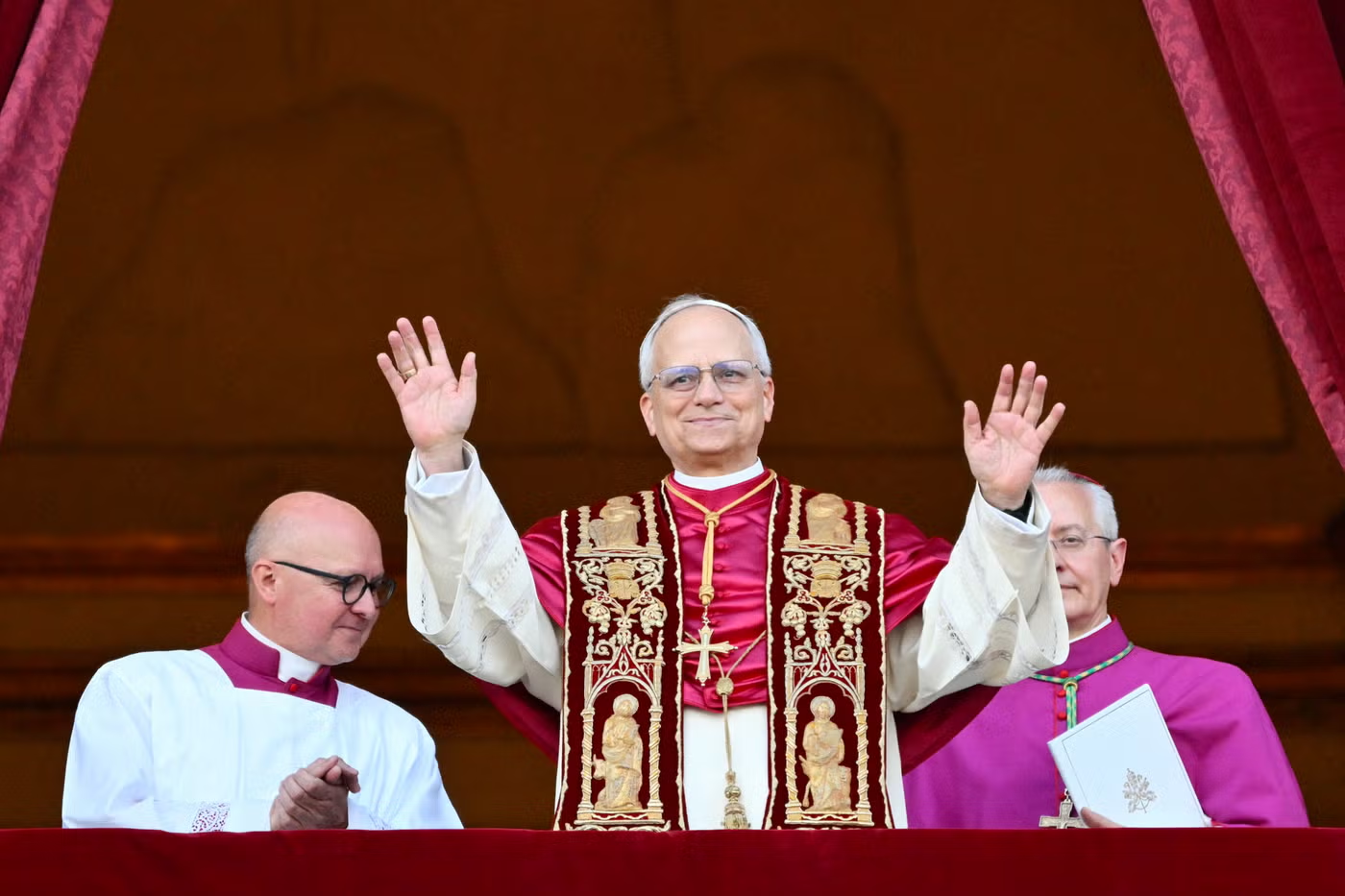
8: Robert Francis Prevost is elected as Pope Francis’s successor, on the fourth ballot by a collegium of 133 cardinal electors. He takes the name Leo XIV, and becomes the first pope from North America, and the first from the Order of Saint Augustine.
20: The 78th World Health Assembly, held under the aegis of the World Health Organization, agrees on a Pandemic Agreement to strengthen international cooperation for preventing, preparing, and responding to future pandemics
28: More than 500 people are killed, and hundreds more missing after flooding in Mokwa, Nigeria
June
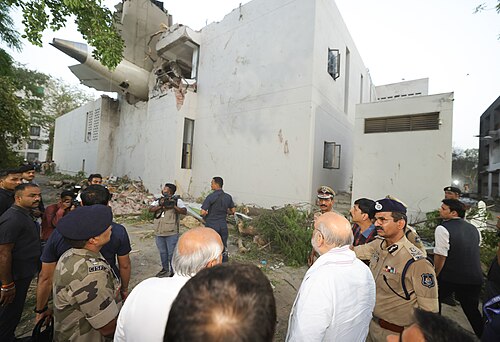
12: Air India Flight 171, a London-bound Boeing 787, crashes into a building after take-off from Ahmedabad, India, killing 229 passengers, 12 crew on board, and 19 people on the ground. One passenger survives the crash.
13: Israel conducts air strikes against Iran’s nuclear facilities, killing military commanders. Iran retaliates
22: The United States carries out B-2 bomber airstrikes on three Iranian nuclear sites in Fordow, Natanz, and Isfahan. The next day Iran launches missiles at US bases in Qatar and Iraq in response to the previous day’s strikes.
25: The Axiom Mission 4, a private crewed space mission to the International Space Station is launched. The mission involves four astronauts, including the first astronaut from India, Shubhanshu Shukla.
July
4: At least 135 people are killed and over a hundred reported missing during a flood of the Guadalupe River in Central Texas in the US
11: The 2025 World Aquatics Championships opens in Singapore, with China emerging on the top in the medals tally by close of the competitions on 3 August.
23: The International Court of Justice (ICJ) rules that countries can sue each other over historical emissions of greenhouse gases and the effects of climate change.
24: Armed conflicts break out between Cambodia and Thailand after the escalation of a border dispute. At least 39 people are killed and more than 100,000 displaced due to the conflicts
August:
7: The 12th World Games opens in Chengdu, China with China topping the medals tally by the end of the Games on 17 August
8: Armenia and Azerbaijan sign a peace deal to end 37-year-old hostilities regarding the Nagorno-Karabakh conflict.
31: An earthquake in eastern Afghanistan kills over 2,200 people and injures 3,500. On the same day, between 370 and 1,000 people are reported killed in a landslide caused by heavy rain that buries the village of Tarasin in the Marrah Mountains of Central Darfur in Sudan, leaving a sole survivor
September:
8: Mass anti-government protests erupt in Nepal, resulting in at least 22 deaths and hundreds injured. Prime Minister K.P. Sharma Oli resigns the following day amidst the demonstrations. Four days later former chief justice Sushila Karki assumes office as interim prime minister of an interim government.

13: The 20th World Athletics Championships opens in Tokyo, Japan. The nine-day event witnesses the participation of 198 nations, with the US winning the highest tally of medals.
30: An earthquake with a seismic magnitude of Mw 6.9 shakes the island of Cebu in the Philippines, leaving 71 people dead and 559 injured
October:
9: Israel and Hamas agree to the first phase of a Gaza peace deal, nearly two years after the conflict began on 7 October 2023 with Hamas launching an attack on Israel, resulting in the death of 1,195 Israelis and foreign nationals and 251 taken hostage. The Israeli offensive that followed led to the death of over 70,000 Palestinians in Gaza and injuries to more than 171,000.
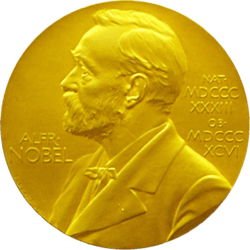
10: The 2025 Nobel Peace Prize is awarded to María Corina Machado of Venezuela. At the time of the prize’s announcement, Machado was hiding inside Venezuela fearing repression from the government. The prize was received on her behalf by her daughter.
26: Timor-Leste becomes the 11th member state of ASEAN, being the first enlargement of ASEAN since Cambodia’s entry in 1999 and comprising all countries of Southeast Asia
28: Hurricane Melissa, the third most intensive Atlantic storm on record, makes landfall in Jamaica as a Category 5 hurricane, with wind speeds of 295 km/h causing 102 confirmed deaths and many more injured or missing..
November:
10: The two-week long COP30 climate summit opens in Belém, Brazil, focusing on the role of the Amazon rainforest in climate action. When curtains fall on 21 November, the key to curbing climate change—cutting fossil fuels—remains elusive.
25: A new report published by the United Nations shows that Indonesian capital Jakarta has surpassed Japanese capital Tokyo as the world’s largest city, with a population of 42 million people
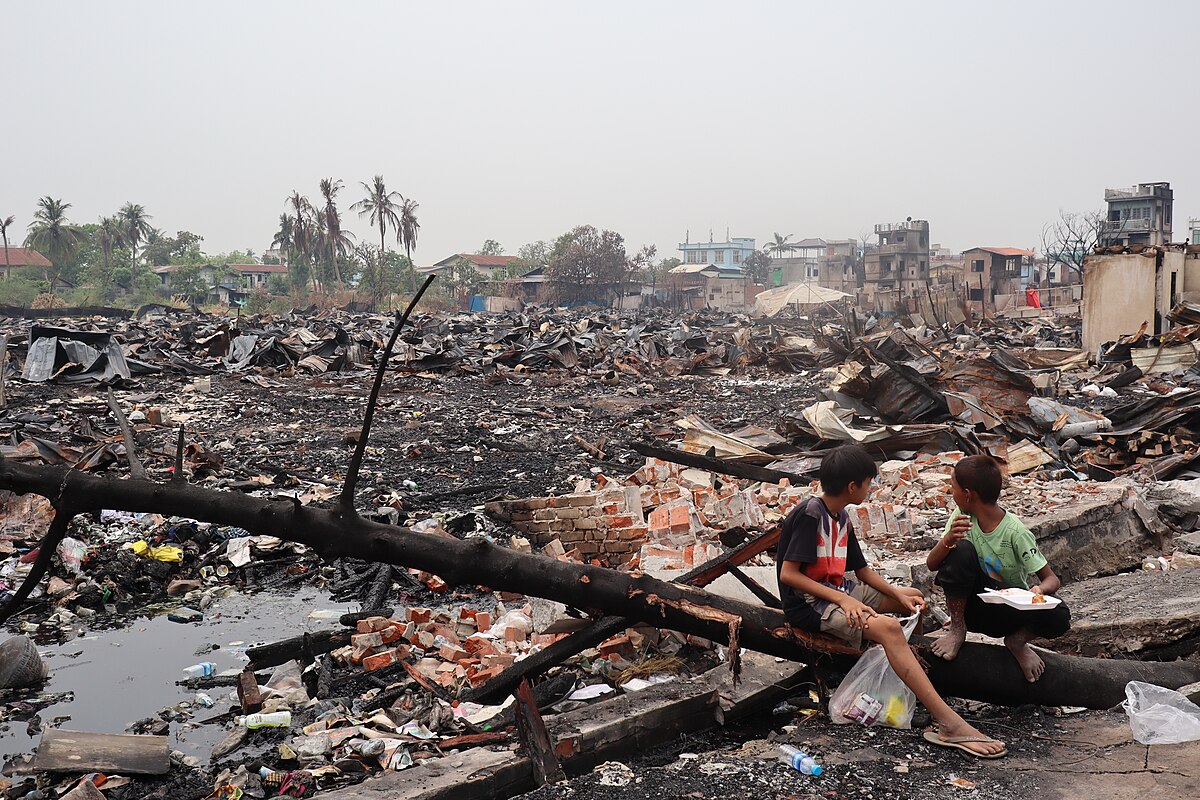
26: Cyclone Senyar causes at least 1,390 deaths and 186 missing in Thailand, Malaysia, and Indonesia. Two days later, flooding and landslides caused by Cyclone Ditwah leave at least 647 dead and 183 missing across Sri Lanka and South India
December
14: Several barbarous terrorist attacks took their toll around the world in 2025, they have not been included here, as we believe repeated media coverage is often what the perpetrators seek through their vile acts.

21: The 35th edition of the biennial Africa Cup of Nations opens in Morocco. It is slated to conclude on 18 January 2026.
28: More elections are slated before the year rings to a close, with elections scheduled in the Central African Republic, Guinea, and Kosova.