- India urges restraint as Middle East conflict escalates, government prioritizes safety of citizens
- New Delhi monitors the crisis closely, calls for dialogue
- Moves to protect citizens and energy security as 67,000 Indians return amid rising tensions
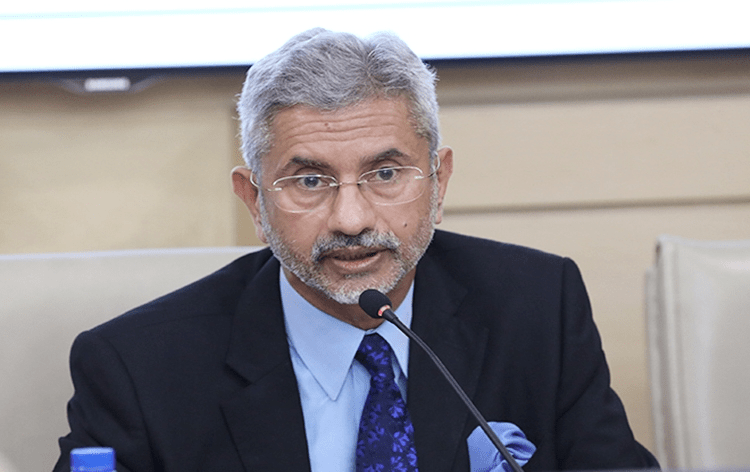
In a suo motu statement to Rajya Sabha, External Affairs Minister Dr. S. Jaishankar outlined the Indian government’s response to the ongoing conflict in the Middle East, emphasizing the need for dialogue, restraint, and the protection of civilians.
The minister noted that the government had issued an initial statement on 28 February 2026, expressing deep concern over the escalation and urging all parties to avoid further tensions.
India continues to advocate for diplomacy to address the underlying issues while underscoring the importance of respecting the sovereignty and territorial integrity of all states in the region.
Given the seriousness of the situation, the Cabinet Committee on Security (CCS) convened on 1 March under the chairmanship of Prime Minister Narendra Modi.
The committee was briefed on airstrikes in Iran and subsequent attacks in several Gulf countries.
The CCS focused on the safety and security of the Indian community in the region, assessing the impact on regional security, economic activities, and commercial operations.
Officials also discussed challenges faced by Indian travelers transiting the region and students appearing for examinations abroad. The committee directed all relevant ministries to take appropriate measures to address these issues.
Dr. Jaishankar added that the Prime Minister continues to monitor developments closely, while ministries and agencies coordinate to ensure effective responses for Indian nationals affected by the crisis.
Nearly 10 million Indians live and work in Gulf countries, while several thousand others are in Iran for education or employment. The region also remains critical to India’s energy security and trade, with bilateral trade with Gulf nations exceeding $200 billion annually.
Dr Jaishankar noted that the conflict has already disrupted normal life and economic activities in several parts of the region and raised concerns over supply chains and maritime security. Attacks on merchant shipping have also affected Indian seafarers, with two Indian mariners reported dead and another missing.
India has issued multiple travel advisories since January urging citizens to avoid non-essential travel to Iran and advising those already there to remain cautious and stay in contact with the Indian Embassy.
Following the outbreak of the conflict, the embassy in Tehran facilitated the relocation of Indian students and helped some nationals cross into neighboring countries such as Armenia to return home.
Embassies across the region—including those in Israel, United Arab Emirates, Qatar, Kuwait, Saudi Arabia and Oman—have also issued safety advisories, while the Ministry of External Affairs established a dedicated control room to assist affected citizens and their families.
Indian diplomats have additionally assisted stranded transit passengers in regional hubs such as Dubai, Doha and Abu Dhabi. According to government estimates, about 67,000 Indian nationals have returned home since the crisis began, with dozens of flights continuing to operate to facilitate travel.
Jaishankar said the Indian leadership has maintained close contact with regional leaders, including discussions by Prime Minister Narendra Modi with leaders of several Gulf states and Israel, seeking assurances regarding the safety of the Indian community.
India has also taken humanitarian steps, including permitting an Iranian vessel to dock at Kochi, where its crew is currently being accommodated in naval facilities.
The minister concluded that India’s response is guided by three key priorities: promoting peace and de-escalation, ensuring the safety of Indian citizens in the region, and safeguarding national interests, including energy security and trade flows.
*(suo motu is a Latin legal term meaning ‘on its own motion’)