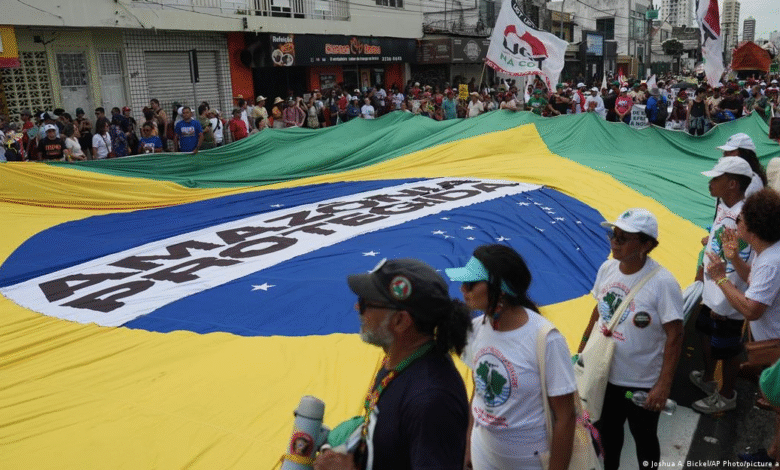
The COP30 climate summit in Belém, Brazil — expected to be a landmark moment for global environmental action — ended with more fizzle than force, as negotiators closed two weeks of tense discussions without a commitment to phase out fossil fuels.
Despite urgent calls from scientists, climate-vulnerable nations, and Indigenous communities, the final agreement fell far short of expectations in what many described as a troubling setback for the planet.
The summit, marked by Indigenous protests, the notable absence of the United States, and even a fire that briefly forced participants to evacuate, culminated in a deal that avoided the world’s most pressing environmental question: how to end reliance on coal, oil, and gas—the primary drivers of global warming, dw.com reports.
Fossil Fuel Phase-Out Blocked
Over 80 countries, including Germany, Colombia, and Kenya, pushed forcefully for a firm roadmap to transition away from fossil fuels, arguing that without it, global temperature targets will slip out of reach.
However, major resistance from China, Saudi Arabia, and several Arab states ultimately stripped the final text of any such commitment.
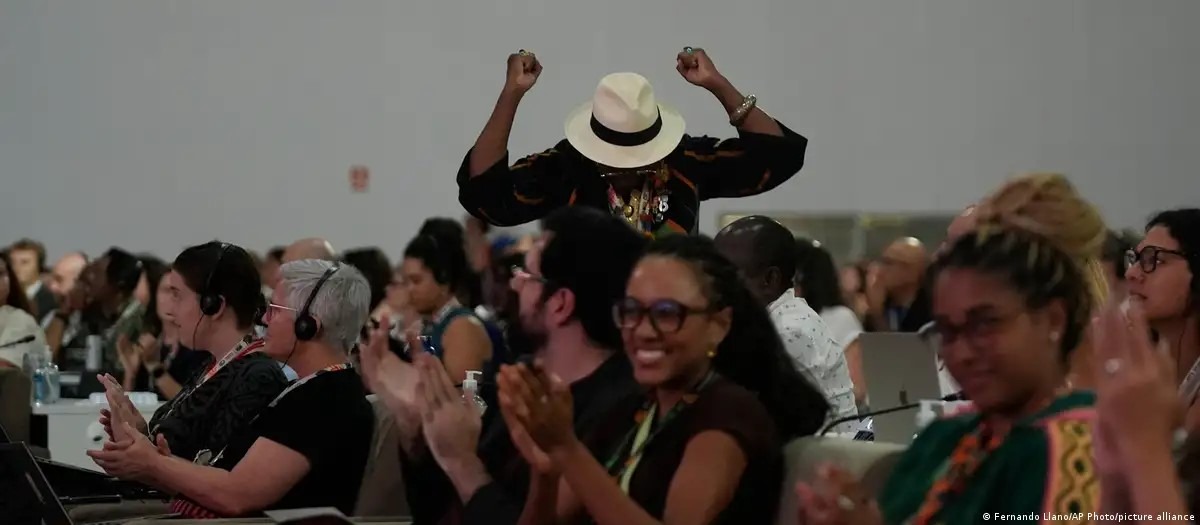
Instead, countries adopted a voluntary proposal encouraging cooperation to help keep the Paris Agreement’s 1.5°C limit alive—a threshold scientists warn the world is on track to breach imminently. An annual dialogue will monitor progress, though critics say it lacks real enforcement.
COP30 President André Corrêa do Lago announced two additional voluntary roadmaps—one for ending fossil fuel dependency, the other for halting deforestation—as well as a first-ever global conference on fossil fuel phase-out scheduled for next April in Colombia. These initiatives, however, remain outside the official UN agreement.
Panama’s head negotiator summed up the frustration: the system, he said, is failing people “at a historic scale” by protecting the very industries responsible for the climate crisis.
Adaptation Funding: A Partial Win for Vulnerable Nations
The final deal calls on wealthy nations to triple adaptation finance—from $40 billion annually to at least $120 billion by 2035—to help communities brace for worsening storms, heatwaves, and rising seas.
Developing countries, many already suffering severe climate impacts, argued they cannot bear the rising costs alone. UNEP estimates they will need $310 billion a year by 2035.
Tensions flared when some developing nations accused wealthier countries of linking adaptation funds to accepting weaker language on fossil fuel phase-outs.
As Tanzania’s envoy Richard Muyung put it: “It’s like you are trading our lives for something we never caused.”
Trade Tensions Surface
The final agreement introduces new dialogues to prevent climate policies from morphing into hidden trade barriers—a concession partly aimed at easing disputes around the EU’s Carbon Border Adjustment Mechanism (CBAM), which China and India argue unfairly penalizes their industries.
Given the summit’s location near the Amazon, forests were a major focus. An early breakthrough came with the launch of the Tropical Forests Forever Facility (TFFF)—a $125 billion fund using bond investments to reward nations that preserve their forests.
Countries including Brazil, Indonesia, Germany, Norway, Portugal, France, and the Netherlands pledged contributions. Environmental groups praised the innovative financing model but warned it cannot succeed unless major banks stop funding deforestation.
Despite this progress, negotiators failed to secure a binding deadline to end global deforestation by 2030.
Brazil announced the creation of 10 new Indigenous territories, a step toward safeguarding communities whose stewardship has consistently proven vital for forest protection. The final COP30 agreement also, for the first time, acknowledged Afro-descendant communities and land rights.
As one Indigenous representative stated: “If the forest disappears, humanity disappears.”
A World Off Track
Held a decade after the Paris Agreement, COP30 exposed the growing gulf between global promises and environmental reality. Current policies put the world on track for a devastating 2.6°C to 2.8°C of warming by 2100.
National climate action plans submitted ahead of the summit were widely criticized as inadequate and unaligned with the 1.5°C target.
As the world looks ahead to COP31—set to be co-hosted by Turkey and Australia—the pressure is mounting. Without stronger commitments and real accountability, experts warn the window to protect the planet from irreversible climate breakdown is rapidly closing.