- Trump is projecting strength, control and ownership.
- Rodriguez is projecting defiance, sovereignty and resistance.
- Between them lies a country battered by years of crisis, now standing at the center of a geopolitical storm.
- One side says it will run Venezuela. The other says Venezuela will never be run by outsiders.
- And as barrels of oil, body bags of soldiers, and warnings of war collide, the world is watching a dangerous question unfold in real time: Is this the liberation of a state — or the beginning of a new kind of occupation?
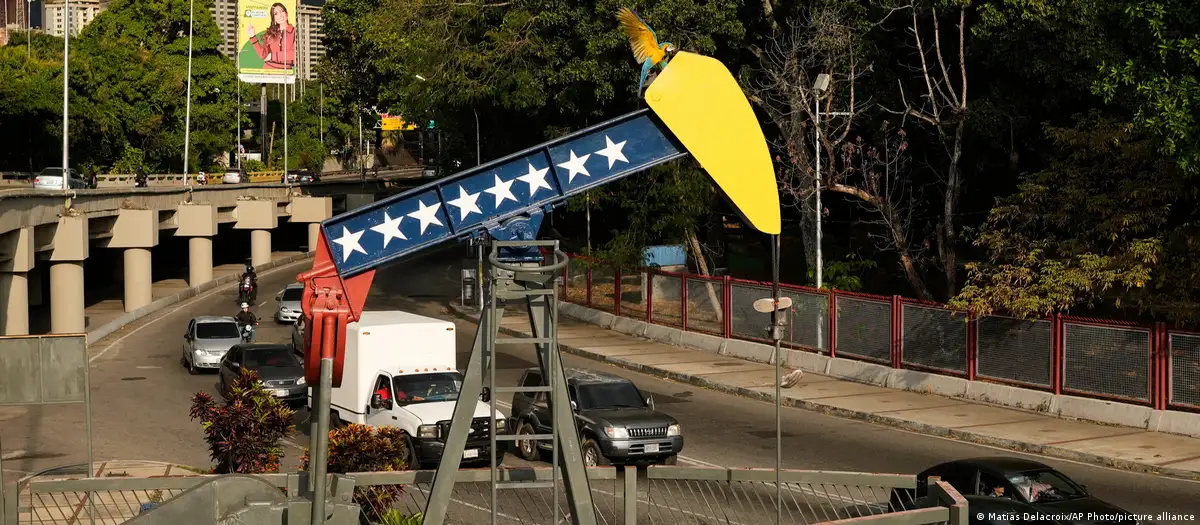
The crisis in Venezuela has entered a volatile new phase as US President Donald Trump announced plans to seize and sell between 30 and 50 million barrels of Venezuelan oil, declaring that Washington is now “in charge” following the dramatic capture of President Nicolas Maduro and his wife in a US military raid, reports DW.COM
The announcement has triggered fierce pushback from Venezuela’s acting leader Delcy Rodriguez, who insists that no foreign power governs the country.
What is unfolding is no longer a diplomatic standoff — it is a direct confrontation over sovereignty, control of resources, and the future of the Venezuelan state.
In a social media post that sent shockwaves across Latin America and global energy markets, Trump claimed that “interim authorities in Venezuela” had agreed to hand over 30 to 50 million barrels of sanctioned oil to the United States.

“This oil will be sold at its market price, and that money will be controlled by me, as president of the United States of America, to ensure it is used to benefit the people of Venezuela and the United States,” Trump wrote.
No details were provided on how the transfer would be executed, and Venezuelan officials immediately rejected the premise of his claim.
Trump also said the US intends to take control of Venezuela’s oil industry and have American companies rebuild it — a task experts warn would require massive investment after years of decay, mismanagement and sanctions.
In a defiant televised address, Delcy Rodriguez, sworn in as interim president and one of Maduro’s closest allies, rejected Trump’s statements outright.
“The government of Venezuela is in charge in our country, and no one else. There is no foreign agent governing Venezuela,” she said.
“To those who threaten me — my destiny is not determined by them, but by God.”
Her remarks came after Trump warned that she would fare “probably worse” than Maduro if she refused to cooperate.
US Secretary of State Marco Rubio later attempted to soften Trump’s rhetoric, saying the United States would not manage Venezuela’s day-to-day governance, but would exert pressure through control of oil exports.
Rodriguez has declared seven days of national mourning for Venezuelan soldiers killed in the US operation that captured Maduro.
“I decree seven days of mourning in honor and glory of the young people, women and men who gave their lives defending Venezuela and President Nicolas Maduro,” she said.
The Venezuelan military confirmed that at least 24 officers were killed in the raid.
Cuba announced that 32 Cuban soldiers were also killed, intensifying regional anger and raising the specter of broader confrontation.
The legality of the US operation is now under fierce scrutiny.
German Foreign Ministry officials have demanded clarification on the legal basis for the capture of Maduro, while international law experts warn the action could set a dangerous global precedent.
Christoph Safferling, a professor at the University of Erlangen-Nuremberg, said the US had likely breached international law: “The US has violated the prohibition of the use of force under Article 2(4) of the UN Charter. States must respect each other’s political independence and territorial sovereignty.”
In blunt terms: this was not law enforcement — it was an act of force across borders.
Trump has framed the operation in the language of historic US dominance in the Western Hemisphere, invoking the Monroe Doctrine and warning that similar action could be taken against Cuba, Colombia and Mexico.
His comments have already triggered diplomatic fallout.
Colombia’s foreign minister Rosa Villavicencio announced that Bogota will file a formal complaint with Washington after Trump threatened military action and insulted President Gustavo Petro, calling him a “sick man who enjoys making cocaine and selling it to the United States.”
Villavicencio said Colombia would seek to de-escalate tensions while continuing cooperation against drug trafficking.
Meanwhile, at the heart of Venezuelan crisis is not only oil — though Venezuela’s reserves remain among the largest in the world — but who gets to decide the fate of a nation.
Trump is projecting strength, control and ownership. Rodriguez is projecting defiance, sovereignty and resistance. Between them lies a country battered by years of crisis, now standing at the center of a geopolitical storm.
One side says it will run Venezuela. The other says Venezuela will never be run by outsiders.
And as barrels of oil, body bags of soldiers, and warnings of war collide, the world is watching a dangerous question unfold in real time: Is this the liberation of a state — or the beginning of a new kind of occupation?