Banks study how to distribute dues of citizenship-revoked retirees among all creditors
Debate grows over where retirement entitlements should go for those with amended nationality; proposal to link social security with credit network to settle retirees’ debts fairly
The debate continues in Kuwait over how and where to deposit the financial entitlements of people whose citizenship was withdrawn before retirement, and this time the focus has shifted from the Social Security system to detailed banking mechanisms.
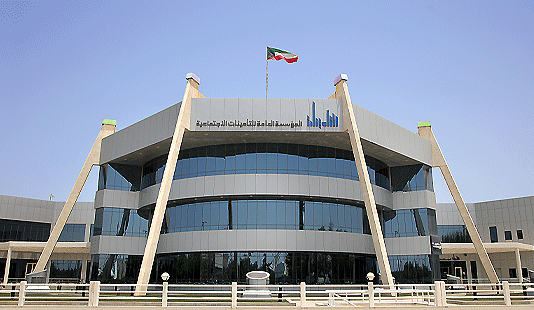
The Public Institution for Social Security (PIFSS) is studying a scenario in which those registered in its system would receive either a bonus payment or the total value of their contributions up to the point they stopped working — whichever is greater.
However, banking officials are now examining how to transfer these entitlements directly to client accounts and how to distribute them fairly among lenders, especially for customers with outstanding loans, reports Al-Rai daily.
According to informed sources, early discussions have taken place between bank representatives and preparatory committees, raising several points of contention at both the banking and pension institution levels.
The most prominent of these relates to retirees whose nationality status has been changed and who have borrowed from more than one bank. In such cases, banks are debating whether PIFSS should deposit the entitlements into the account where the retiree’s pension is usually received, or whether the institution should divide the money among all financing entities according to the proportion of debt owed to each.
Some banks have even proposed extending this distribution method to end-of-service bonuses for non-retired private-sector customers who have also had their status changed, though industry insiders acknowledge that this broader application could be difficult to implement in practice.
Beyond that, bank officials are also discussing cases in which a retiree has a main debt with the bank that handles their pension, but has other “scattered” loans — such as car payments or consumer financing — with different lenders. The question here is whether the primary bank should recover its entire debt from the entitlements, or whether it should allocate part of the payment to other creditors, even if only from any surplus.
The discussions also looked ahead to scenarios where a retiree with changed nationality later becomes eligible for financing, seeks to restructure existing loans, or applies for new credit. Such forward-looking considerations form part of the broader banking dialogue on managing credit risk and ensuring fair treatment across the financial sector.
Industry estimates suggest that about 15 percent of retirees in this category have loans with more than one financial institution, with the remaining 85 percent linked to only one lender. This proportion is seen as significant in determining how widely the new distribution mechanisms might need to be applied.
In an effort to bring clarity and transparency to the process, two banks have proposed linking PIFSS with the Kuwait Credit Information Network (CINET).
Under this proposal, credit reports would be consulted before entitlements are disbursed, allowing payouts to be distributed to all creditor entities based on each party’s share of the debt. This approach would mean that entitlement distribution is not based solely on the pension-receiving bank but on the full credit profile of the retiree.
Most banking officials argue that lenders who made financing decisions without a salary guarantee assumed greater risk and therefore should not automatically claim rights to entitlements simply because they later provided loans.
Ultimately, PIFSS will determine the most appropriate payment mechanism — whether in one lump sum or multiple installments — taking into account its financial capacity and operational plans, while safeguarding the rights of beneficiaries and avoiding any conflict with broader pension entitlements.
As discussions continue, banking and pension officials are seeking a balanced solution that protects retirees, manages credit risk, and ensures the stability of monetary flows within Kuwait’s financial system.