AI, heavy fines, tough penalties: Kuwait strengthens fight against drugs, smuggling networks
Statistics from the General Directorate of Drug Control show that between 2023 and 2025, 9,754 drug-related cases were recorded, involving 11,136 accused. Authorities confiscated 9.59 tons of narcotics and 45 million psychotropic pills, while 3,329 expatriates involved in drug offenses were deported. These figures underscore the growing need for a stringent legal framework.

- Officials emphasized the integration of all narcotics and psychotropic substances under a unified legal framework, making penalties consistent across all offenses.
- Previously, certain chemical substances and psychotropic drugs carried lighter penalties, which encouraged dealers to exploit these loopholes. Now, all offenders face equally severe consequences.
- The law also empowers authorities to extradite suspects, monitor shipments abroad, and apprehend recipients, closing gaps that once allowed traffickers to evade prosecution.
- Innovative methods, including artificial intelligence, will be used to track dealers and promoters, particularly those exploiting social media to lure young people.
- At the same time, the law maintains a humanitarian focus. Addicts are treated as patients rather than criminals, with treatment periods extended to three months.
Kuwait is set to implement the new Narcotics Law No. 159 of 2025 on December 15, signaling a decisive step toward safeguarding the nation and its youth from the scourge of drugs.
The law aims to close loopholes that previously allowed dealers, promoters, and even untreated addicts to operate with relative impunity.
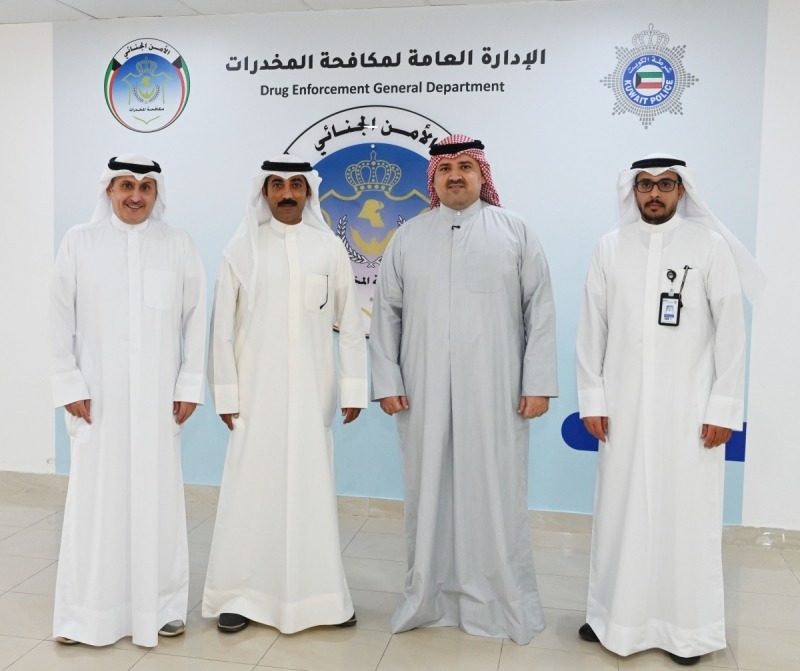
Speaking to Al-Rai, Brigadier General Muhammad Qabazard, Director General of the Directorate-General for Drug Control, highlighted that the law introduces deterrent penalties, including life imprisonment and execution, for those who traffic, promote, or smuggle narcotics and psychotropic substances.
“The new law ensures that anyone who dares to harm society risks the ultimate punishment,” he stressed.
Officials emphasized the integration of all narcotics and psychotropic substances under a unified legal framework, making penalties consistent across all offenses.
Previously, certain chemical substances and psychotropic drugs carried lighter penalties, which encouraged dealers to exploit these loopholes. Now, all offenders face equally severe consequences.
The law also empowers authorities to extradite suspects, monitor shipments abroad, and apprehend recipients, closing gaps that once allowed traffickers to evade prosecution.
Brigadier General Sheikh Hamad Al-Sabah noted that this measure significantly strengthens Kuwait’s ability to combat international smuggling networks.
Innovative methods, including artificial intelligence, will be used to track dealers and promoters, particularly those exploiting social media to lure young people. “These new tools, combined with strict penalties, block all avenues for criminal activity,” Qabazard said.
At the same time, the law maintains a humanitarian focus. Addicts are treated as patients rather than criminals, with treatment periods extended to three months.
Articles 61 and 62 ensure that voluntary treatment remains confidential and that families can seek intervention for relatives struggling with addiction. This dual approach balances enforcement with rehabilitation.
Statistics from the General Directorate of Drug Control show that between 2023 and 2025, 9,754 drug-related cases were recorded, involving 11,136 accused. Authorities confiscated 9.59 tons of narcotics and 45 million psychotropic pills, while 3,329 expatriates involved in drug offenses were deported. These figures underscore the growing need for a stringent legal framework.
The law also imposes heavy fines, reaching up to two million dinars in certain trafficking and smuggling cases.
It provides for execution in cases involving exploitation of children or teenagers in drug promotion, reflecting the government’s zero-tolerance stance. “Dealers and promoters will not escape punishment,” Brigadier General Qabazard warned.
Assistant Director Lieutenant Colonel Mohammed Munawer reiterated the law’s humanitarian dimension, noting that it allows addicts a real opportunity for recovery before prosecution.
Families can also intervene to protect both the individual and society, ensuring early intervention and preventing the escalation of addiction.
With the implementation of Law No. 159, Kuwait positions itself at the forefront of both deterrence and rehabilitation in the fight against narcotics. Authorities urge families to remain vigilant, warn youths against involvement with drugs, and emphasize that strict enforcement combined with support systems will protect the nation and its future generations.