A Nation’s Pride: India’s Republic Day Legacy

By Jewel Gijo
Class IX, United Indian School
Special to the Times Kuwait
“Long years ago, we made a tryst with destiny, and now the time comes when we shall redeem our pledge, not wholly or in full measure, but very substantially. — Jawaharlal Nehru.
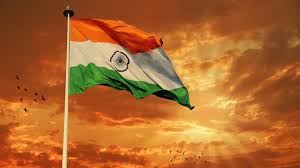
The Republic Day of India which is celebrated on 26 January every year, is a national holiday for the whole nation which signifies the Constitution of India coming into effect.
This day marks the country’s transition into a republic and also the day when India adopted its own constitution, which lays down the framework of our duties, rights and governance as the citizens of this country. The Indian Constitution is the longest and the most detailed constitution in the world.
After three years of prolonged discussion and debates, the Constituent Assembly adopted the constitution on 26 November 1949 and it came into effect on 26 January 1950. This day was elected to be the Republic Day because it was on this day in 1930, the Indian National Congress opposed the dominion status offered by the British Raj and proclaimed the Declaration of Indian Independence or the Purna Swaraj.
The drafting committee of the constitution was chaired by Dr. Bhimrao Ramji Ambedkar who is also known as the ‘Father of the Indian Constitution.’
Distinct from the Independence Day of India which commemorates the liberation of the country from the British rule, the Republic Day marks the moment when a government was established by the people, of the people and for the people.
The Republic Day is celebrated annually in New Delhi which showcases the historical legacy, cultural heritage and diversity and the military strength of the country. Every year, the celebrations often feature a chief guest, usually a head of state or government from another country, highlighting the global relations of India.
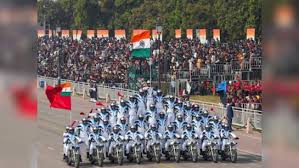
The day is marked with parades, flag-hoisting ceremonies, cultural performances from different states highlighting the vast heritage and diversity and also the display of military powers.
The festivities begin with the lying of a wreath at the Amar Jawan Jyoti (‘light of the immortal soldier’) by the honorable Prime Minister. This solemn moment is an act of gratitude and tribute to the soldiers who sacrificed their lives for the country.
This is followed by a parade, which is a 2-mile-long avenue called the Kartavya Path or the Path of Duty. It begins with the Indian President hoisting the national flag, followed by the national anthem which is followed by a 21-gun salute.
The parade starts at the Rashtrapati Bhavan which passes the India gate and then ends at the Red Fort. It showcases the military ability (tanks, fighter jets, radars, missiles etc.), marching contingents (Indian army, navy, Air force, Central Reserve police force and the border security force), cultural tableaux (traditions, folk art and social initiatives of different states and union territories), and some performances by the school children and cultural troupes celebrating India’s unity in diversity. It also features two unique contingents like the Cavalry regiment of the Indian Army, the world’s only active horse-mounted cavalry unit and the Border Security Force’s camel contingent, the only one of its types.
This day also honors the personalities who showed acts of exceptional bravery, service and achievements. Prestigious awards like the:
o Gallantry Awards — The ParamVir Chakra (highest military honor), Maha Vir Chakra, Vir Chakra, Shaurya Chakra, Ashoka Chakra and Kirti Chakra for the military personnel who displayed exceptional bravery, courage and service to the country.
o President’s Police Medals – Officers are recognized for their acts of bravery, long-term service and commitment to law enforcement.
o Civilian Awards – The Padma Bhushan, Padma Vibhushan and the Padma Shri are awarded to personalities who displayed their contribution in fields like art, science, literature and sports.
o Correctional Service Medals – Prison personnels receive this for their gallantry, meritorious and distinguished service.
o Bravery Awards – Bravery awards like the Jeevan Raksha Padak (‘lifesaving medal’) is awarded to civilians who showed immense courage in saving lives during casualties and emergencies.
o Children’s Awards – The Pradhan Mantri Rashtriya Bal Puraskar (‘Prime Minister’s National award for children’) recognizes the children aged 5-18 for exceptional achievement in sports, arts and innovation, social service, bravery and academics.
This is followed by The Beating Retreat ceremony. It is held on January 29 at Raisina Hill and Vijay Chowk near Rashtrapati Bhavan in New Delhi, which also marks the conclusion of the events of Republic Day.
This event combines the military tradition with music and ceremonial precision, honoring the country’s armed forces and cultural diversity.
The lowering of the national flag is marked by a bugle call, and the ceremony ends with the retreat of the bands and the illumination of government buildings.
And so, the Republic Day comes to an end after reminding us about a number of soldiers and people who sacrificed their lives for the sake of their country.