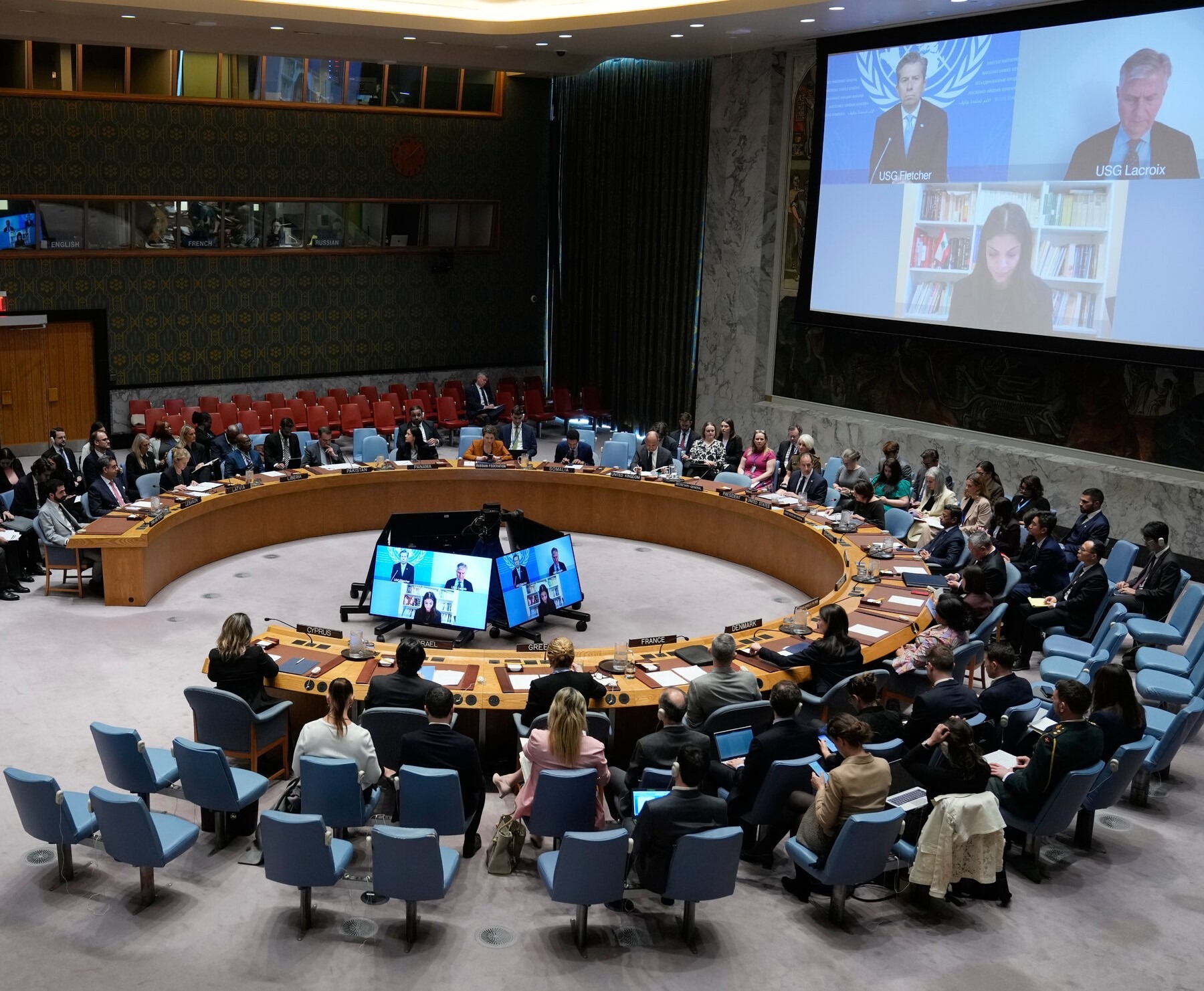
The sustained diplomatic efforts led by the Gulf Cooperation Council (GCC) states and Jordan in response to Iranian attacks targeting countries in the region culminated in the UN Security Council’s adoption of Resolution 2817 (13 votes in favor with Russia and China abstaining), condemned these “heinous” attacks.
The concerned countries were keen to clarify the facts before the international community and highlight the illegitimate nature of these attacks, which targeted civilian facilities, residential areas, and vital infrastructure, resulting in casualties and posing a direct threat to the security of citizens and residents, as well as to the safety of navigation and regional stability.
The majority of UN member states, through their sponsorship of Resolution 2817, affirmed that the attacks on the GCC states and Jordan constitute a serious violation of the trust that the countries of the region have long sought to build through dialogue and diplomacy.
The resolution also noted that the Gulf states have historically played a role in supporting de-escalation efforts, mediation, and promoting peaceful solutions to regional and international conflicts.
The resolution added that targeting these countries, despite their continued commitment to de-escalation policies between the various parties, reflected the extent of the disappointment with what she described as a breach of trust and an attempt to employ propaganda campaigns to distort the facts.
This prompted the international community to recognize the nature of these attacks and to stand with the Gulf states and Jordan in defense of their sovereignty, security, and stability.
Since the outbreak of these attacks on February 28, the Gulf states have acted collectively and in a coordinated manner, reflecting a clear unity of position and integrated diplomatic efforts.
Jordan has also been a key partner in this process, both as a targeted state and as a major Arab party in building and defending the common position in various international forums.
This mobilization quickly extended to the Arab and Islamic spheres, with the League of Arab States holding an emergency ministerial meeting dedicated to discussing these developments.
During the meeting, the League affirmed the Arab states’ full solidarity with the Gulf Cooperation Council countries and Jordan and their categorical rejection of these attacks.
The United Nations also convened a meeting of the Organization of Islamic Cooperation, during which member states expressed their condemnation of the attacks and their support for the affected countries.
On the broader international level, the ministerial meeting between the GCC and the European Union (EU) marked a significant milestone in this process.
During the meeting, the EU reaffirmed its support for and solidarity with the GCC states in the face of the attacks targeting them. The meeting emphasized the importance of respecting the sovereignty of states and maintaining the security and stability of the region in accordance with the principles of international law and the UN Charter.
At the United Nations, the positions of the international leadership reflected a clear understanding of the gravity of these developments. UN Secretary-General António Guterres condemned the attacks targeting GCC and other Arab states, stressing the need to respect state sovereignty and refrain from any actions that threaten regional peace and security.
The statements and positions issued by the GCC, the League of Arab States, the Organization of Islamic Cooperation (OIC), and the European Union demonstrated a broad international understanding of the nature of these attacks.
The presentation of the facts helped to expose the accompanying propaganda campaigns and misinformation, clarifying the true picture of events and strengthening international understanding of the seriousness of these attacks and their repercussions on the security and stability of the region.
Recent developments have highlighted the exceptional measures taken by GCC states to protect their sovereignty and territorial integrity, and to ensure the safety of their citizens and residents, while simultaneously exercising restraint and working to maintain regional stability. This reflects the strength of their institutions and their ability to address security challenges.
The resolution garnered the support of 135 UN member states from various regional groups, the highest number of co-sponsors in the Security Council’s history.
This reflects the broad international support for the Gulf and Jordanian position in the face of ongoing Iranian aggression. The adoption of the resolution is considered a significant milestone, reflecting the cohesion of the Gulf and Arab stance and the unity of vision in confronting shared challenges.
It also underscores the ability of Gulf diplomacy, including Kuwaiti diplomacy, to work effectively and in a coordinated manner at the UN to garner international support and uphold the principles of respecting sovereignty and preserving the security and stability of the region.
–KUNA