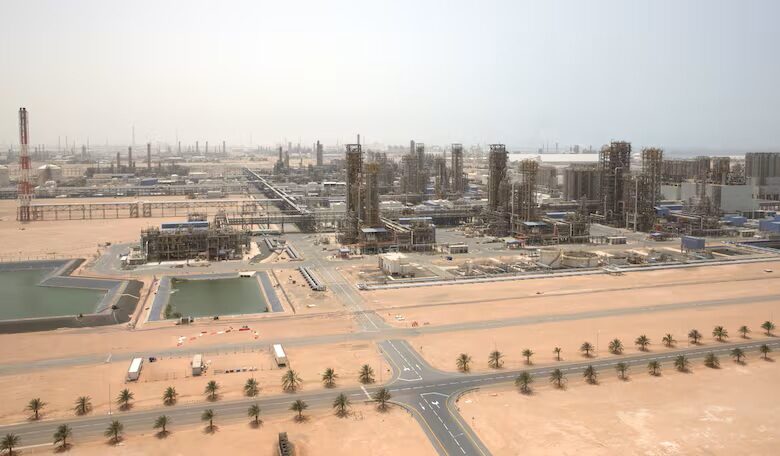
The United Arab Emirates (UAE) halted its huge Ruwais oil refinery, one of the world’s largest, as a precautionary measure after a drone strike caused a fire in the industrial area in which it’s located, according to people familiar with the matter.
Abu Dhabi National Oil Co was assessing damage at the plant, the people said, asking not to be named because the matter is not yet public. The refinery can process 922,000 barrels of oil a day.
The attack and shutdown of one of Abu Dhabi’s most high-profile assets adds to a series of similar incidents in the Middle East. Ruwais is Abu Dhabi’s only refinery, with the majority of the facility’s gasoline, diesel and jet fuel exported, but some of it used domestically. Saudi Arabia shut down its largest refinery last week and Qatar closed the world’s biggest liquefied natural gas (LNG) export facility following drone strikes.
Production cuts are rippling through the entire oil industry in the Middle East. Saudi Arabia, Iraq, the UAE and Kuwait have lowered their collective crude oil output by as much as 6.7 million barrels a day, people with knowledge of the matter said.
Saudi Aramco and Adnoc have been ramping up exports through alternative routes to bypass the Strait of Hormuz, which remains at a near standstill for maritime traffic. A long shutdown of the Ruwais refinery could force the UAE to reduce crude output more quickly.
The UAE said earlier that it was dealing with a blaze following a drone attack at a facility in the Ruwais industrial zone, according to the Abu Dhabi Media Office.
Adnoc is developing the Ruwais complex as a major hub as the company pushes into trading refined fuels and builds a global chemicals and natural gas business. The industrial city along the Arabian Gulf about 250km (155 miles) from Abu Dhabi city is a vast industrial area.
Adnoc is building a LNG export terminal at Ruwais and the town is also the site of chemical maker Borouge Plc and fertilizer producer Fertiglobe PJSC, both of which are Adnoc’s units.
The UAE’s other main refinery is in Dubai, while emirates like Sharjah and Fujairah have smaller conversion units mainly built to process heavy crudes or fuel oil.
Source: Bloomberg