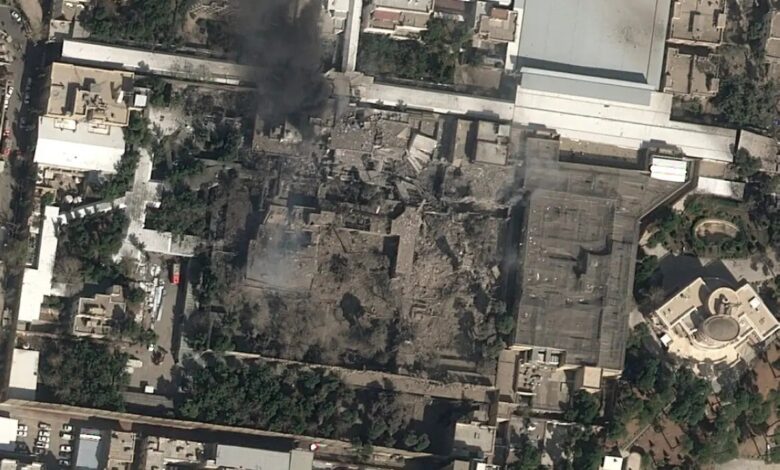
The Middle East has entered a dangerous new phase of confrontation following large-scale military strikes led by the United States and Israel against Iran, triggering retaliatory missile attacks that expanded tensions across the Gulf region and disrupted international air traffic.
US President Donald Trump declared that the military campaign aims to eliminate what he described as an imminent security threat to Washington and prevent Iran from acquiring advanced missile and nuclear capabilities.
He also called on the Iranian people to seize what he termed a “historic opportunity” to take control of their government, reports Al-Rai daily
The American offensive, dubbed “Operation Wrath,” followed Israel’s earlier “Operation Lion’s Roar,” in what officials described as a coordinated effort targeting Iran’s military infrastructure and senior leadership.
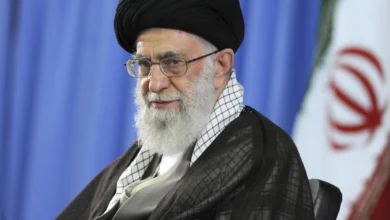
Israeli sources indicated that Supreme Leader Ali Khamenei and President Masoud Pezeshkian were among figures targeted in the initial strikes, although Iranian sources later said Khamenei had been moved to a secure location outside Tehran.
In response, Iran’s Revolutionary Guard launched missiles and drones toward American and Israeli military assets, announcing strikes on US bases in Qatar and the UAE, as well as the headquarters of the US Fifth Fleet in Bahrain. Gulf states temporarily closed their airspace while air defenses intercepted incoming projectiles.
Iranian Foreign Minister Abbas Araqchi warned that all American bases in the region would be considered legitimate targets, sending urgent messages to Gulf countries amid rapidly escalating tensions.
In Washington, Trump confirmed that US forces had begun “major combat operations” aimed at dismantling Iran’s missile industry and naval capabilities.
In a series of statements, he warned Iran’s military and security forces to surrender their weapons, offering immunity in exchange for compliance while threatening severe consequences for resistance.
Addressing the Iranian public directly, Trump said the operation marked a turning point, urging citizens to “take control of your government” once military objectives were achieved, while cautioning them to remain indoors due to ongoing bombardments.
Israeli Prime Minister Benjamin Netanyahu described the joint offensive as an effort to eliminate an existential threat, insisting Israel would not allow Iran to obtain nuclear weapons.
Israeli officials confirmed the operation had been planned for months in coordination with Washington, with initial strikes expected to last several days.
On the ground, missile exchanges shook multiple locations across Israel, prompting nationwide emergency measures, closure of schools and workplaces, and a complete shutdown of civilian airspace.
Iran condemned the attacks as a blatant violation of international law and the UN Charter, while regional diplomatic contacts intensified in an attempt to prevent further escalation. Iranian officials warned that previously unthinkable scenarios had now become reality, declaring that “no red lines remain.”
Conflicting reports emerged regarding casualties among senior Iranian officials, with some sources confirming the deaths of several Revolutionary Guard commanders and political figures, while Iranian state media denied other assassination claims.
As military operations continue, airlines suspended flights across large parts of the region, leaving Iranian airspace largely empty and raising fears that the confrontation could evolve into a wider regional war.