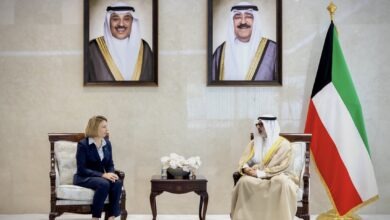
Kuwait paves a new path focused on socio-economic progress
From independence in 1961 to liberation in 1991, Kuwait’s journey has been defined by resilience, transformation, and determination. Today, under renewed leadership and an ambitious reform agenda, the nation is transitioning from years of political gridlock toward a new era focused on transparency, economic diversification, infrastructure expansion, and sustainable development aligned with Vision 2035.
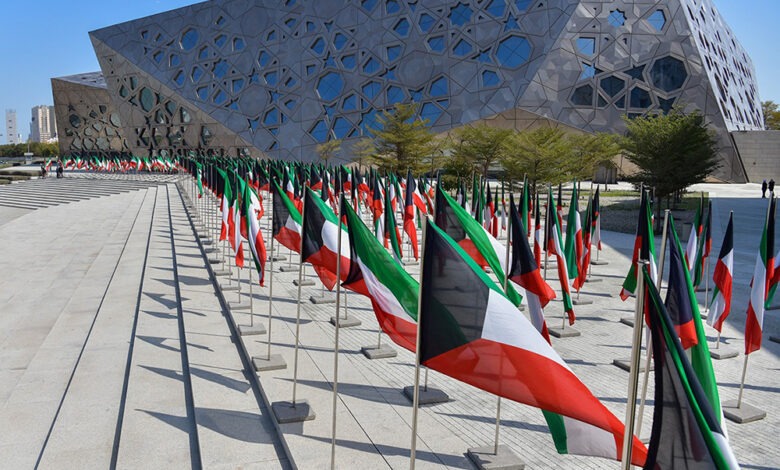
By Reaven D’Souza
Executive Managing Editor
Celebrations marking the joyous occasion of 65th National Day and 35th Liberation Day are an opportune moment to examine how the freedom gained from Great Britain in 1961 shaped the identity and progress of Kuwait over the past many decades.
Commemoration of Kuwait’s liberation from the yoke of tyranny imposed by the defunct Iraqi regime in 1991, also provides a window into the resilience and unity of the people in facing and overcoming internal and external threats.
The discovery of oil in the late 1930s and the first commercial oil exports in 1946 was the genesis of Kuwait’s transformation into a modern state, and its economic, social, and political metamorphosis since then. Economic independence, brought on by the newly-found oil wealth, set the tone for Kuwait to reach an amicable agreement with Great Britain on abrogating the Protectorate Treaty of 1899. This allowed Kuwait to determine its destiny and chart its own course as a pluralistic, democratic country, joining the comity of free nations in 1961.
The treacherous invasion of Kuwait and the seven-month long barbarous occupation by Iraqi forces in 1990-91, was another defining moment in the nation’s history. In the aftermath of the invasion and occupation, Kuwait emerged stronger, resilient and with a new focus, reorienting its priorities, revising its relations regionally and internationally, and reshaping the country’s social, economic, and political landscape.
The first and second Gulf Wars, which led to regime change and political transformations in Iraq, and the modus vivendi that currently exists with Iraq, have decreased the potential for further cross-border threats. Meanwhile, the multiple bilateral and multilateral security and defense pacts that Kuwait has signed with international partners and blocs ensure stability, territorial integrity, and sovereignty of the nation.
Over the years, confidence in the ability of the State to protect border integrity meant that public focus then shifted to the prevailing political and social status quo. Weaknesses in institutional mechanisms of governance, absence of structural changes and lack of essential reforms, together with the inability of executive and legislative authorities to cooperate in parliament, fueled political and social instability that hampered economic development and progress for decades.
Notably, since 2020, the Cabinet has resigned 10 times and Kuwait has held four legislative elections. Although the need to resolve the long-standing political gridlock that engendered instability and curtailed progress in the country was widely acknowledged, there was no political will to implement the necessary bold changes. It was only following a shift in leadership in December 2023 and the ascension of His Highness Sheikh Meshal Al-Ahmad Al-Jaber Al-Sabah as the Amir of Kuwait, that the country began to witness transformational changes.
Following the dissolution of parliament and suspension of certain constitutional articles in May 2024, Kuwait, under the wise and visionary leadership of His Highness the Amir, embarked on a new phase of progress marked by transparency, accountable governance, equality, and justice. Today, the country is witnessing an accelerated pace in infrastructure development, strengthened economic and social stability, and the implementation of a rigorous agenda of structural, fiscal, and social reforms.
Since taking legislative charge in May 2024, the new government headed by His Highness the Prime Minister Sheikh Ahmad Abdullah Al-Ahmad Al Sabah has prioritized transparency, good governance, combating corruption across state institutions, and digitalization of public services, while enforcing the rule of law equally on everyone. The government’s focus on prudent, resolute decision-making, and swift implementation has pushed through long-pending reforms and policies, revived stalled infrastructure projects and commissioned new ones.
On the economic side, the government has been implementing reforms, policies, and initiatives aimed at diversifying the oil-reliant economy and driving Kuwait’s strategic Vision 2035 development plan. As part of Vision 2035, to transform the country into a regional and global commercial and financial hub, Kuwait has prioritized growth of the non-oil sector, encouraging greater private-sector participation, attracting foreign investments, and generating gainful employment opportunities for the national cadre in this sector.
In line with the strategy of diversifying revenue sources, in December 2024, Kuwait introduced a 15 percent corporate tax, levied on multinational firms operating in the country with revenues exceeding €750 million (KD270m) in two of the last four years. The new tax, effective January 2025, which is expected to target over 300 local and foreign multinationals and net the country around KD260 million yearly, aims to prevent foreign tax leakage on locally-sourced profits, and position Kuwait as a competitive business hub, compliant with best global and regional practices.
In another significant fiscal reform that enables Kuwait to tap into local and international debt-markets, in March 2025, the government passed the Public Debt Law. The law, which had remained stuck in parliament for eight years, authorizes a borrowing ceiling of KD30 billion, with maturities of up to 50 years. The bill boosts liquidity, fosters sustainable financial management, diversifies funding sources, and supports mega infrastructure developments and other capital expenditures.
In particular, infrastructure project activity has witnessed a surge in recent years, with various sectors, including energy, water, waste management, transport, housing, and health, seeing significant developments. Road infrastructure in the country, once ranked the worst among Gulf Cooperation Council (GCC) states, is being revamped through a new KD400 million maintenance contract signed in October 2024 with 18 local and foreign firms.
Additionally, the first phase of a 111-kilometer railway project to connect Kuwait to Saudi Arabia by 2030, was awarded to a Turkish engineering firm in February 2025. The new railway, which will eventually link up with the 2,100-kilometer GCC-wide network, is expected to transport eight million passengers and 95 million tons of cargo annually by 2045. Kuwait has also revitalized the long-stalled Mubarak Al-Kabeer Port project through a partnership signed in December 2025 with Chinese state enterprises.
As part of restructuring and digitalization of public sector services, policy reforms initiated in August 2024 now allows more than 175 business activities to operate without a physical office premise. This has resulted in a 225 percent surge in freelance and micro-enterprise licenses since then. Digital initiatives such as the unified government platform ‘Sahel’, are streamlining bureaucracy and improving efficiency of business-related transactions. For instance, more than 9,880 new licenses were issued in the first-quarter of 2025.
The government has also emphasized a social development agenda aimed at empowering women and youth. This initiative has supported innovation and entrepreneurship among youth, and seen increased women’s representation in the public sector, including appointment of several female ministers. In another landmark social reform, in March 2025 Kuwait abolished the controversial Article 153 of the 1960 Penal Code, which allowed for lenient, misdemeanor sentences for ‘honor killings’ of women by male relatives.
In line with the government’s purposive approach to implementation of reforms, the authorities also introduced reforms to the citizenship and identity file, as fraudulent citizenship was deemed a national security threat. Amendments to the 1959 Nationality Law, which aims to curb duplicity in citizenship and significantly tighten the right to citizenship, has resulted in a major review and the revoking of citizenship of many former ‘citizens’.
Groundbreaking transformations such as implementing a value-added-tax (VAT), amending the mortgage law, and rationalizing public-sector wages and subsidies that account for nearly 80 percent of total budget spending, are also said to be under review by the government. It is apparent that Kuwait has transitioned from the earlier phase of being tied-down by persistent political instability, to a new path that focuses on directing progress, providing good governance, realizing the goals of Vision 2035, and ensuring the long-term sustainability of the nation.