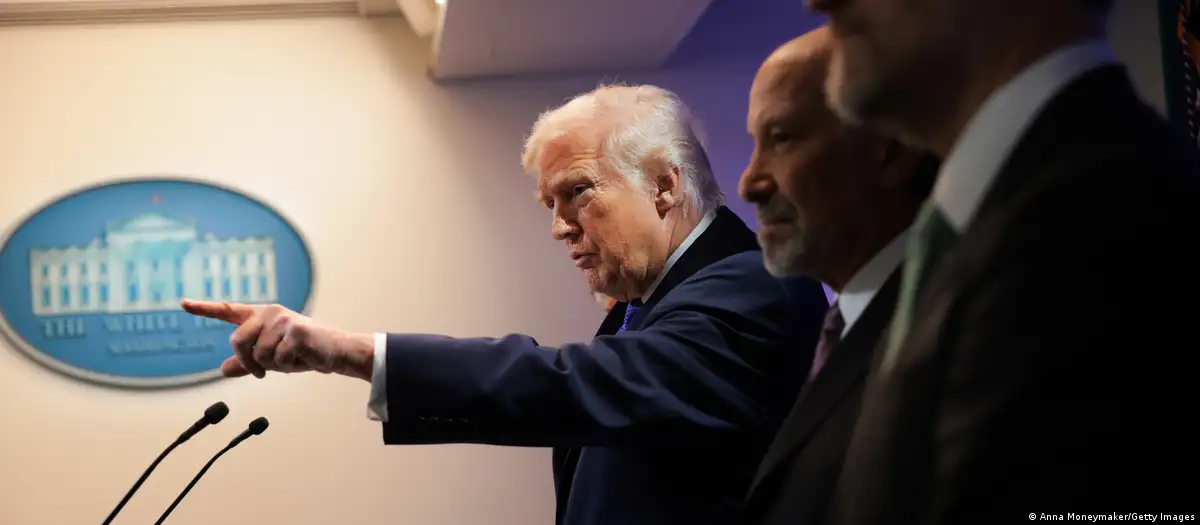
President Donald Trump announced a new global tariff rate of 15%, increasing it from the previously proposed 10%, just one day after the Supreme Court of the United States blocked much of his earlier emergency tariff policy.
In a social media statement, Trump said the new tariffs would take effect immediately, arguing that many countries had taken economic advantage of the United States for decades without consequences.
The announcement follows a major legal setback for the administration after the Supreme Court ruled that the president had exceeded his authority by using emergency powers to impose sweeping trade tariffs.
 US
US
The financial impact of the new tariffs — both on the US economy and global trading partners — remains unclear, as markets and governments assess the potential consequences of the decision.
The developments were reported by German international broadcaster Deutsche Welle, which is closely tracking ongoing updates surrounding the administration’s trade policy.
European leaders and businesses reacted with a mix of cautious optimism and growing uncertainty after the Supreme Court of the United States ruled that many tariffs imposed by Trump were illegal.
The landmark decision has left America’s trading partners trying to assess what the ruling means for future trade relations, particularly as Trump signaled he intends to continue pursuing tariffs through alternative legal mechanisms.
European officials welcomed the judgment carefully, viewing it as a reaffirmation of institutional checks and balances.
French President Emmanuel Macron praised the ruling, saying democratic systems benefit from limits on executive power, while noting France would closely evaluate the impact of Washington’s newly announced global tariff increase to 15%.
Meanwhile, the European Commission and German authorities said they were in close contact with US officials to clarify the next steps and assess how the decision could affect transatlantic trade.
EU–US trade deal thrown into doubt
The court ruling has cast significant uncertainty over the EU-US trade agreement reached last year, which fixed tariffs on most European exports to the United States at 15% while eliminating EU tariffs on American industrial goods.
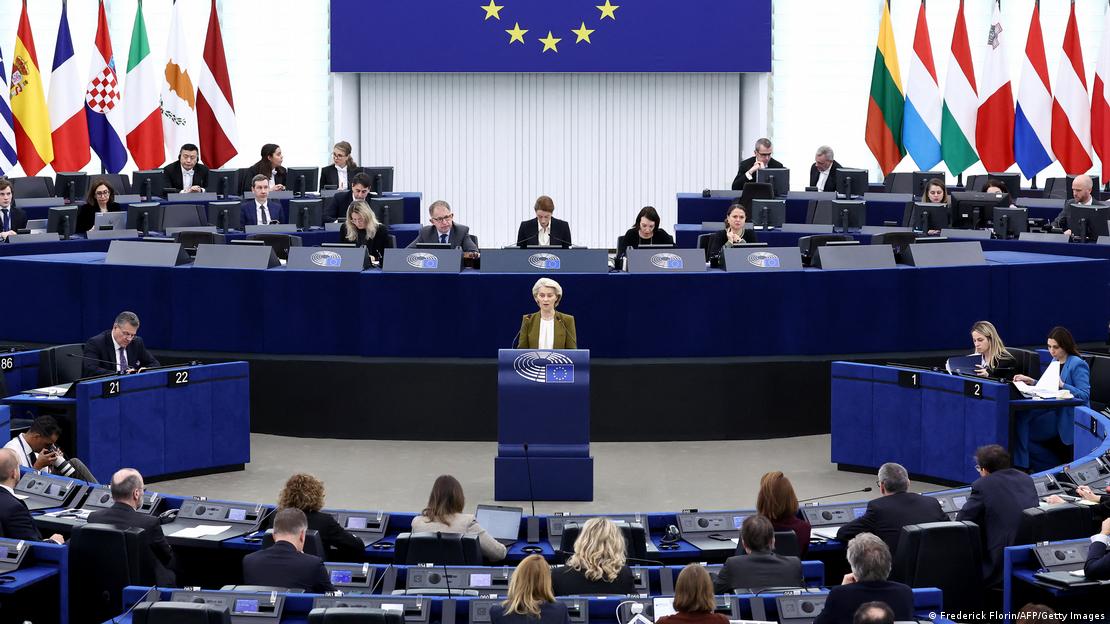
The European Parliament’s trade committee, chaired by Bernd Lange, is now reconsidering its ratification timeline and will hold emergency discussions before a planned vote. Lawmakers warn the ruling could reshape negotiations and delay approval of the deal.
European Commission President Ursula von der Leyen faces renewed political pressure as policymakers reassess whether the agreement still provides stability amid shifting US trade policies.
German industry groups reacted positively to the court’s decision but emphasized that uncertainty remains a major concern. Business leaders said companies urgently need predictable trade rules to plan investments and supply chains.
The Federation of German Industries described the ruling as a strong signal supporting a rules-based global trading system, while the German Chamber of Industry and Commerce warned that the US administration still has multiple legal tools available to impose tariffs.
The ruling specifically targeted tariffs imposed under emergency economic powers, but several sector-specific measures remain untouched. Tariffs on steel, aluminium, and automotive imports introduced on national security grounds are still in force, and additional investigations could lead to new duties.
European car manufacturers, already facing tariffs as high as 25% on imports into the United States, remain particularly exposed. Pharmaceutical and chemical industries could also face future levies if Washington launches new trade probes.
Analysts caution that while the court decision may limit one legal pathway for tariffs, alternative mechanisms could produce similar — or even stronger — economic effects for global trading partners.