Kuwait Towers stand tall as eternal symbols of pride, progress, and identity
. . . from vision to victory the Kuwait illuminate Kuwait’s past, present, and future
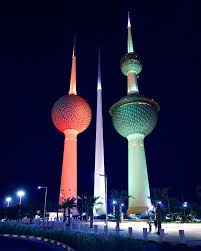
Rising gracefully along Kuwait’s shoreline, the Kuwait Towers are more than architectural structures — they are silent witnesses to the nation’s journey from ambition to achievement. For nearly half a century, these iconic towers have reflected Kuwait’s resilience, heritage, and modern aspirations, standing as a beacon of identity where engineering brilliance meets cultural symbolism and national pride.
Since rising above the Arabian Gulf skyline in 1979, the Kuwait Towers have stood as far more than an engineering project designed for water storage. Over the decades, they have evolved into one of Kuwait’s most recognizable national symbols and a defining icon of contemporary Arab heritage.
The vision for the Towers dates back to 1963, when the late Amir Sheikh Jaber Al-Ahmad Al-Jaber Al-Sabah proposed the construction of large water reservoirs. What began as an infrastructure initiative later developed into a cultural landmark, a distinctive tourist destination, and a global emblem closely associated with Kuwait’s identity.
The architectural complex consists of three towers of varying heights, each serving a specific function. The tallest tower rises to 187 meters with a base diameter of 20 meters and is designed to store one million cubic gallons of water. The second tower reaches 147 meters with an 18-meter base diameter and performs a similar water-storage role, reports Al-Anba daily.
The third and smallest tower, standing 113 meters tall with a base diameter of 12 meters, plays a vital infrastructural role by supplying electricity to the surrounding area and illuminating the entire complex through one hundred external spotlights.
Inspired by Kuwaiti heritage, the towers’ design reflects traditional cultural elements: the main tower symbolizes an incense burner, the middle tower represents a water sprinkler, and the smallest tower resembles a kohl container. This unique architectural vision earned the complex the prestigious Aga Khan Award for Architecture in 1980.
The towers endured their most severe challenge during the Iraqi invasion of Kuwait in 1990, when they sustained significant damage. Through determined national efforts, however, they were fully restored and reopened in December 1992, regaining their former brilliance.
In July 2025, the Arab Architectural and Urban Heritage Observatory officially included the Kuwait Towers on its list of Arab heritage sites under the category of modern architecture, further affirming their cultural and historical significance.
Each February, during National Day celebrations, the towers are transformed into a panoramic display illuminated in the colors of the Kuwaiti flag. Standing proudly over the capital, they commemorate the nation’s history while symbolizing optimism, pride, and loyalty as Kuwait looks confidently toward the future.