Night hunter of the sands: Rare desert owl reveals Kuwait’s hidden biodiversity
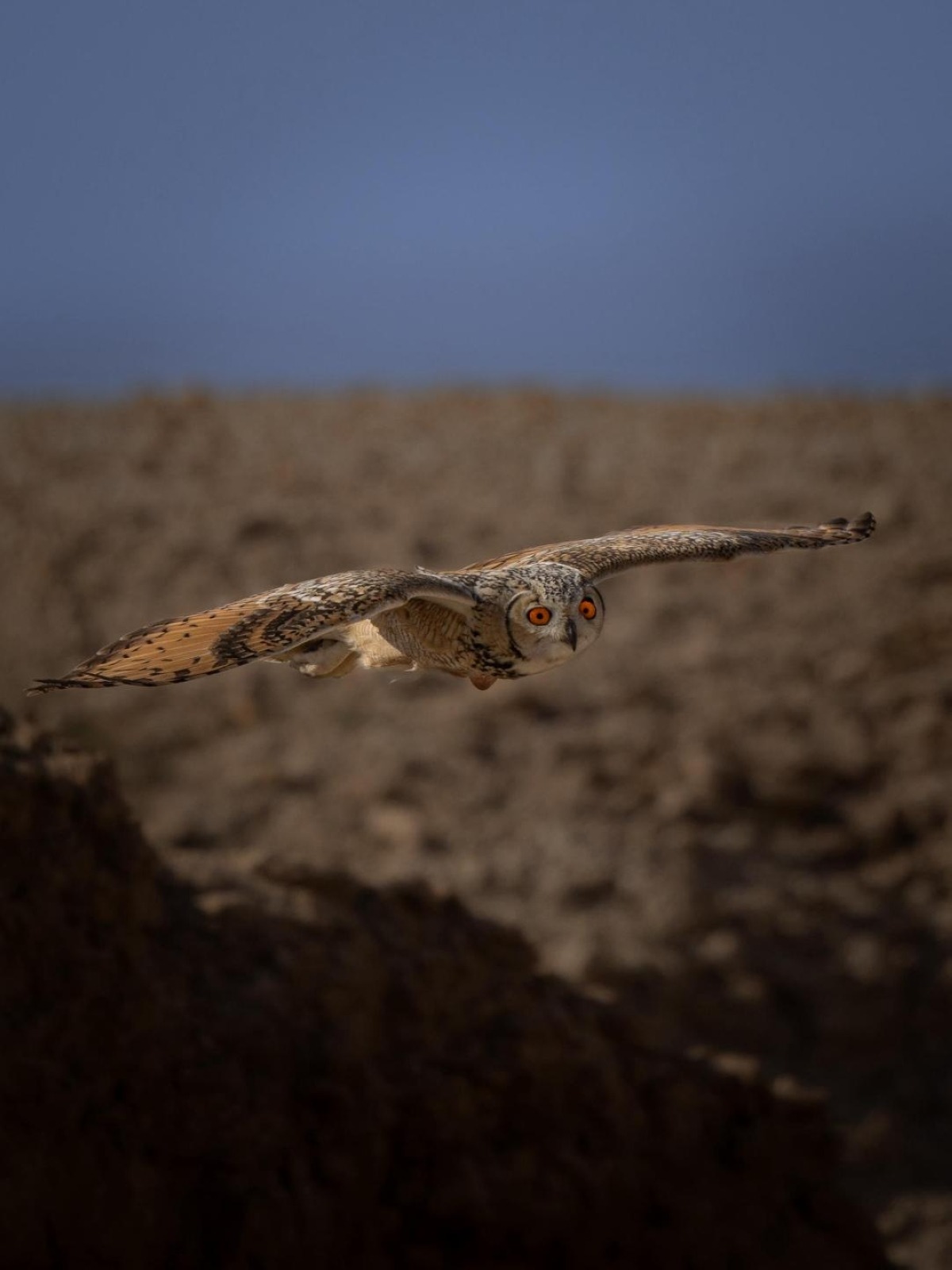
Environmental activist Dr. Abdullah Al-Zaidan has documented the presence of the Pharaoh Eagle Owl, describing it as the largest owl species found in Kuwait and across the Middle East, after observing it among the rocky elevations of Jal Al-Zour and Bar Kazma.
Speaking to Al-Rai, Al-Zaidan explained that Kuwait’s desert wilderness serves as a natural refuge for the species, providing an ideal environment where it can nest and reproduce away from human disturbance. The owl typically inhabits open, barren landscapes characterized by rocky outcrops, plains, valleys, and sloping terrain.
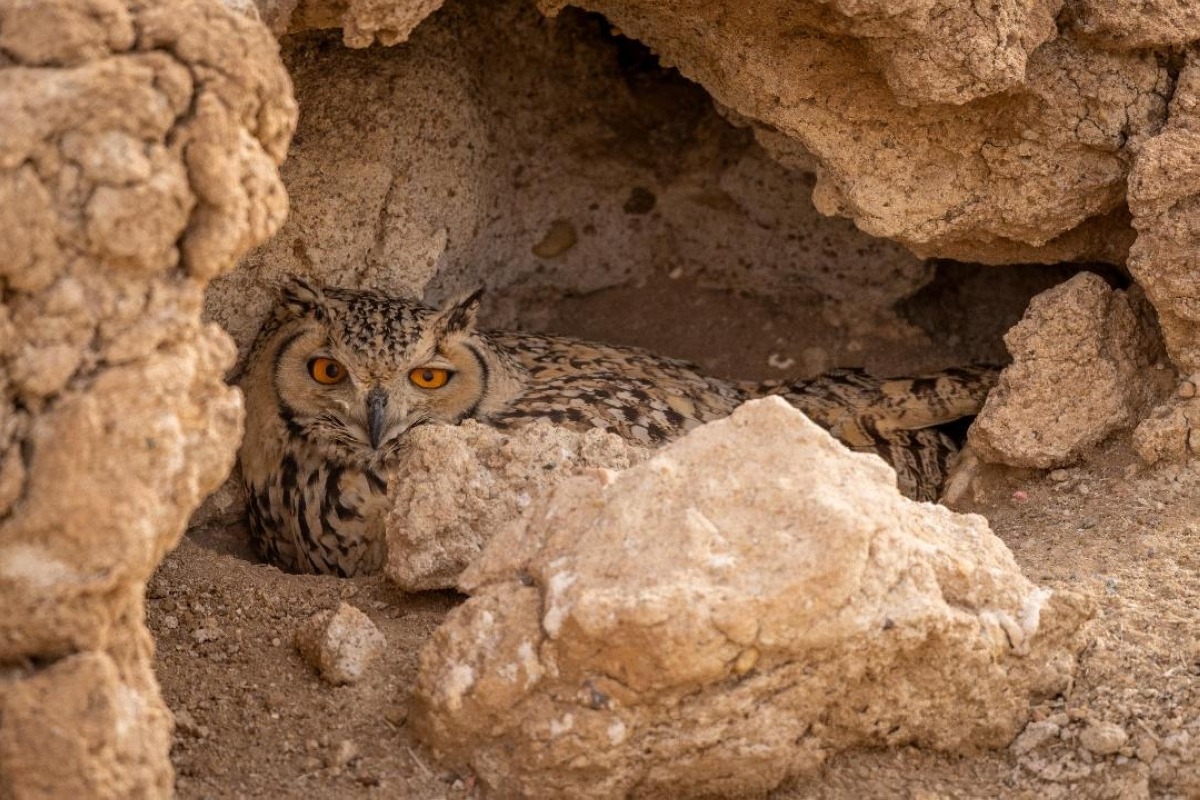
The species is widely distributed across parts of Africa and the Middle East, including Saudi Arabia, the United Arab Emirates, Oman, Iraq, and Iran.
Its name, he noted, derives from its impressive size, which resembles that of large birds of prey such as vultures and eagles, with a body length ranging between 46 and 50 centimeters.
Al-Zaidan added that Pharaoh Eagle Owls are generally monogamous, with mating pairs remaining together for life. Both parents share responsibility for raising and feeding their young until maturity.
The birds are primarily nocturnal, hunting from dusk through the night across territories that can extend up to five square kilometers. Their diet includes small mammals, birds, snakes, lizards, beetles, and scorpions.
Although the species currently faces no direct threats, Al-Zaidan warned that ongoing urban expansion is gradually reducing its natural habitat.
He emphasized the owl’s ecological importance, noting its role in maintaining environmental balance by controlling rodent populations — particularly jerboas — and preventing their numbers from rising beyond natural levels.
He also highlighted the scientific value of what are known as “owl pellets,” compact masses of undigested material such as bones and fur that owls regurgitate after feeding. These pellets provide researchers with valuable insights into owl diets and the broader health of local ecosystems.