Joint Kuwait–UAE operation dismantles international drug trafficking network
Protecting Gulf youth is a non-negotiable priority. Our security is one and our response is one -- First Deputy Prime Minister and Minister of Interior Sheikh Fahd Al-Yousef
- In a landmark demonstration of Gulf security unity, Kuwaiti and Emirati authorities executed a high-level joint operation that intercepted one of the region’s largest Captagon smuggling attempts, underscoring a shared commitment to safeguarding communities through intelligence integration and decisive pre-emptive action.
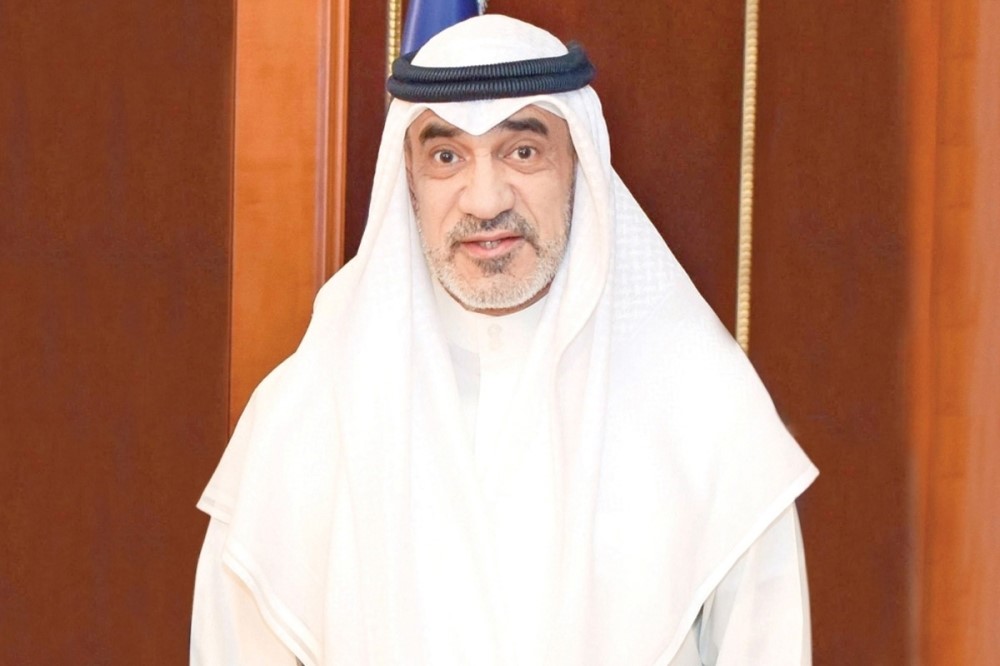
First Deputy Prime Minister and Minister of Interior Sheikh Fahd Al-Yousef said the successful joint security operation carried out by Kuwait and the United Arab Emirates against an international drug trafficking network reflects the Gulf Cooperation Council’s vision of building a unified security system based on intelligence integration and proactive action.
Speaking to Al-Jarida, Al-Yousef stressed that the operation sends a decisive deterrent message, emphasizing that “the security of the Gulf is a red line,” and warning that any attempt to threaten regional stability will face firm and coordinated responses.
He described the dismantling of one of the region’s most dangerous drug networks as a practical implementation of bilateral security agreements between Kuwait and the UAE, highlighting the unity of purpose in confronting the growing threat of narcotics.
The achievement, he said, is the result of close cooperation reflecting the strong brotherly relations between the two countries and their shared commitment to protecting Gulf societies.
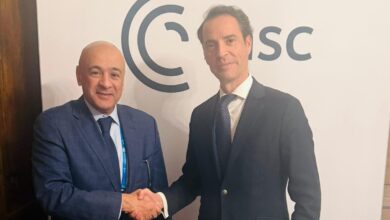
Al-Yousef also praised the role of Sheikh Zayed bin Hamad Al Nahyan, head of the UAE National Anti-Narcotics Agency, noting that direct coordination demonstrated a high level of professionalism, readiness, and rapid decision-making.
Intelligence Cooperation Led to Major Seizure
According to Al-Yousef, Kuwaiti security services initially monitored a suspicious shipment originating from an African country and heading toward Dubai. The Kuwaiti authorities provided Emirati counterparts with detailed intelligence, including container numbers, shipping data, and transit routes.
Based on this information, Dubai’s Anti-Narcotics Department swiftly intercepted the shipment, seizing more than 14 million Captagon pills weighing over 2,250 kilograms before they could reach Gulf markets. Three suspects of Arab nationality were arrested in connection with the operation.
Al-Yousef emphasized that security coordination between both countries now operates as an integrated system capable of striking criminal networks before they become operational threats, adding that anyone attempting to exploit trade routes or borders to harm Gulf societies will face unwavering vigilance.
He affirmed that strengthening Gulf security partnerships remains a priority, with future operations expected to rely increasingly on early detection and joint intelligence work.
Details of the Operation
The Ministry of Interior’s Criminal Security Sector, represented by the General Department for Drug Control, carried out the operation in coordination with the UAE National Drug Control Agency under directives from Sheikh Fahd Al-Yousef and UAE authorities.
Major Abdulrahman Al-Dosari, international liaison officer at Kuwait’s General Department for Drug Control, revealed that authorities received confirmed intelligence about a large smuggling attempt targeting Gulf countries. Investigations traced the shipment to containers stored at an African port.
A specialized Kuwaiti security team tracked the shipment, identified the exact container numbers, and discovered that the narcotics were concealed within agricultural corn cargo. After verifying the intelligence, Kuwaiti officers traveled to Abu Dhabi to work alongside Emirati counterparts.
Upon arrival at a UAE port, five containers carrying the concealed drugs were monitored and allowed to proceed under surveillance to a city where members of the criminal network were waiting to receive the shipment. Authorities then arrested three suspects — two Syrians and one Egyptian — all residents of the UAE.
Investigations conducted by UAE anti-narcotics authorities confirmed the suspects’ involvement, with the accused confessing to smuggling the drugs hidden inside the corn shipment.
Unified Gulf Security Message
Officials stressed that the case represents a model of Gulf security cooperation built on intelligence sharing and coordinated field operations. Kuwaiti authorities reiterated that combating narcotics remains a top priority, emphasizing that Gulf security is indivisible.
Al-Yousef concluded with a clear message, “Protecting Gulf youth is a non-negotiable priority. Our security is one — and our response is one.”