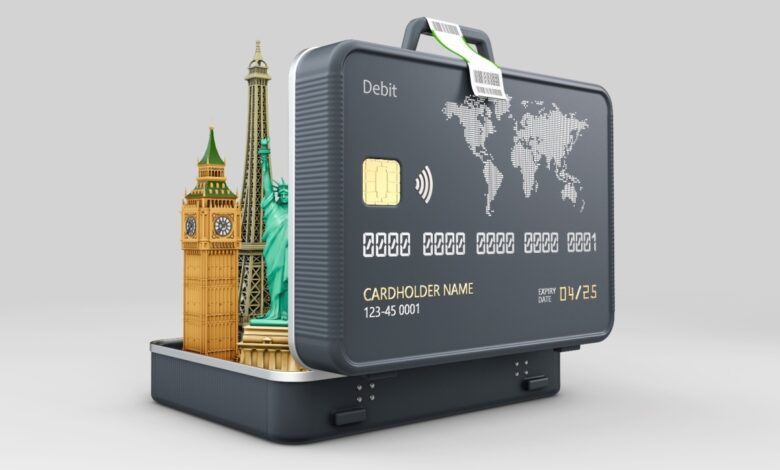
- Kuwait plans to issue a dual-chip national card, one for local payments and the other for international payments
- This supports the digital transformation agenda by processing and storing locally executed payment data.
- The Central Bank has directed banks to provide cards that cover transactions for individual and merchant consumers
- The national card eliminates the need to register with Visa and Mastercard and transfers payments to KNET
- The Gulf region is linked to a single payment network that facilitates real-time cross-border settlements between its countries
- The region’s systems are witnessing the emergence of independent national cards such as Jiwan, Mal, and Hemyan.
Kuwait is quietly preparing for one of the most significant shifts in its financial infrastructure in decades — the introduction of a dual-chip national payment card designed to strengthen digital sovereignty, reduce reliance on global payment giants, and safeguard financial transactions against geopolitical uncertainty.
According to informed banking sources, the planned card will feature two integrated payment systems: one dedicated to local transactions processed through Kuwait’s national electronic payment network, KNET, and another enabling international payments through established global networks such as Visa or Mastercard, Al-Rai daily report.
The initiative, backed by the Central Bank of Kuwait, forms part of a broader digital transformation strategy aimed at localizing payment processing, enhancing data security, and reinforcing the country’s financial independence in an increasingly unpredictable global environment.
A Strategic Shift in How Payments Move
For decades, digital payments worldwide have depended heavily on international card networks that connect banks, merchants, and consumers across millions of payment terminals and online platforms.
While domestic payments in Kuwait already run through KNET, overseas purchases and withdrawals remain largely dependent on global intermediaries.
The proposed system seeks to rebalance that equation.
Under the plan, locally executed payments will be processed and stored within Kuwait, reducing operational costs and limiting exposure to external financial risks.
Banks have reportedly been instructed to issue cards capable of handling transactions for both individual consumers and merchants, covering withdrawals, point-of-sale purchases, and e-commerce payments.
By routing domestic transactions through national infrastructure, Kuwaiti banks could avoid paying international processing fees while strengthening oversight and cybersecurity protections.
Geopolitics Driving Financial Innovation
The initiative comes amid growing global debate over financial sovereignty and the risks associated with concentrated control of international payment networks.
Recent geopolitical tensions and economic sanctions imposed worldwide have highlighted how financial systems can become instruments of pressure during political disputes.
Analysts note that countries increasingly seek alternatives that ensure continuity of payments even during international disruptions.
While Kuwait is not facing such risks today, policymakers appear to be planning proactively — asking a strategic question: What happens if access to global payment networks becomes restricted?
The answer, officials suggest, lies in diversification rather than replacement.
A Regional Trend Toward Independent Payment Systems
Kuwait’s move aligns with a broader Gulf trend toward developing independent national payment ecosystems. Across the region, countries have introduced domestic card systems designed to reduce reliance on foreign processors while lowering transaction costs.
Examples include the UAE’s Jiwan card, Oman’s Maal, and Qatar’s Himyan, all aimed at strengthening financial autonomy while maintaining global connectivity.
At the regional level, Gulf states are also advancing integration through the Gulf Payments Company, headquartered in Riyadh. The platform enables real-time cross-border settlements between Gulf countries using local currencies, accelerating transfers and enhancing financial cooperation across the bloc.
How the Dual-Chip Card Would Work
Under the proposed model, a single card — or two linked cards — would allow users to seamlessly switch between domestic and international payment channels:
- Local transactions: Processed exclusively through KNET, with payment data stored domestically.
- International transactions: Routed through global payment networks for overseas purchases and withdrawals.
This hybrid structure ensures continued global usability while building an independent national backbone capable of operating efficiently on its own.
Digital Transformation Meets Financial Security
Banking officials say infrastructure preparations are already underway, including the development of specialized technology platforms capable of processing local card transactions and cash transfers entirely within Kuwait.
A specialized consultant has reportedly been appointed to support implementation, with expectations pointing to the possible launch of a national payment card as early as 2026.
Beyond cost savings, the initiative represents a broader evolution in financial policy — shifting from convenience-driven globalization toward resilience-driven digital architecture.
In an era where technology, finance, and geopolitics increasingly intersect, Kuwait’s dual-chip card may signal not just a new payment tool, but a strategic step toward long-term economic sovereignty.