Making the most of the holy month of Ramadan
Ramadan may seem restrictive to many expats, but beyond the daytime fast lies a vibrant season of community, generosity and tradition — from bustling nights in Mubarakiya’s old souk and the sharing of harees with neighbors, to children celebrating Girgian and families gathering in festive Ramadan tents. By embracing its customs and spirit, the holy month can become a rich and memorable experience for all.
By Claudia Farkas Al Rashoud
Special to The Times Kuwait
Many expats are wary of the advent of Ramadan. It is during this month that eating, drinking, and smoking in public is forbidden and even punished by fines and imprisonment; cafes and restaurants remain closed until after sunset; many shops and businesses have irregular hours and seem to open or close at whim; nighttime traffic is a nightmare; and life in general seems to be turned upside down.
Many Muslims, on the other hand, look forward to the holy month as a festive season marked by family get-togethers and late night socializing, a spirit of community, charity, and spiritual renewal, and a welcome change of pace. While some Ramadan traditions have changed over the years, many of its customs have remained constant. Fasting is widely practiced along with other religious duties such as reading the Holy Quran and attending extra prayers at the mosque. True fasting includes refraining not just from food, drink, and conjugal relations but from all bad habits, thoughts, actions and speech.
By learning a little bit about the customs and taking advantage of some of the unique experiences Ramadan has to offer, expatriates can also make the most of this special month. From late night shopping and dining to sampling special foods, sharing favorite dishes, and participating in colorful festivals, Ramadan can be an enjoyable time for all.
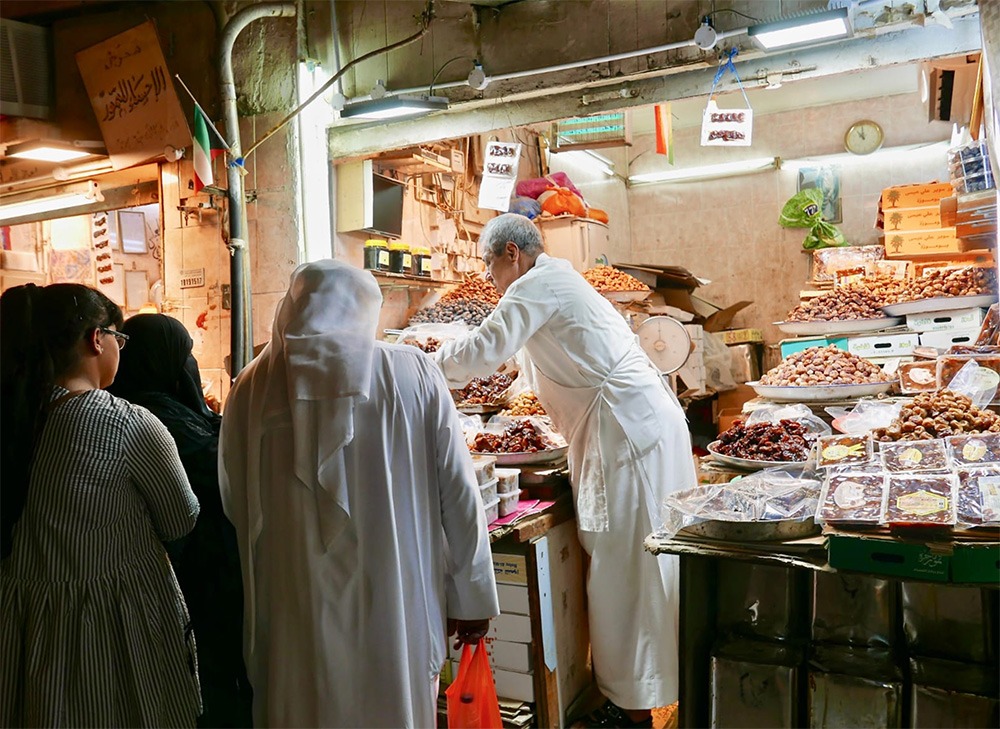
Perhaps the best place to experience the traditional atmosphere of Ramadan is the old souk in Mubarakiya. Ramadan nights in the outdoor market are all hustle and bustle as shoppers throng the narrow, festively decorated streets.
One of the oldest sections of the market is Souk Tamar, the date market. In Ramadan the shops selling piles of sweet, sticky fruit do a thriving business.
The date is the first food eaten by Muslims when breaking the fast, a tradition that originated with Prophet Mohammed (PBUH). Today, physicians point out that the body benefits from the date’s high level of natural sugars and vitamins and minerals. The sugars are converted into energy more quickly than any other nutrient and thus help relieve the fatigue felt at the end of the fast.
Friendly vendors are happy to explain about the many date varieties. They are also generous with free samples, allowing you to taste different kinds of dates. Years ago, the date market housed a small dry goods shop owned by a congenial Kuwaiti merchant named Ali Al Ajeel. Over many cups of strong black tea, Ali shared memories of the old days, when there were no supermarkets in Kuwait and Mubarakiya market was one of the only places for people to do their shopping.
“In the days preceding Ramadan, shoppers would stock up on food supplies for the night time feasts that follow the days of fasting,” Ali told me. Cupping his palm and scooping cracked wheat grains from a large burlap sack, he explained it is the main ingredient of harees, a traditional Ramadan dish.
Simple, filling, and delicious, harees is Arabian comfort food. Simmered to a porridge-like consistency in enormous pots, harees has always been a dish meant to be shared, and thus has age-old connotations of hospitality, generosity and community. In Ramadan, up until this day, containers of harees are delivered to family, neighbors and friends. In Ali’s family, the contents of a huge pot were sent to families in the neighborhood every Thursday.
If you would like to try this typical Ramadan dish, you can buy it from one of the shops beside the cooperative supermarkets, selling cooked chickpeas, fava beans and other hearty dishes from steaming vats. At just 400 fils per portion, these dishes are a delicious bargain. And by the way, while different versions of harees are popular throughout the region, it is only in Kuwait that it is served sprinkled with powdered sugar and cinnamon.
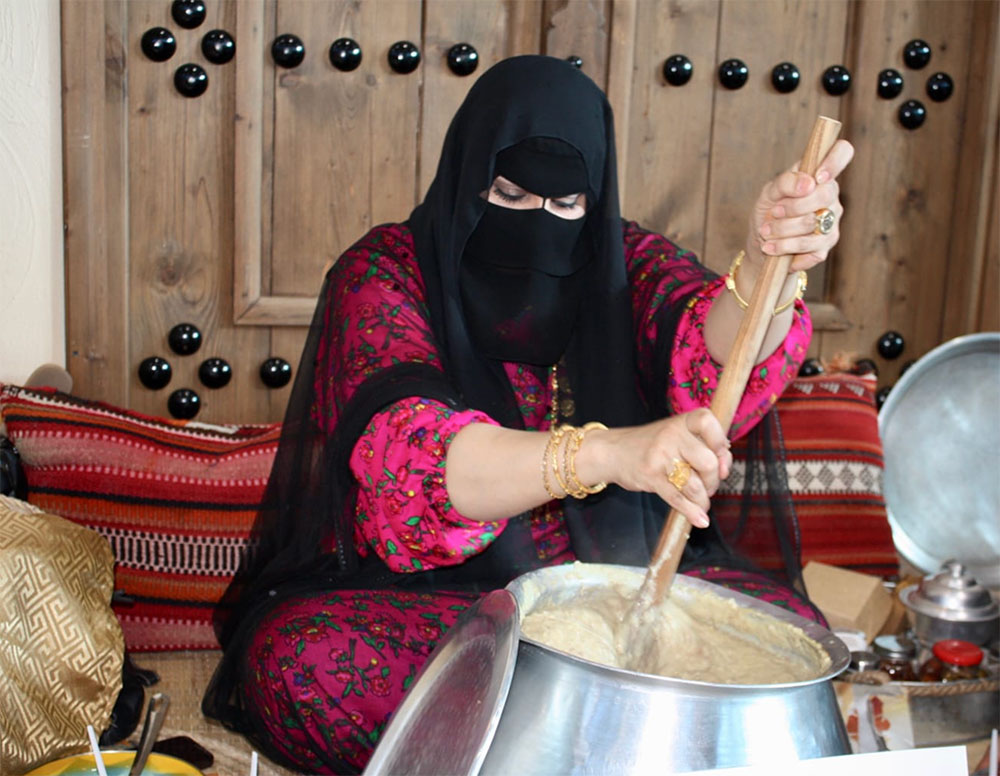
Ali Al Ajeel passed away more than a decade ago, and his simple shop selling traditional foodstuff was replaced with a French fries stand with a flashy neon sign. But despite dramatic changes in Kuwait, the custom of sharing food during Ramadan that Ali spoke of is still widespread. Should you be passing through a Kuwaiti residential area before sunset, you can often see children or household helpers carrying trays of dishes to neighboring homes. Expats can also join in this popular pastime by sending friends or neighbors a special dish or dessert that need not be traditional Kuwaiti food.
American ladies reported that their brownies and peanut butter cookies resulted in requests for the recipes from their Kuwaiti neighbors.
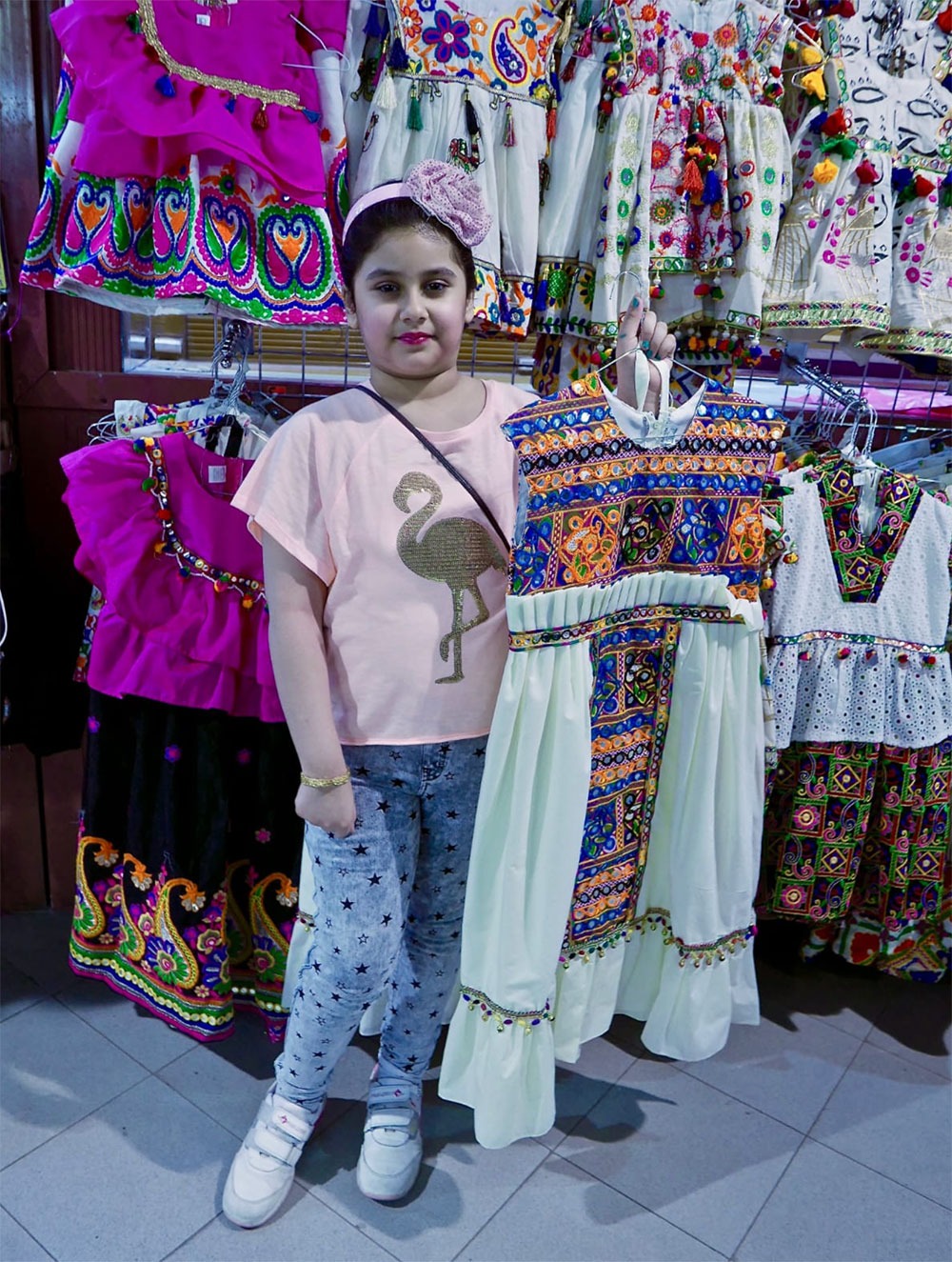
A traditional celebration that takes place on the thirteenth, fourteenth and fifteenth nights of Ramadan is Girgian. Children go door to door singing special Girgian songs and are then rewarded with a mixture of sweets and nuts. About a week before the holiday you will see big bags of Girgian candy for sale in all the supermarkets.
In the old days, boys would streak their faces with charcoal and use old oil tins as drums. Girls wore the traditional head covering called bushneg. Cotton flour or burlap rice sacks were used for collecting the sweets. Nowadays the children wear beautiful, ornate outfits often with fancy matching bags. It is worth having sweets and a camera ready when these late-night visitors come to your door.
Another Ramadan delight is a visit to one of the festively-decorated Ramadan tents erected by hotels and restaurants, where huge selections of Arab and international foods are served buffet style. Do not miss the traditional Ramadan sweets, like lgeymat and sub al gafsha, small fried dough balls covered in sweet syrup.
During Ramadan, restaurants and shops remain open until the early hours of the morning, so you might want to indulge in the novelty of shopping or dining after midnight. An unappealing aspect of Ramadan is the horrible traffic, and unfortunately there is really nothing that can be done about that. But do not let this prevent you from getting out and about and enjoying some of the special highlights of this unique month.
– Photographs by
Claudia Farkas Al Rashoud