By Reaven D’Souza
Executive Managing Editor
At a time when the global economy faces persistent uncertainty, geopolitical tensions, supply chain disruptions, inflationary pressures, and slowing trade, India has stood out as one of the world’s fastest-growing major economies.
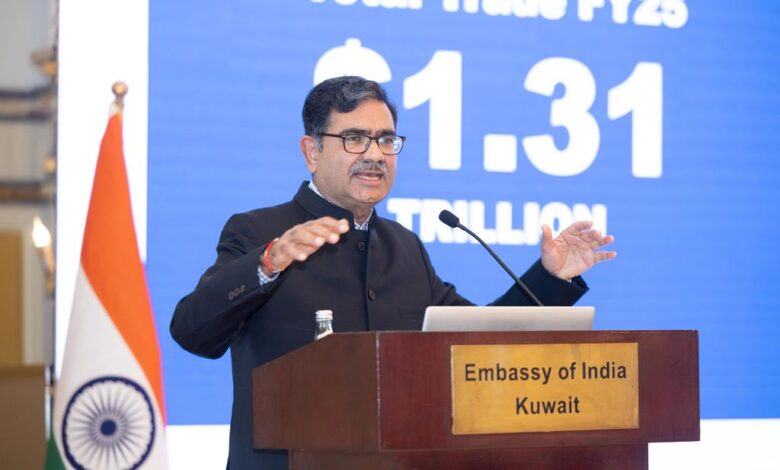
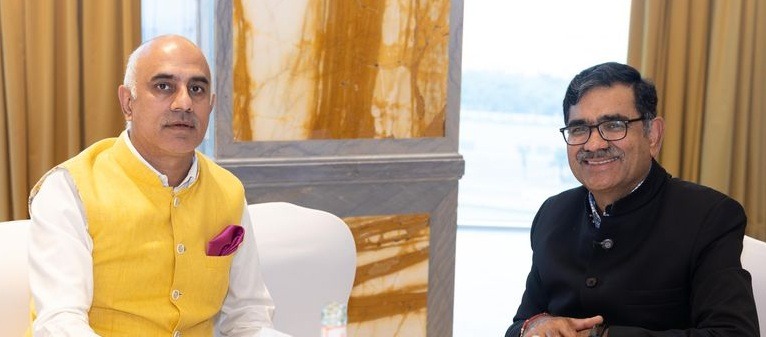
In an exclusive interview with The Times Kuwait, noted Indian economist Dr. Rajat Kathuria offered a comprehensive perspective on the foundations of India’s resilience and the roadmap for sustained, inclusive growth. Dr. Kathuria was in Kuwait as part of the ‘Viksit Bharat 2047 – India-Kuwait Dialogues’, organized by the Embassy of India in collaboration with the Indian Business and Professional Council (IBPC), where he delivered insights on India’s long-term economic transformation strategy.
Pillars of India’s Growth: According to Dr. Kathuria, economic growth rests on four pillars: consumption, government expenditure, private investment, and net exports. In India’s case, growth has largely been driven by domestic consumption and public investment.
India’s vast consumer base provides a powerful demand engine. Even during global slowdowns, domestic consumption has helped stabilize the economy. At the same time, the government has stepped up capital expenditure, particularly in infrastructure. Investments in roads, railways, ports, airports, and metro systems are laying the groundwork for future private-sector participation.
While private investment has moderated in recent years, public capital expenditure is performing the heavy lifting, creating the enabling ecosystem necessary for businesses to expand. As infrastructure improves, Dr. Kathuria expects private investment to follow.
Case for Labor-Intensive Manufacturing: A key theme in Dr. Kathuria’s remarks was the urgent need to expand labor-intensive manufacturing. Countries such as Japan, South Korea, and China built their economic transformation on the backbone of manufacturing sectors that absorbed large numbers of workers.
India, with its large pool of relatively low-skilled labor, must replicate this model. Sectors such as textiles, footwear, toys, sports goods, light engineering, electronics assembly, and medical equipment manufacturing present significant opportunities. These industries not only generate employment but also integrate India into global value chains.
India may not yet be considered the ‘factory of the world’, but Dr. Kathuria believes it has the potential to become one. Rising wages in China, Thailand, and even Vietnam create a competitive window for India. With supportive policies, regulatory reforms, and investment in clusters, India can emerge as a global manufacturing hub.
Balancing Growth and Inclusion: India’s official unemployment rate appears modest, but Dr. Kathuria highlighted the challenge of disguised unemployment, individuals engaged in informal or low-productivity work for survival rather than meaningful employment.
High growth alone is not enough. The government must use tax revenues generated from growth to fund fiscal transfers, invest in health and education, and improve living standards. Growth creates resources; policy determines how those resources are distributed.
India’s economic landscape is deeply heterogeneous. On one end, it produces globally competitive CEOs, world-class scientists, and cutting-edge technology firms. On the other, poverty and informality persist. The task is to ensure that the benefits of growth spread more evenly.
Free Trade and Competitiveness: On trade policy, Dr. Kathuria expressed support for well-structured free trade agreements (FTAs). While import-competing sectors may face short-term challenges, consumers benefit from lower prices and better quality. Over time, domestic producers are incentivized to become more competitive.
Unlike advanced economies attempting to ‘reshore’ large-scale manufacturing despite high wages, India’s economic structure supports expansion in labor-intensive production. Strategic openness can accelerate this process.
Investment Opportunities for Global Investors: India presents significant opportunities for global investors, particularly in equity and long-gestation sectors. Key growth areas include:
- Data centers and cloud services
- AI development and digital infrastructure
- Electronics and mobile manufacturing
- Computer peripherals and components
- Public-private partnerships in infrastructure
- Ports, airports, metro rail, and EPC projects
India’s large market, growing digital ecosystem, and improving infrastructure create substantial absorptive capacity for foreign capital. Sovereign wealth funds and pension funds from Canada, Australia, Japan, and elsewhere have already established strong investment footprints in India.
Dr. Kathuria emphasized that building institutional relationships with the Ministry of Finance, regulators such as SEBI, and investment promotion agencies is essential for sustained foreign participation. Trust and long-term engagement matter as much as returns.
Role of Government: Enable, Do not Operate: A consistent theme was the appropriate role of the state. The government, in Dr. Kathuria’s view, should focus on regulation and enabling conditions rather than running commercial enterprises.
Investments in health, education, and soft infrastructure generate positive externalities and are core state functions. Privatization and regulatory oversight, rather than direct production, create more efficient outcomes. Growth, when properly managed, generates fiscal space that can be redirected toward public goods.
Education: Public Good and Commercial Opportunity: Education represents both a public investment and a commercial opportunity. While public institutions create broad societal benefits, private universities and international collaborations are increasingly viable business models. High-quality education, whether philanthropic or profit-driven, strengthens India’s human capital base and long-term competitiveness.
Addressing Investor Concerns: Foreign investors typically raise concerns about regulatory complexity, bureaucratic delays, and infrastructure bottlenecks. However, digitization of approvals, regulatory reforms, and large-scale infrastructure investments are gradually addressing these constraints. India’s trajectory remains positive. With political will, institutional strengthening, and strategic global engagement, the country is well-positioned to sustain high growth rates.
A Growth Story with Depth: India today is a nation of contrasts, frontier-level innovation coexists with developmental challenges. Yet this diversity is also a source of strength. As Dr. Kathuria concluded that the fundamentals remain strong: a large market, competitive labor costs, growing digital capabilities, and rising global integration. With continued reforms and targeted investment in labor-intensive sectors, India’s growth story is not only sustainable it is poised to become transformative.