Making way saves lives: Obey traffic rules for emergency vehicles or pay hefty fines
- Step aside, save a life: Make way for emergency vehicles
- Obey traffic rules: Emergency vehicles can’t wait
- Making way is more than courtesy — it’s the law
The Ministry of Interior has reminded motorists that giving priority to emergency and government vehicles is not only a legal obligation but also a humanitarian responsibility that can save lives.
The Ministry emphasized that failure to comply with traffic rules in such situations can lead to strict penalties, including fines and imprisonment.
What ‘Making Way’ Really Means
Making way refers to allowing emergency vehicles — such as police patrols, ambulances, firefighting units, civil defense vehicles, and official convoys — to pass safely and without delay.
This applies as soon as the vehicles activate their audible sirens and visual warning signals. Obstructing or delaying these vehicles can endanger lives and violate the law.
How to Make Way Safely
To ensure emergency vehicles can move quickly to the site of an incident, motorists should follow these steps:
- Immediately reduce your speed upon hearing sirens.
- Gradually move to the right side of the road to clear a passage.
- Stop at the roadside if necessary to allow safe and unhindered passage.
Legal Consequences for Non-Compliance
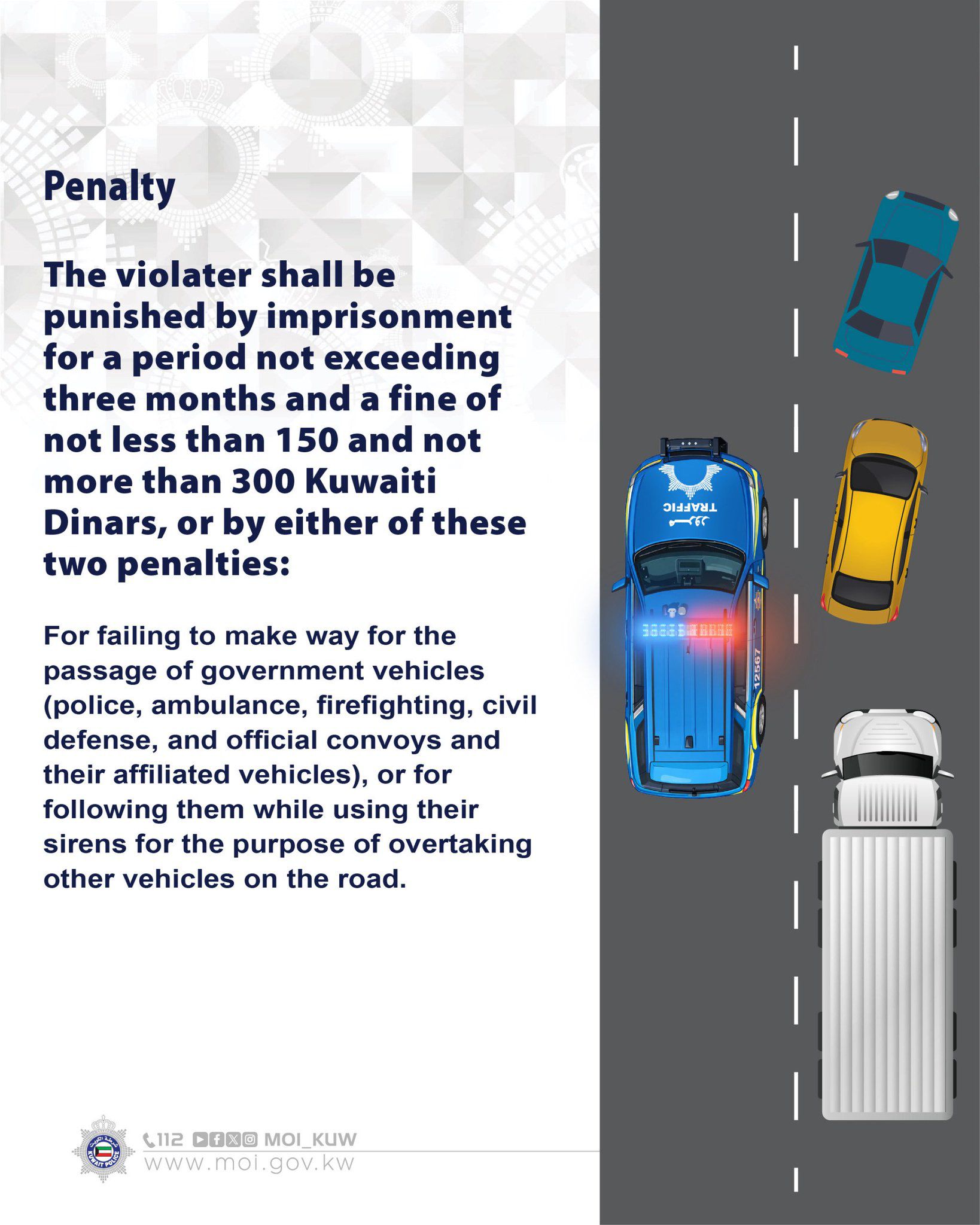
Violating these rules is a punishable offense. Offenders may face:
- Imprisonment for up to three months,
- A fine ranging from 150 to 300 Kuwaiti Dinars, or
- Either one of these penalties.
The same penalties apply to motorists who misuse emergency sirens to follow government vehicles in order to overtake other cars.
Why Compliance Matters
The Ministry stresses that cooperation with emergency vehicles is vital for saving lives and protecting public safety. Quick response times for police, ambulances, and firefighting units can mean the difference between life and death during critical situations.
By following simple rules and making way for emergency vehicles, motorists contribute to a safer, more responsible driving culture and ensure that everyone on the road benefits from enhanced protection.
Remember: Making way is both a legal duty and a humanitarian act—your actions can save lives.