Earth Sciences warn of dangerous caverns in Jal Al-Zour, Al-Mutlaa
Geologists caution against visiting desert caverns over collapse risk; Kuwait Geological Survey informed after ground cavities detected
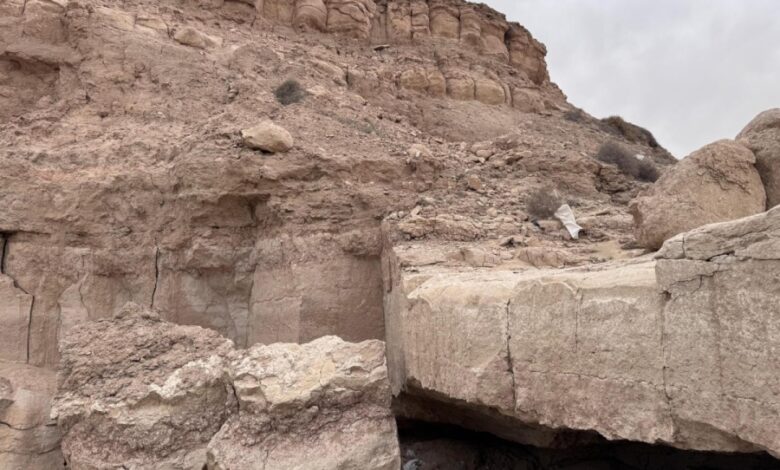
The Kuwaiti Society for Earth Sciences has warned of the presence of ground cavities in the desert areas of Jal Al-Zour and Al-Mutlaa, cautioning that these formations — whether natural or man-made — pose potential dangers and are not suitable to be visited as natural landmarks due to the risk of sudden collapse.
Chairman of the Society, Dr. Mubarak Al-Hajri, told KUNA on Saturday that field teams conducted site visits to study the cavities, prepare a preliminary report and issue warnings regarding their hazards.
Dr. Al-Hajri said one cavity was identified in the “Had” area at the foot of Jal Al-Zour, along a rainwater runoff path that has contributed to the formation of cracks. He explained that runoff zones are typically geologically weak and marked by fractures and faults extending in a northeasterly direction, reports Al-Rai daily..
He added that the area is known for active erosion processes and ongoing geological development of rock layers, factors that have led to the emergence of cracks that could widen over time and pose risks to anyone nearby. He stressed the need for extreme caution when approaching the slope for any reason.
Another cavity was documented in Al-Mutlaa, described as a hole about four meters in diameter and six meters deep horizontally, containing bird nests believed to be more than a year old.
Dr. Al-Hajri noted that cavities in southern regions are often linked to the Dammam geological formation, where the development of underground caves is possible. However, he said the cavity in Jal Al-Zour differs from the typical underground caves found in the Al-Dahr area and locations with similar rock structures.
He emphasized the importance of taking precautionary measures near such sites to prevent accidents and called for the establishment of an independent Kuwait Geological Survey to undertake specialized scientific and field tasks.
He said the proposed body would help protect lives and infrastructure by studying subsurface conditions, particularly as urban expansion and infrastructure investments accelerate. He pointed to the need to address a scientific and institutional gap stemming from the absence of an authorized entity to study shallow sedimentary layers and the effects of natural geological processes.
Such an authority, he added, could play a key role in monitoring natural phenomena and assessing geological hazards, including land subsidence, active faults, fracture networks and other subsurface processes whose effects appear at the surface.