Northern Economic Zone Vital to Realizing Vision 2035
The Times Kuwait Report
Plans to develop a new urban conglomerate in northern Kuwait, to ease the country’s persistent housing woes and meet needs of a growing population, traces back over four decades to the mid-1980s. But this concept of constructing a large residential city in Al-Subiya area, to the north of Kuwait City, with a bridge across Kuwait Bay and a new port, was shelved for over two decades due to then prevailing geopolitical tensions, economic constraints, and political priorities.
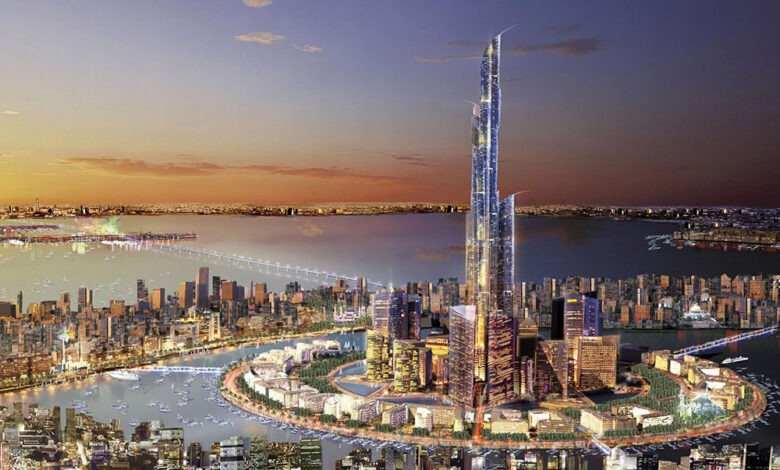
It was only in 2004 that plans for Al-Subiya residential area were revived, with Kuwait Municipality reimaging the originally mooted plan into a more expansive and integrated project, renamed as Madinat Al Hareer (Silk City). The new plan, spread over an area of 250 square kilometers, included not only the residential city of Al-Subiya but also the development of an industrial zone, health, educational and recreational centers, as well as developing Boubyan Island as a nature reserve.
However, the municipality’s plans floundered over specific details and differences with the private sector, and, despite transfer of the project in 2006 to the Kuwait Investment Authority (KIA) and the Supreme Council for Planning and Development (SCPD), it still failed to take-off. In 2012, the government decided to directly intervene, establishing the Al-Subiya and Boubyan Development Agency (ABDA) to restructure the plan and develop legal frameworks for its viability. ABDA was also entrusted with developing Mubarak al-Kabeer Port on Boubyan Island.
Despite the government’s structural changes and centralized decision-making process, this plan too failed to materialize. It was only in 2017, following the conceptualizing of Kuwait’s Vision 2035, that plans for the Silk City gained stronger traction. Significant impetus for the project came in 2019, with the then Deputy Prime Minister Sheikh Nasser Sabah Al-Ahmad Al-Sabah taking charge of the project and presenting it as a Northern Economic Zone (NEZ) to Parliament.
Aside from the Silk City as a central, large-scale urban development, the overarching NEZ plan, encompassing an area of nearly 1,700 sq km, included the Mubarak Al-Kabeer Port on Boubyan Island, the islands of Warba, Failaka, Miskan and Awha as major tourism, logistics, and investment hubs, and the Al-Abdali Economic Zone (AEZ) as a smart and sustainable industrial development.
The opening of the Jaber Al-Ahmad Causeway in 2019 initiated the launch of NEZ. However, political opposition to the project arose from parliament, with lawmakers voicing concerns over the project’s extraterritorial and extrajudicial aspects, and its perceived sidelining of Kuwait’s private sector in favor of foreign entities. In addition to the persistent executive-legislative tussle in parliament, institutional infighting, bureaucratic hurdles, and funding mechanism combined to scupper the plan, with its priority relegated for another four years.
Coincidentally, as plans for Silk City and Vision 2035 were being formulated, China began pushing ahead with its Belt and Road Initiative (BRI) that aimed to expand trade and growth opportunities across Asia, Africa, and Europe. Recognizing the synergy between Kuwait’s 2035 Vision to transform into a financial and trade hub, and the BRI’s emphasis on developing trade and logistics networks, Kuwait entered into strategic ties with China, and became the first country in the region to sign on to the BRI initiative.
In September 2023, His Highness Sheikh Meshal Al-Ahmad Al-Sabah, then the Crown Prince, made a historic visit to China, during which several memorandum of understandings on development and investment were signed between the two nations. Following his assumption as ruler of Kuwait in December 2023, His Highness the Amir Sheikh Meshal Al-Sabah emphasized that economic and social development, along with equitable justice, transparency and good governance were vital to Kuwait’s sustainable growth and to the prosperity of its people.
Since taking office in May 2024, the government headed by His Highness the Prime Minister Sheikh Ahmad Al-Abdullah Al-Sabah has, in alignment with the directives of His Highness the Amir, made reforms and sustainable growth a key plank in its development agenda. As part of this future-oriented strategy, the government held a meeting last June with representatives of all concerned entities on rejuvenating the NEZ.
The discussions centered around encouraging participation of the private sector in the project, designing a flexible legislative framework and competitive incentive structures, as well as developing sustainable industrial, commercial, and tourism sectors in the zone. During the talks, officials stressed the need to preserve Kuwaiti sovereignty over developments in NEZ, while creating an investor-friendly environment and a competitive economic zone guided by its own legal framework and governed by independent institutions.
Last December, the government made good on its commitments to reviving NEZ, with the signing of an engineering, procurement and construction (EPC) contract with China Communications construction company Ltd., for developing the first phase of Mubarak Al-Kabeer Port on Bubiyan Island. Speaking on the occasion, His Highness the Prime Minister stressed that the signing highlighted the government’s resolve to translate amiri directives into tangible development achievements. He indicated that the Port was a vital step in realizing NEZ and to achieving Vision 2035.
The cumulative impact of the government’s wide-ranging reforms and structural transformations since 2024 are reflected in recent positive rankings by global rating agencies. Last November, Kuwait’s sovereign credit rating was upgraded to ‘AA- with a stable outlook’ by Standard & Poor’s (S&P). The agency highlighted major infrastructure projects, including work on NEZ, the new airport terminal, residential cities, and an economic zone, as evidence of Kuwait’s long-term economic transformation.
The agency added that Kuwait’s reform agenda has also accelerated significantly, with a coordinated program covering economic, financial, legislative and structural areas. The reforms, aimed at developing a flexible and sustainable economic model aligned with Vision 2035, have reinforced the country’s fiscal framework, enhanced liquidity management, and created a more predictable environment for long-term financial planning, said the agency.
The government also launched a Performance Management System to promote accountability, strengthen governance, improve service quality, and enhance transparency across ministries and state agencies, in a bid to counter administrative inefficiencies and reinforce integrity. The government’s sweeping reforms roadmap, development agenda, and good governance initiatives are expected to be transformative to the economy.
The measures are expected to stimulate economic diversification, boost investor confidence, foster more foreign investment inflows, enhance competitiveness of Kuwait’s development projects internationally, create quality job opportunities, develop national capabilities, and strengthen regional trade and economic integration, as well as enable the country to respond effectively to fast-evolving global challenges.
Vision 2035 emerged in 2017 from the growing realization that the rentier model of an oil-based economy was increasingly becoming untenable, and that Kuwait needed to develop new pathways for growth, employment, and revenue generation. Reviving the NEZ is seen as crucial to catalyze Kuwait’s Vision 2035 and realize a sustainable future for Kuwait.
Opening of the Al-Jaber Causeway linking Subiya area across Kuwait Bay in 2019, was not only a remarkable feat of engineering, it also underlined that under the right leadership and drive, Kuwait could be jostled from its development lethargy and achieve timely results. With work on the causeway taking six years for completion, and first phase of Mubarak Al-Kabeer Port slated for handover in 2028, it is evident that, rather than a piece-meal approach, a plan involving work on all units of NEZ concurrently is needed to realize Vision 2035 within its timeframe.
The country’s new economic diversification trajectory, its revamped identity as a reform-oriented, development-enabling, investor-friendly environment, and its future as a trade, cultural, and financial hub that ensures sustained and sustainable growth and employment opportunities, will ultimately hinge on the government successfully implementing the Northern Economic Zone in its entirety.