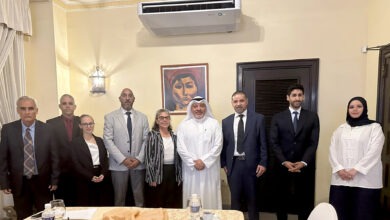
Japan Kuwait relations marked by shared values, mutual trust
Year 2026 will see deeper cooperation in energy, water, clean technology, AI, and culture. Japan is committed to supporting Kuwait Vision 2035 while expanding educational, economic, and people-to-people exchanges - Ambassador Kenichiro Mukai
The Times Kuwait Report
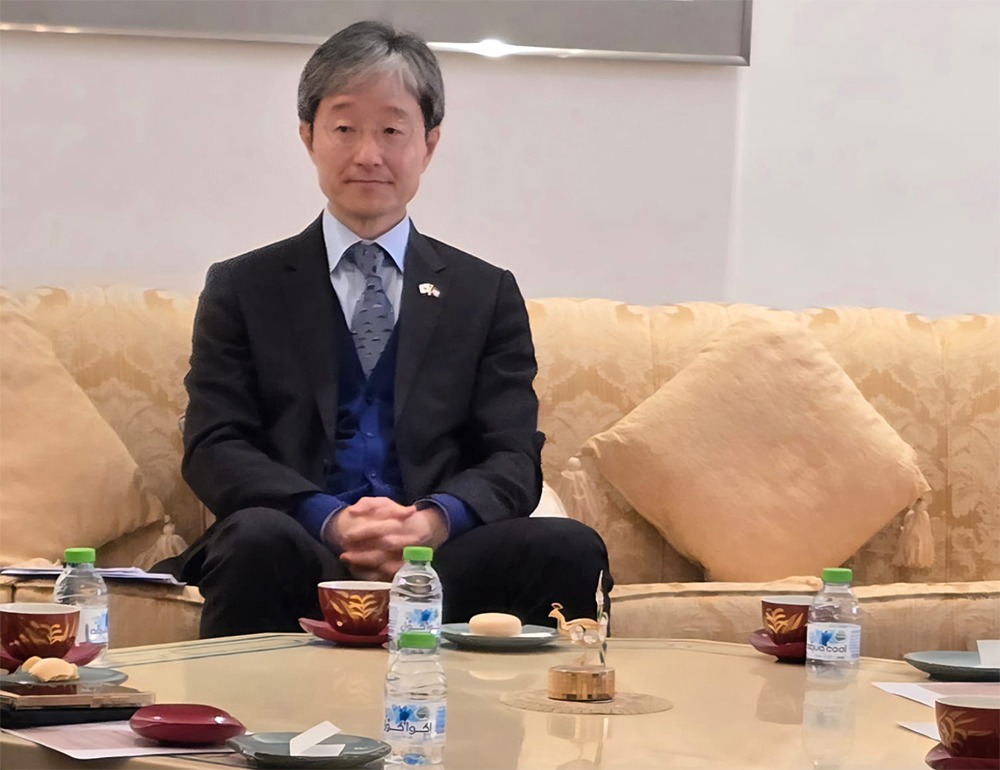
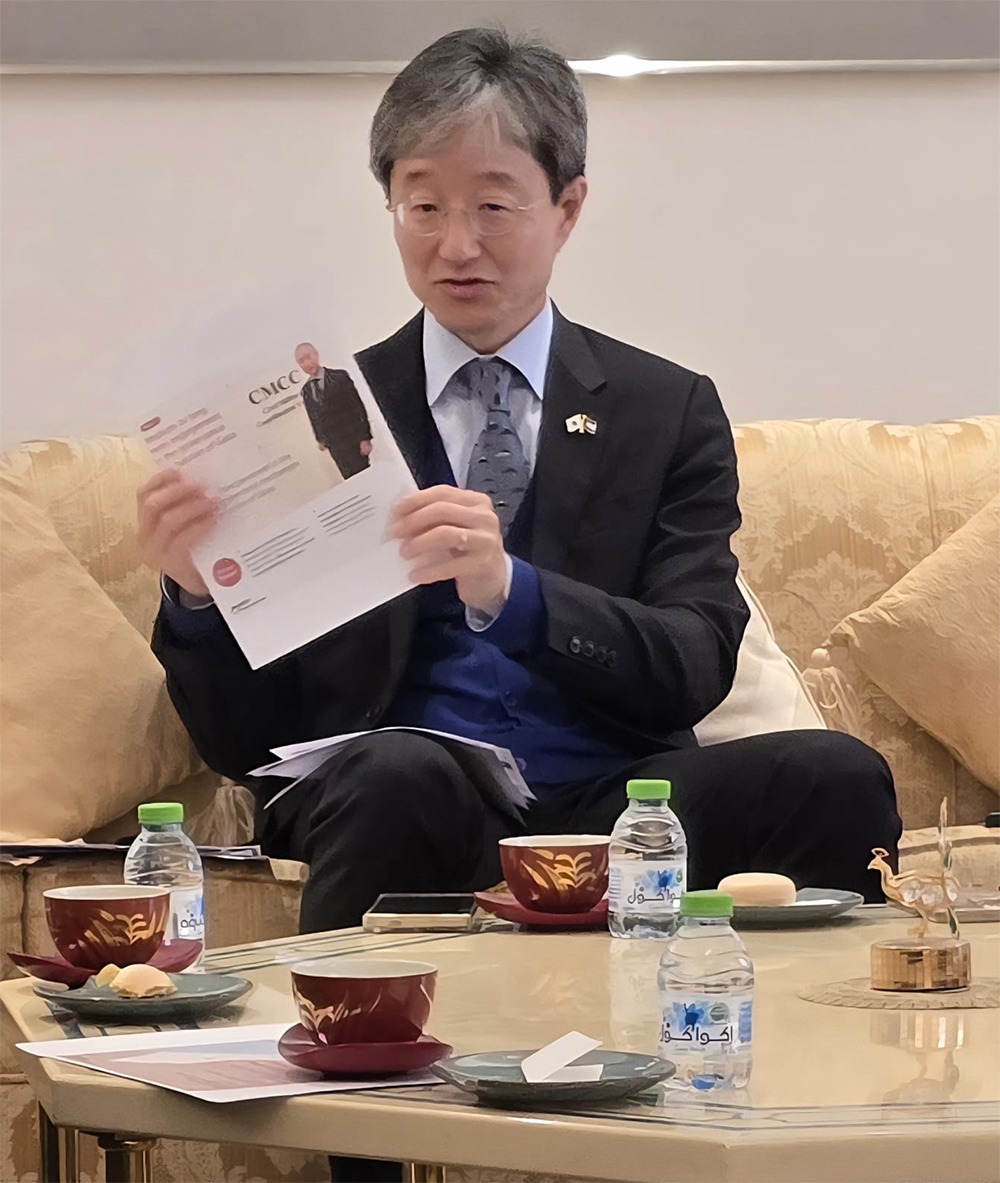
The strength of Japan-Kuwait relations are underlined by high profile visits, strategic discussions, and strategic cooperation, as well as shared values and mutual trust. Underlining the robustness of bilateral ties, Ambassador of Japan H.E. Kenichiro Mukai expressed confidence that 2026 will bring further progress in Japanese-Kuwaiti relations, with both countries aiming to deepen cooperation in established sectors such as energy and water, while leveraging advanced Japanese technologies to support Kuwait Vision 2035.
On the economic front, Ambassador Mukai revealed that between 10 and 15 Japanese companies are currently operating in Kuwait across various sectors. While fierce global competition has affected export performance, he said it has also driven Japanese firms to rethink strategies and reinforce their presence in overseas markets.
Collaboration is also expanding into clean energy, decarbonization, artificial intelligence, cybersecurity and advanced materials, said the envoy. On 21 January, a workshop titled ‘The Road to Decarbonization’, was held in Kuwait in collaboration with Mitsubishi Research Institute, Mitsubishi Corporation, the Kuwait Institute for Scientific Research (KISR), and the Kuwait Foundation for the Advancement of Sciences (KFAS).
Addressing education, the ambassador described academic exchange between Kuwait and Japan as below expectations. Only one Kuwaiti student is currently studying in Japan, while the total number in previous years did not exceed 26.
He added that Japan is working to expand scholarship programs and open new avenues for higher education cooperation. He noted that Japanese universities hold advanced global rankings and increasingly offer programs in English, enhancing their appeal to Kuwaiti students.
Culturally, he confirmed the continuation of Japanese language programs at Kuwait University, taught by Japanese instructors, citing growing local interest in Japanese language and culture and the potential to expand these programs. Japan is also promoting cultural outreach across the Arab world through the Arabic-language Instagram platform @japan.arabic_culture.
In the food sector, exports of Japanese Wagyu beef to Kuwait have begun, with promotional events planned over the coming months. Japanese products such as matcha are also gaining popularity in Kuwait’s market. Meanwhile, cultural engagements are set to continue with an exhibition of traditional Yakishime pottery beginning in April, which will introduce Kuwaiti audiences to a distinctive Japanese ceramic art form.
The Kuwait Pavilion at the Osaka-Kansai Expo also drew significant attention, promoting Kuwaiti culture in Japan. From September to October 2026, the 20th Asian Games (Aichi–Nagoya) will welcome Kuwaiti athletes and supporters, further strengthening people-to-people ties. In consular matters, Ambassador Mukai explained that Japan’s citizenship laws are among the strictest worldwide, with reinstatement procedures often taking several years. Visa fees, he added, may be adjusted to align with international standards while remaining relatively low compared to other countries.
He pointed out that the year 2025 marked a significant step forward in Japan–Kuwait ties, with His Highness the Crown Prince Sheikh Sabah Khalid Al-Hamad Al-Sabah visiting Japan in May and meeting with the Japanese Emperor, the Crown Prince and the Prime Minister.
During the visit, Sheikh Sabah Khalid also attended the Osaka Expo and held high-level discussions . that saw both countries elevate their relationship to a Comprehensive Strategic Partnership, and signing agreements in key sectors including power and water.
Further momentum followed in September during the Japan–GCC Foreign Ministers’ Meeting in Kuwait, which advanced cooperation under the strategic framework. High-level exchanges, including visits by Tokyo Governor Yuriko Koike with startup delegations, strengthened business and technology ties.
In November, former Prime Minister His Highness Sheikh Nasser Al-Mohammed Al-Ahmed Al-Sabah was awarded the Grand Cordon of the Order of the Rising Sun by the Japanese Emperor in recognition of his role in enhancing bilateral relations. The Kuwait Pavilion at the Osaka-Kansai Expo also attracted wide attention, promoting Kuwaiti culture in Japan.
On regional issues, the ambassador reaffirmed Japan’s firm commitment to supporting the Palestinian people. Since 1993, Japan has provided about US$2.6 billion in humanitarian and reconstruction assistance to Palestine, addressing urgent needs, early recovery and broader rebuilding efforts.
Expanding on increasing global competition in the automotive sector, Ambassador Mukai said, the growing presence of Chinese cars on regional roads has become an undeniable reality, reshaping the global automotive landscape and pushing major industrial nations into an open and intensified race for innovation and advanced technology.
The ambassador noted that competition across Middle Eastern and international markets has reached unprecedented levels. Despite these pressures, Japan continues to hold a leading position, supported by product quality, strong global brands and a long-standing industrial legacy.
He highlighted a major strategic shift toward electric vehicles, noting that some newer models can travel hundreds of kilometers on a single charge—a clear sign of the accelerating global transition toward clean energy.
Returning to Japanese Kuwaiti ties, Ambassador Mukai said that building on the progress of 2025, Japan and Kuwait are working to elevate cooperation at governmental, private-sector and grassroots levels in 2026, while Japan continues to maintain its active humanitarian and diplomatic engagement in the region.