












The partnership extends well beyond trade. India and the EU also agreed on:
- A defense and security cooperation framework
- An annual security dialogue
- A mobility pact to ease movement for skilled workers and students
- A future EU office to facilitate academic and professional exchanges
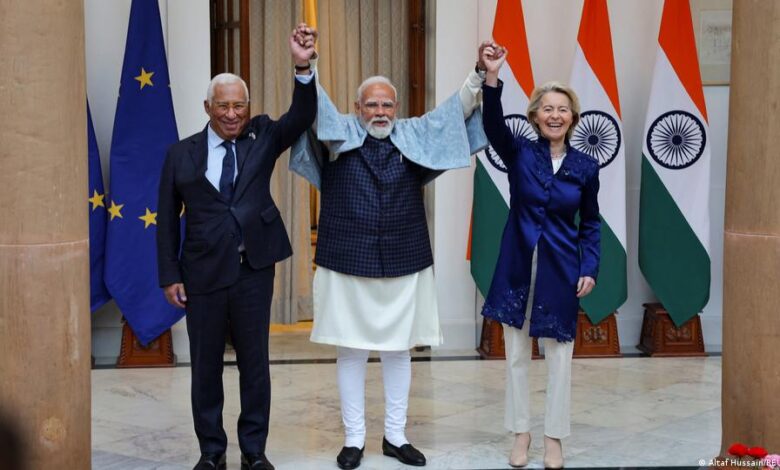
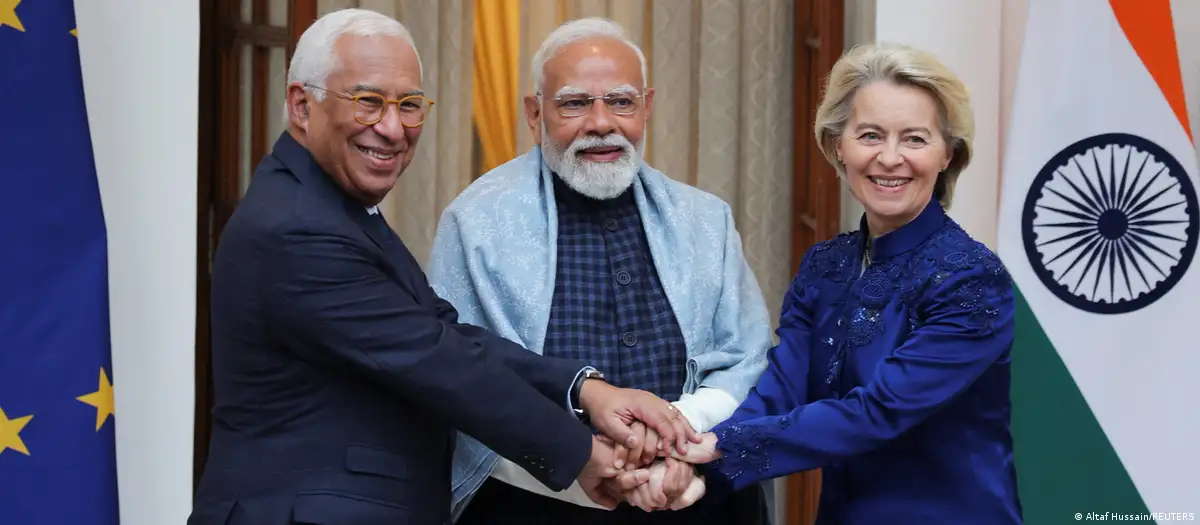
India and the European Union have concluded a landmark free trade agreement (FTA), marking a major breakthrough in economic and strategic relations between the world’s most populous country and the 27-nation bloc.

European Commission President Ursula von der Leyen hailed the accord as the “mother of all deals,” noting its potential impact on nearly two billion people across both markets.
According to the European Commission, the agreement is expected to double EU exports to India by 2032 through the elimination or reduction of tariffs on 96.6% of European goods entering India.
Products set to benefit include wine, automobiles, machinery, chemicals and pharmaceuticals, with India lowering some of its steepest import duties, DW.COM reports.
In return, the EU will reduce tariffs on 99.5% of goods imported from India over a seven-year period. Indian exports such as marine products, leather goods, textiles, chemicals, rubber, metals, and gems and jewellery are among those gaining wider access to European markets.
Duties on imported cars in India — currently as high as 110% — will fall gradually to 10%, a move expected to benefit European automakers, although analysts say competition from domestic and Asian manufacturers will remain intense.
Here are some more details of the deal, which is expected to be formally signed later this year after legal vetting:
- The agreement is set to double European exports to India by 2032
- Duties on cars will fall from as high as 110% to as low as 10% over time, while tariffs on car parts will be abolished within 5-10 years
- Levies on machinery, chemicals and pharmaceuticals to be largely eliminated
- Sharp cuts to agri-food tariffs, currently averaging more than 36%
- Indian duties on wine will drop from 150% to 75% initially and eventually to around 20%
- Olive oil tariffs will fall to zero within five years
- Levies on processed foods such as bread and confectionery will be removed
- All imports to the EU to continue to meet strict EU food safety standards
- A new EU-India climate cooperation platform to be launched in 2026
- A €500-million EU fund over two years is expected help India cut emissions and increase sustainable industrial transformation
- The EU will cut tariffs on 99.5% of goods traded over seven years
- Tariffs on Indian marine goods, leather products, chemicals, rubber, base metals and gems and jewelry to be cut to zero
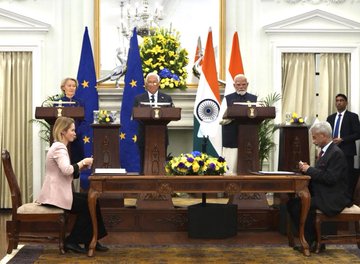
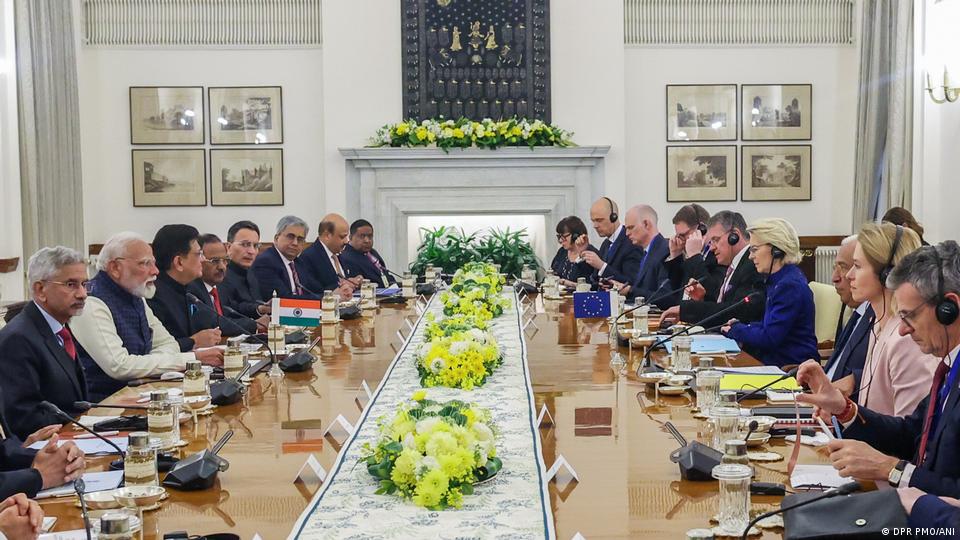
On defense partnership, Minister of External Affairs, Dr S. Jaishankar said, “When two major democracies act together, we build stronger shared security. It was a great pleasure to sign a new EU–India Security and Defense Partnership.
“The pact launches an annual security and defense dialogue – with the first meeting taking place in a month – and deepens cooperation on maritime security, cyber issues, and counterterrorism.
“We will also explore Indian participation in European defense initiatives. As the global order shifts, the EU will continue to deepen its diplomatic and economic ties across the world. Strong partnerships multiply our strength,” he added.
EU foreign policy chief Kaja Kallas said the agreements reflect the bloc’s intent to strengthen global partnerships amid shifting geopolitical realities. “Strong partnerships multiply our strength,” she noted.
The deal comes after nearly two decades of intermittent negotiations but gained fresh urgency amid global trade disruptions and growing uncertainty in multilateral trade systems.
Experts say both sides now see each other as stable, large-scale economic partners at a time when global supply chains and trade alliances are being reshaped.
Former Indian diplomat Sanjay Bhattacharyya described the pact as a turning point. “This is not just commerce — it is connectivity, investment and technology integration,” he said, adding that trade flows are likely to trigger increased European investment in India.
The agreement also includes cooperation on climate action, labor rights, environmental protection, and sustainable industrial transformation.
A dedicated EU-India climate platform is expected to launch in 2026, alongside financial support for emissions reduction initiatives.
Next Steps
The text will now undergo legal vetting before being submitted to the European Parliament for ratification. Formal signing is anticipated later this year.
If implemented smoothly, the accord could reshape trade flows between Europe and Asia, strengthen supply-chain resilience, and anchor a long-term strategic partnership between two of the world’s largest democratic blocs.