By Ghada Hatim Eltahir,
Representative of the United Nations Secretary- General and
Resident Coordinator in State of Kuwait
We live in a world where peace is increasingly under threat, peace today is not failing in theory, it is failing people. 90 million forcibly displaced people now live in countries facing high to extreme climate risk. Conflict-related sexual violence has surged by 87% since 2022. Armed conflicts continue to rage across multiple regions. At precisely the moment when global challenges demand coordinated responses, trust in multilateral cooperation is being tested, and unilateral approaches at times overshadow collaborative action.
This is exactly why multilateralism is more needed than ever. Pandemics, climate change, mass displacement, and transnational security threats cannot be solved by any nation acting alone. The multilateral system, for all its imperfections, remains humanity’s best framework for addressing shared challenges and building sustainable peace. When multilateralism weakens, power speaks louder than principle, and civilians pay the price.
At its core, multilateralism is about nations coming together, respecting differences, and working toward shared goals for the common good. It reflects the understanding that peace in one region affects security everywhere, that climate action requires collective commitment, and that protecting human rights universally strengthens us all.
Here in Kuwait, this understanding runs deep. Kuwait knows from its own history the vital importance of international solidarity and collective action. As highlighted during the United Nations Secretary-General’s visit in 2024, Kuwait has long been recognized for its humanitarian leadership. Positioned as a bridge between diplomacy and humanitarian action, Kuwait continues to champion multilateral cooperation, serving on the UN Human Rights Council (2024-2026) and ranking among the most peaceful countries in the region according to the Global Peace Index (2025).
And if multilateralism is more necessary than ever, then women in multilateralism are more crucial than ever. Inclusive multilateral systems deliver more legitimate decisions, more durable peace, stronger accountability, and better protection for human rights. Women’s equal participation is not an add-on – it is a credibility test for multilateralism.
Peace agreements are 35% more likely to last at least 15 years when women participate in their creation. When women lead peace processes, communities place greater trust in them. When women shape humanitarian responses and climate adaptation strategies, solutions are more grounded in local realities and more sustainable over time.
Across diverse contexts, I have witnessed women proactively leading peace efforts at moments with complex institutional malfunctions, keeping health services running when systems collapsed, as peacebuilders mediating resource-based conflicts before they turned violent, and facilitating dialogue between divided communities while ensuring that reconstruction reflected real needs. In fact, in 75% of informal peace processes, women’s groups are actively involved, delivering tangible results on the ground.
At moments of global tension, leadership is measured not by volume, but by balance. Kuwait’s diplomatic history demonstrates this powerfully. Ambassador Nabeela Al-Mulla became the first woman from Kuwait and the Gulf Cooperation Council to serve as an ambassador in 1993, opening doors across the region. From 2002 to 2003, she chaired the Board of Governors of the International Atomic Energy Agency during a period of intense nuclear tensions, the first woman from the Gulf and the wider region to hold this position. Her leadership showed that women strengthen multilateral institutions precisely when they are most tested.
Yet despite this proven effectiveness, significant gaps remain. Women deliver peace locally, yet remain excluded globally. In 2024, women comprised just 7% of negotiators, 14 % of mediators, and 20 % of signatories in peace processes globally. Women currently lead only 29 countries worldwide, while 102 countries have never had a woman head of state or government. Between 2015 and 2024, only 23 % of United Nations Security Council Permanent Representatives were women. Too often, women deliver results on the ground, yet remain absent when formal multilateral negotiations begin.
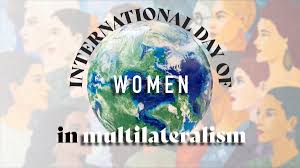
This is why the International Day of Women in Multilateralism is marked each year on January 25th , to call for structural change, not symbolism. We must ensure that women have genuine influence over the decision-making process. We must support women-led organizations as essential peace infrastructure. We must protect women from violence intended to silence them. And we must create clear pathways for the next generation of women leaders in diplomacy.
The United Nations Country Team in Kuwait works closely with the Government, academia, civil society organizations and beyond to advance women’s empowerment, including through the implementation of Security Council Resolution 1325 on Women, Peace, and Security. As Kuwait advances its Vision 2035 and continues its humanitarian engagement across the region, integrating women’s perspectives into these efforts will strengthen outcomes and enhance their sustainability.
At a time when peace is under threat and multilateral cooperation faces one of its greatest tests, women’s leadership in multilateralism is not peripheral, it is essential. The greatest threat to peace today is not the absence of institutions, but the exclusion of voices that sustain them.
Peace does not collapse overnight; it erodes when cooperation gives way to division.