- Europe is rethinking transatlantic trust as US-EU trade tensions deepen.
- Brussels is positioning the EU as the world’s most reliable alternative trading partner.
- India is now Brussels’ top strategic trade target; An EU-India deal would connect 2 billion people and a quarter of global GDP.
- Brussels is expanding trade talks across Asia, the Gulf and the Pacific.
- Europe’s greatest risk is not outside pressure — but internal division.
Fear of rising US protectionism and the combative rhetoric emerging from the White House are accelerating the European Union’s global trade push — but internal divisions threaten to undercut Brussels’ ambitions at a critical moment for the world economy.
For more than a year, governments worldwide have been on edge as the United States slapped on tariffs and repeatedly dangled the threat of trade wars. The unpredictability of President Donald Trump’s trade posture has injected urgency into global diplomacy, forcing nations to seek new alliances as the post-war trading order fractures, dw.com reports.
While China has been a primary target of US trade pressure, Washington’s hard line has extended to its closest partners, including Mexico and Canada.
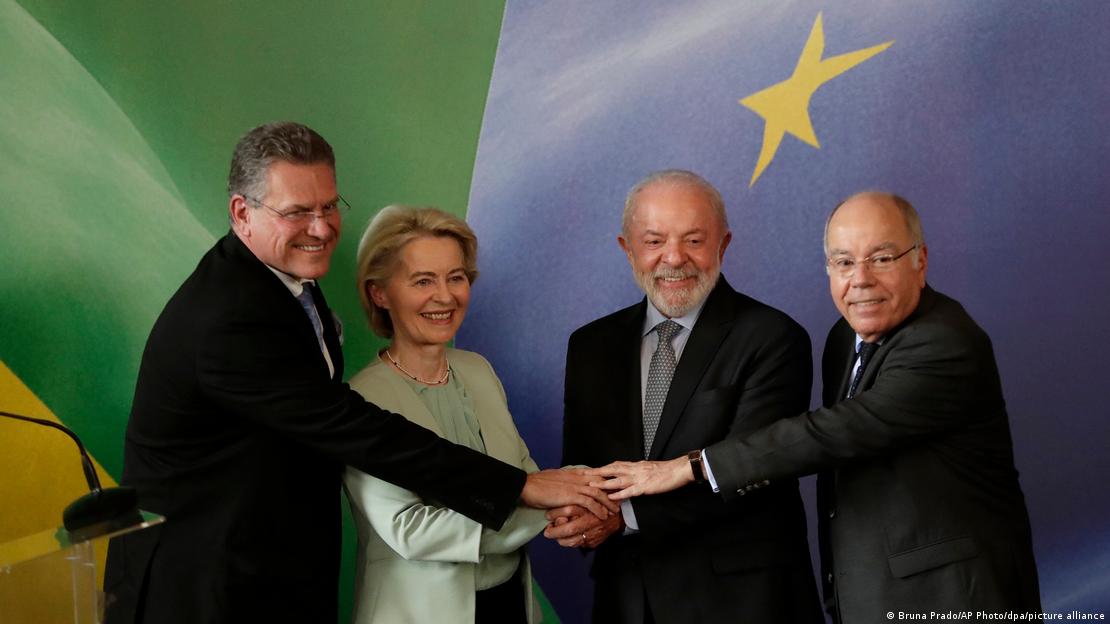
Across the Atlantic, the European Union has also found itself caught in the tariff crossfire, prompting uncomfortable questions about the reliability of long-standing transatlantic ties.
Trump’s dismissive tone toward European leaders at the World Economic Forum in Davos served as yet another wake-up call.
In response, Brussels has moved swiftly to finalize and launch trade agreements, aiming to position the EU as a dependable counterweight to US unpredictability. But trade deals are notoriously slow and politically sensitive — even in calmer times.
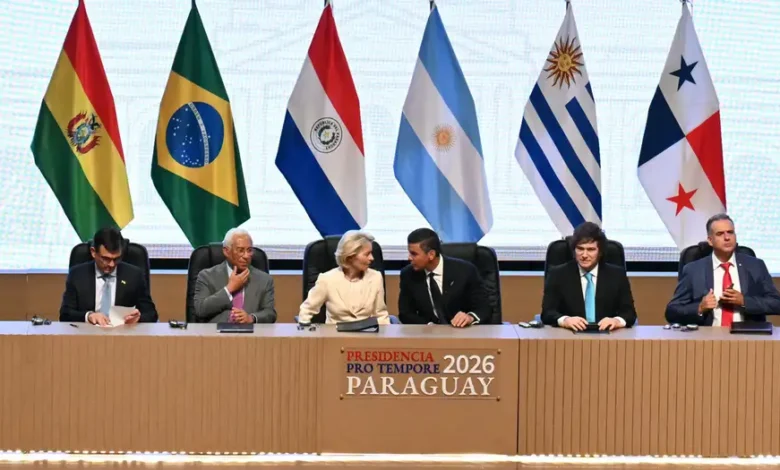
A major milestone came on January 17, when European Commission President Ursula von der Leyen traveled to Asunción, Paraguay, to sign the long-awaited EU-Mercosur trade agreement.
The pact between the 27-member EU and Argentina, Brazil, Paraguay and Uruguay would create a market of 700 million people — one of the largest free trade areas in the world.
EU Trade Commissioner Maroš Šefčovič described the agreement as a clear signal that both sides stand for low tariffs, smoother trade flows, and better prices for consumers.
Yet the breakthrough was short-lived. Just four days later, the European Parliament threw the deal into uncertainty by demanding an extended legal review by the European Court of Justice.
The hesitation — fueled in part by fierce opposition from European farmers fearing competition — risks damaging the EU’s credibility. South American partners could lose patience with a process that has already taken 25 years.
Attention now turns to India, where von der Leyen is seeking stronger results at the EU-India summit in New Delhi, hosted by Prime Minister Narendra Modi.
The EU is eager to conclude a free trade agreement with the world’s largest democracy and fifth-largest economy. Talks that began in 2007 stalled in 2013 before being revived in 2022.
A successful deal would link markets totaling roughly 2 billion people and account for around a quarter of global GDP — a geopolitical and economic prize for both sides.
Despite the hurdles, the EU remains an attractive partner. As the world’s second-largest import market, it is widely seen as more predictable than the United States.
Peter Chase, a senior fellow at the German Marshall Fund in Brussels, says many countries view the EU as steady and serious about honoring commitments in trade agreements.
However, he notes that complex ratification rules and domestic political pressures often slow progress. The Mercosur saga, he argues, shows how a small but vocal minority can stall major strategic moves.
Deals stacking up — but is it enough?
The EU already has preferential trade agreements with 76 countries and is exploring closer ties with the Comprehensive and Progressive Agreement for Trans-Pacific Partnership (CPTPP).
In 2025, Brussels updated its trade deal with Mexico and concluded negotiations on a trade and investment agreement with Indonesia.
Talks are also ongoing with Malaysia, the Philippines and the United Arab Emirates.
Meanwhile, the EU-UK Trade and Cooperation Agreement faces its first full review since Brexit, offering a possible opportunity to ease tensions and deepen cooperation.
Still, Chase argues that bilateral deals alone will not stabilize global trade. The more urgent challenge is reviving the World Trade Organization and restoring respect for international trade rules.
In his view, only the EU has the diplomatic weight to assemble a coalition capable of defending the rules-based system — pushing back against both Washington’s retreat from commitments and Beijing’s uneven compliance.
At a moment when global trade norms are being shaken, Europe’s biggest challenge may not be negotiating new deals — but ensuring it does not undermine itself.