Russia is increasingly looking to India to address its growing labor shortage, marking a notable shift in Moscow’s migration strategy as traditional sources of foreign labor dry up.
At least 40,000 Indian workers are expected to arrive in Russia in 2026, according to Boris Titov, Russia’s special representative for sustainable development. Indian Ambassador to Moscow Vinay Kumar said that between 70,000 and 80,000 Indian citizens were already working in Russia by the end of 2025.
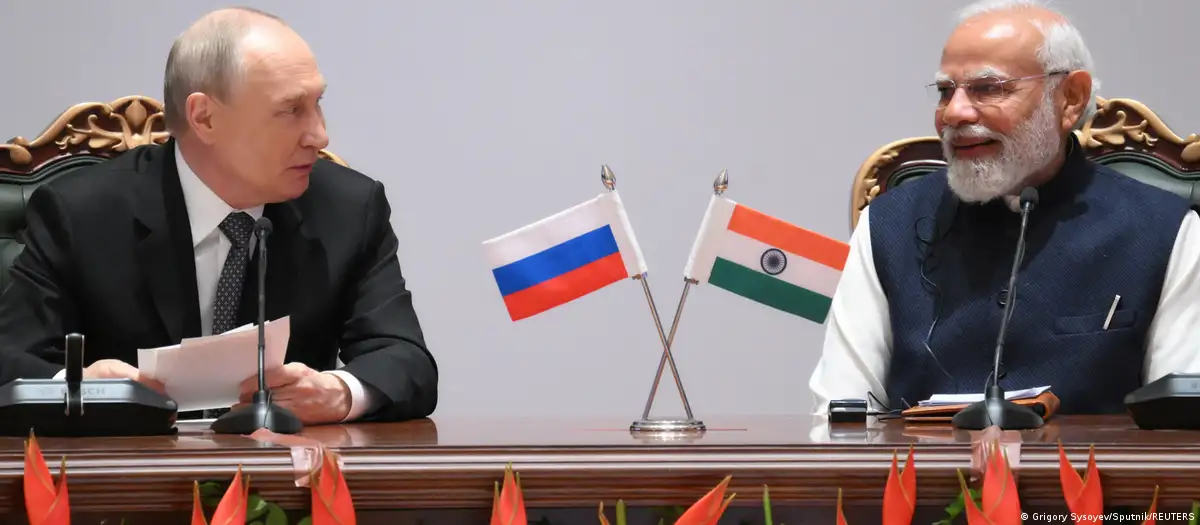
The surge follows a labor mobility agreement signed in December 2025 during talks in New Delhi between Russian President Vladimir Putin and Indian Prime Minister Narendra Modi.
The agreement sets a quota of more than 70,000 Indian workers for 2026, formalizing a migration flow that had previously operated largely outside official channels.
Border data cited by Deutsche Welle (DW) shows a sharp increase in Indian arrivals. While about 32,000 Indians entered Russia in the first quarter of 2025 and 36,000 in the second, the figure rose to 63,000 in the third quarter.
Indian workers are being recruited through both official and unofficial agencies. Wages for low-skilled jobs range from €475 to €950 per month, significantly higher than comparable earnings in India. In St. Petersburg, local authorities reported the arrival of around 3,000 Indian jobseekers, some of whom earn up to 100,000 rubles (€1,125) a month, with free accommodation, meals and Russian language courses.
An Indian diplomat, speaking anonymously, said the agreement serves both countries’ interests. “Russia needs workers, and India needs to export unemployment,” the diplomat said, adding that the deal was intended to curb irregular migration and protect Indian citizens from exploitation.
In the past, informal recruitment channels had exposed Indians to fraud. Some were misled into signing contracts with the Russian army and were later deployed to fight in Ukraine. Since the start of Russia’s invasion in February 2022, 126 Indians have signed military contracts, according to official figures. At least 12 were killed, while 96 have since returned to India.
During a 2024 visit to Moscow, Prime Minister Modi raised the issue with President Putin, urging the repatriation of Indian nationals and measures to prevent further recruitment into the military.
Despite the growing numbers, economists question whether Indian workers can fully address Russia’s labor needs. Igor Lipsits, a Russian economist, pointed to language barriers and limited integration prospects, noting that many Indians are confined to low-skilled jobs such as cleaning and manual labor.
Others argue that cultural considerations also play a role. Economist Andrei Yakovlev suggested that Moscow sees India as a preferable alternative to Central Asian labor, particularly after the March 2024 terror attack at Moscow’s Crocus City Hall, which intensified official scrutiny of migrants from the region.
Central Asian countries themselves are facing labor shortages, with workers increasingly drawn to markets in the UK and southern Europe, pushing up wage demands in Russia and reducing employers’ incentives.
Experts say India’s selection is also driven by economic calculations. Trade between India and Russia stands at about $70 billion, but Russia imports only around $5 billion in Indian goods, leaving large amounts of Indian rupees unused. Paying migrant workers in rupees could offer Moscow a practical way to recycle those funds.
For now, analysts view the initiative as a trial phase, testing whether Indian labor can become a sustainable solution to Russia’s workforce shortfall.