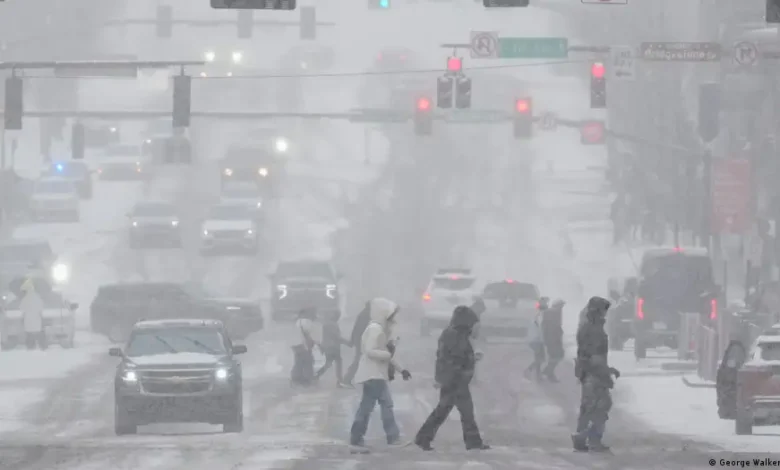
- ‘Storm of the Decade’ puts the US on pause
- From runways to living rooms ice takes over America
- Power failures freeze half of the country
A massive winter storm sweeping across much of the central and eastern United States has brought travel to a near standstill, forcing the cancellation of more than 13,000 flights from Saturday through Monday as temperatures plunged and severe weather intensified.
The unusually expansive storm affected nearly 180 million people — more than half the US population — stretching from the Rocky Mountains to New England, according to the National Weather Service (NWS).
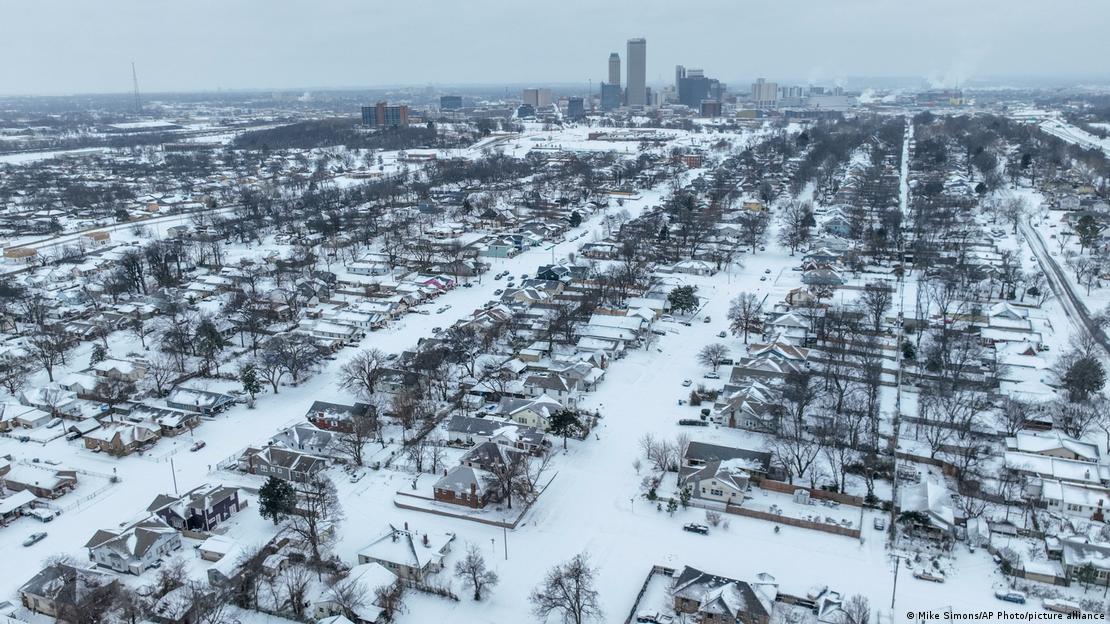
Heavy snowfall, sleet and freezing rain blanketed large areas, prompting warnings that recovery efforts could take days.
Aviation disruption neared levels not seen since the COVID-19 pandemic, with analytics firm Cirium reporting widespread cancellations and further delays expected.
All flights were canceled at Will Rogers International Airport in Oklahoma City, while Dallas–Fort Worth International Airport saw about 700 departures and half of arrivals grounded. Major disruptions were also reported in Chicago, Atlanta, Nashville, Charlotte and Washington, DC.
By late Sunday, more than 9,000 flights had been canceled nationwide, following over 4,000 cancellations on Saturday. All departing flights were scrapped at Ronald Reagan Washington National Airport, highlighting the storm’s growing impact on air travel across the country.
Beyond travel chaos, the storm left more than 120,000 homes without power, with Louisiana and Texas each reporting about 50,000 outages. Forecasters warned that damage from ice accumulation could rival hurricane-level impacts, as ice-laden trees and power lines collapsed under the strain.
Emergency declarations were approved for several states by President Donald Trump, enabling federal assistance through the Federal Emergency Management Agency.
Officials across affected regions urged residents to stay indoors, warning that melting would be slow and conditions could worsen before improving late Monday.