



















MOH elevates poison control and toxicology systems to strengthen emergency preparedness
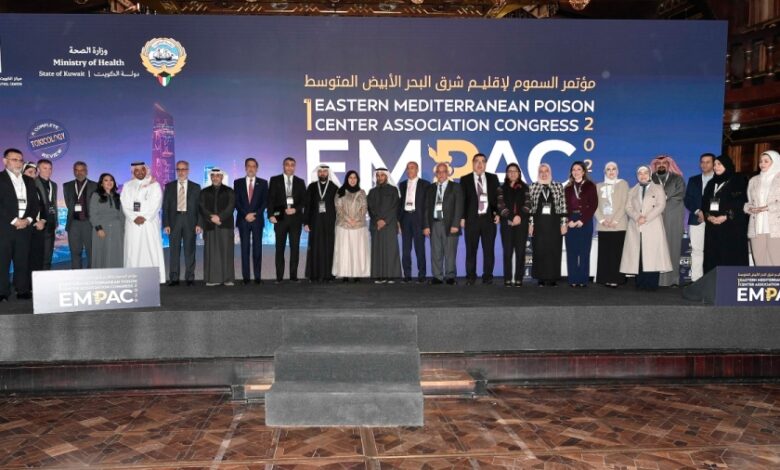
The Ministry of Health has affirmed the State of Kuwait’s strong commitment to developing the toxicology and poison control system and strengthening its integration with emergency and critical care services, as well as surveillance, early warning and rapid response mechanisms, in order to ensure institutional readiness, swift intervention and improved quality of healthcare services.
This was stated in a speech delivered by Undersecretary of the Ministry of Health, Dr. Abdulrahman Al-Mutairi, on behalf of Minister of Health Dr. Ahmed Al-Awadhi, during the opening of the Eastern Mediterranean Region Conference on Toxicology, held with the support of the World Health Organization (WHO) and attended by experts from 14 countries.
Dr. Al-Mutairi emphasized that poisoning in its various forms represents one of the growing challenges facing modern health systems, due to the direct clinical burden it places on healthcare facilities and its broader implications for health security, emergency preparedness and response. He noted that the diversity of exposure sources and the emergence of new and complex poisoning patterns further underscore the need for advanced and integrated toxicology systems, reports Al-Rai daily.
He highlighted the Kuwait Poison Control Center as a distinguished national model, pointing out that its institutional affiliation with the Emergency Departments Council reflects the pivotal role of toxicology within the national emergency framework and its importance in supporting clinical decision-making during critical situations.
Since its inauguration in May 2023, the center has rapidly demonstrated its effectiveness, becoming an essential component of the national health system by providing continuous support for medical decision-making, enhancing the quality of care for poisoning cases, and establishing an integrated institutional approach that brings together various medical and technical disciplines.
For his part, Conference Chairman Dr. Abdul Latif Al-Awmi said that the Poison Control Center’s official integration into the Ministry of Health’s National Emergency and Disaster Plan has positioned it as a key strategic pillar. He noted that the center has played a vital role in developing hospital preparedness plans for dealing with chemical and radiological incidents, reinforcing toxicology’s role as an integral part of Kuwait’s disaster management and health security system.
Dr. Al-Awmi added that in late 2022, the hyperbaric oxygen therapy protocol was adopted at Al-Jahra Hospital to serve all hospitals across Kuwait. Since then, 160 patients transferred from various health facilities have received treatment, providing a practical example of effective integration among healthcare institutions under the Ministry of Health.
The Kuwait Poison Control Center also reaffirmed its commitment to the continuous training of Ministry of Health personnel, including physicians, pharmacists and nursing staff, through ongoing educational and awareness programs aimed at enhancing the efficiency and quality of response to poisoning cases at all levels of healthcare.
Meanwhile, WHO Representative to the State of Kuwait, Dr. Asaad Hafeez, confirmed the organization’s full commitment to supporting the Kuwait Poison Control Center. He said the WHO will continue to provide technical assistance, facilitate dialogue among countries and experts, support resource mobilization, and ensure alignment with global initiatives related to chemical health and safety.
Dr. Hafeez stressed that establishing a regional network of poison control centers would serve as a vital bridge linking toxicologists, laboratories, epidemiologists, physicians, regulators and emergency responders. Such a network would enable the timely exchange of information on toxic substances, emerging threats, unusual poisoning cases and best clinical management practices.
He added that poison control centers play a critical role as specialized services providing diagnostic and treatment guidance, collecting and analyzing data, and functioning as chemical hazard observatories under the International Health Regulations, contributing to monitoring, preparedness and response to public health events involving chemical agents.