Cyprus assumes EU Presidency, pledges deeper cooperation with Kuwait and GCC
Both ambassadors expressed optimism that the Cypriot Presidency would further deepen dialogue and cooperation between the European Union, the GCC and Kuwait in particular, building on the momentum achieved in recent years.
The Times Kuwait Report
- Cyprus begins its EU Council presidency amid major regional challenges, as European leaders stress dialogue, security cooperation and humanitarian engagement in Gaza and Ukraine while strengthening ties with the Gulf.
- During Cyprus EU presidency for the first half of 2026, European officials outlined an ambitious policy agenda centered on defense readiness, economic competitiveness, digital sovereignty and the Union’s next long-term budget.
- Marking 40 years of EU–Kuwait diplomatic relations, Cyprus’s EU presidency opens with renewed emphasis on partnership, shared values and deeper cooperation between Europe, Kuwait and the wider GCC.
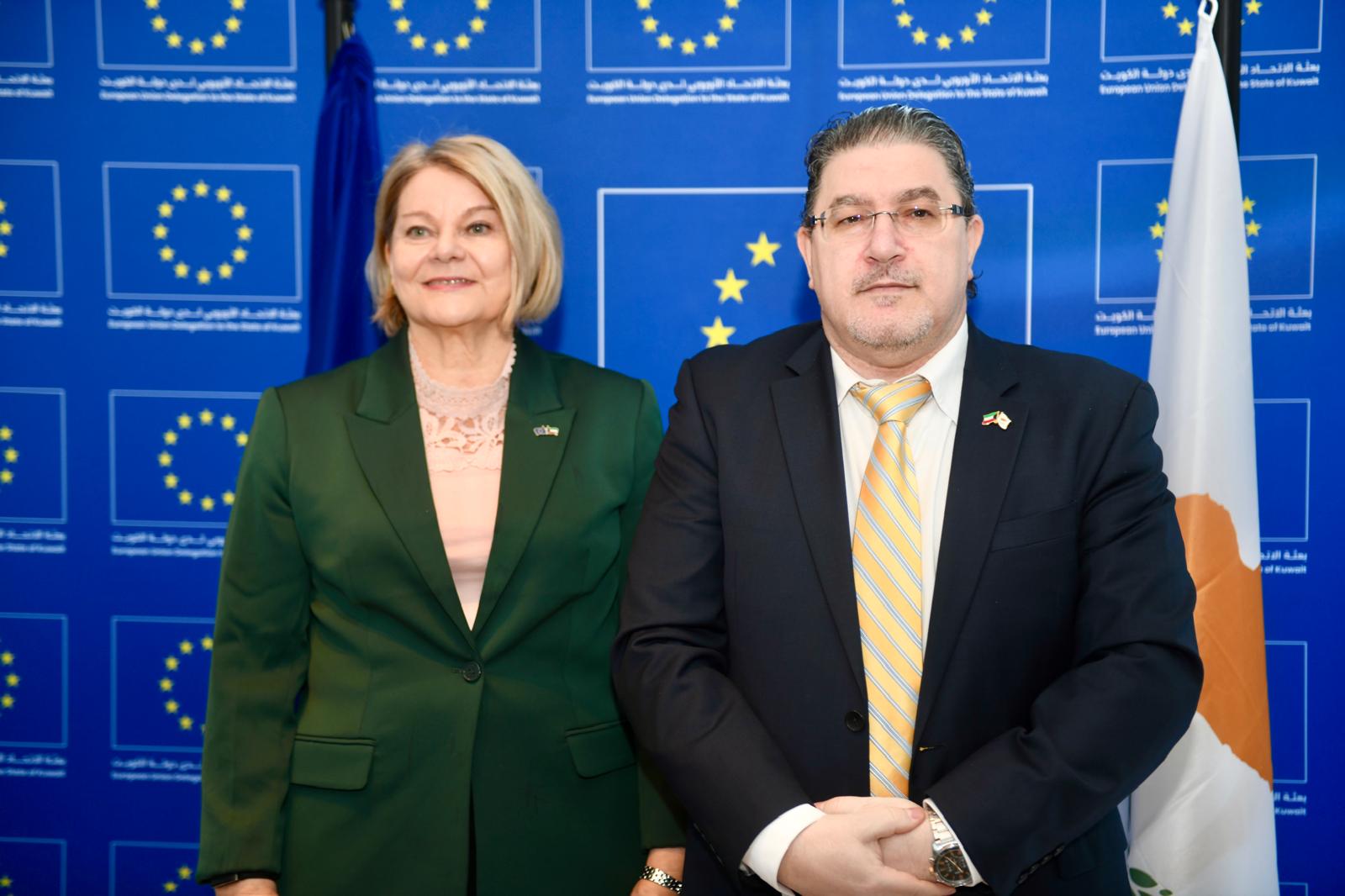
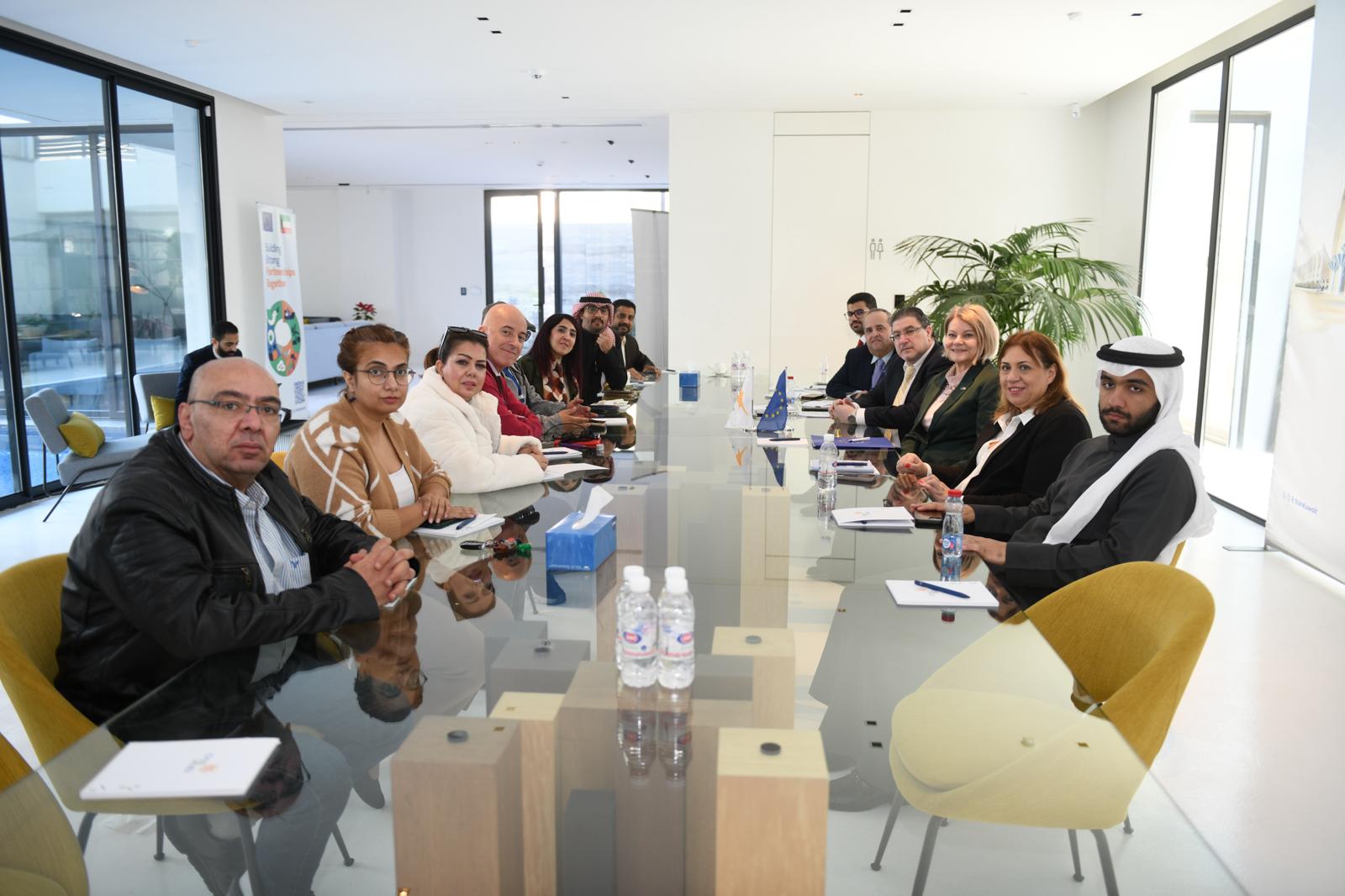
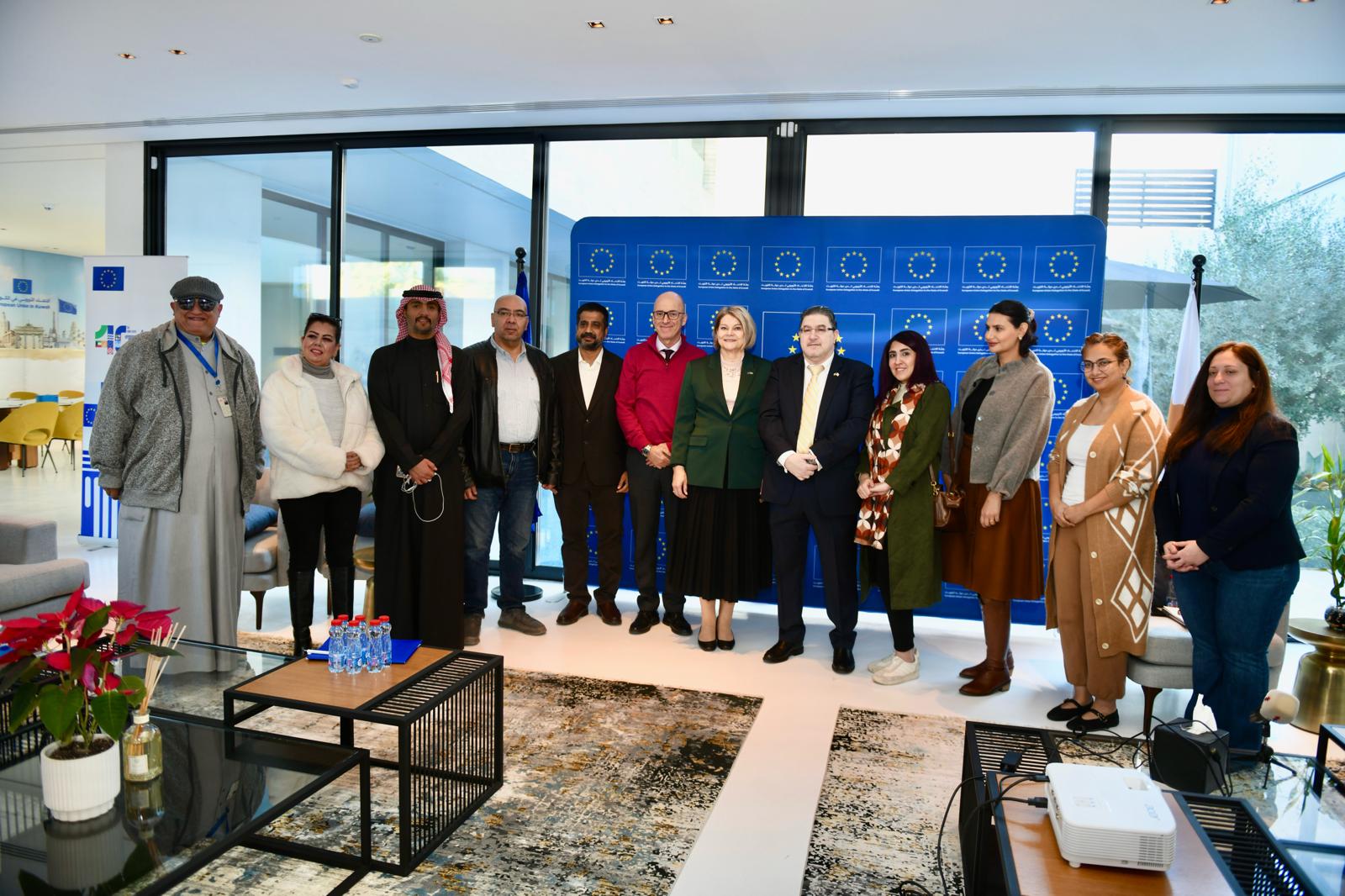
The European Union Ambassador to Kuwait, H.E. Anne Koistinen, and the Ambassador of Cyprus, H.E. Andreas Panayiotou, held a joint press conference on Tuesday to mark Cyprus assuming the rotating Presidency of the Council of the European Union for the first half of 2026.
Welcoming journalists at the event, Ambassador Koistinen congratulated Cyprus on taking over the EU Presidency, noting that the role rotates every six months among member states and carries significant responsibility in shaping the Union’s legislative agenda and advancing common foreign policy objectives.
She underlined that the Cypriot Presidency coincides with a landmark year for EU–Kuwait relations, as both sides mark the 40th anniversary of the establishment of diplomatic ties.
Relations between Kuwait and the EU, she said, continue to deepen across multiple sectors, with both parties looking ahead to negotiations on a bilateral Strategic Partnership Agreement aimed at further elevating cooperation.
Ambassador Koistinen highlighted Kuwait’s vital role during its presidency of the Gulf Cooperation Council last year, particularly in advancing EU–GCC relations.
She recalled the successful hosting of the first EU–GCC Summit in Brussels in October 2024, followed by Kuwait’s organization of the 29th EU–GCC Joint Council and Ministerial Meeting and the 9th EU–GCC Business Forum in 2025.
She also stressed the role of the EU Delegation in Kuwait in coordinating positions among EU member states and expressed confidence that close cooperation with Cyprus over the coming six months would help advance the priorities of the EU Presidency.
Turning to regional and international developments, the EU ambassador said the year had begun on a cautiously positive note with the first phase of the comprehensive plan to end the Gaza conflict holding so far.
She reaffirmed the EU’s commitment to achieving a lasting ceasefire and ensuring unimpeded humanitarian access to Gaza. On Ukraine, she noted that Russia’s aggression continues, stressing that the EU will maintain its support for Kyiv.
In this context, the EU and Ukrainian embassies in Kuwait are planning a joint photographic exhibition on February 12 documenting the full-scale war.
Ambassador Panayiotou, in his remarks, said Cyprus’s presidency — its second after 2012 — will run from January to June 2026 under the theme “An Autonomous Union. Open to the World.” The theme, he explained, reflects the EU’s goal of strengthening its internal capacity while remaining an active and reliable global partner.
He outlined five overarching priorities for the Cypriot Presidency, including strengthening security and defense readiness, enhancing competitiveness through innovation and the green and digital transitions, supporting EU enlargement and global partnerships, upholding EU values and social cohesion, and laying the groundwork for the EU’s long-term budget framework for 2028–2034.
Panayiotou also highlighted the symbolism behind the Cyprus Presidency logo, inspired by the traditional Lefkara embroidery, which represents unity, resilience and cooperation among the EU’s 27 member states.
The Cypriot ambassador noted the strong engagement between the EU and the Gulf region, recalling the participation of GCC Secretary General Jasem Albudaiwi in the official ceremony marking Cyprus’s assumption of the presidency earlier this month. He reaffirmed Cyprus’s commitment to strengthening EU–GCC relations and implementing the outcomes of the EU–GCC Ministerial Council and the first EU–GCC Summit.
The Cyprus Presidency of the Council of the European Union has outlined an ambitious agenda aimed at strengthening Europe’s autonomy, resilience and global role, with a strong focus on security, competitiveness and shared values.
On security and defense, the presidency will prioritize enhancing the EU’s ability to act independently when necessary. This includes strengthening defense readiness, advancing key military mobility and defense investment initiatives, implementing the EU Maritime Security Strategy, and improving preparedness across multiple security domains, including cybersecurity, migration management and water resilience.
Migration and economic security will also feature prominently, with Cyprus committed to implementing the EU Pact on Migration and Asylum, concluding negotiations on return mechanisms, and guiding discussions on reducing strategic economic dependencies while safeguarding the Union’s economic interests.
Competitiveness is identified as a cornerstone of European autonomy. The presidency aims to reduce regulatory burdens, particularly for small and medium-sized enterprises, complete the Single Market, deepen capital markets, and enhance energy security through affordable and predictable pricing.
Digital sovereignty, green transition and connectivity are also key priorities. Cyprus will advance legislation supporting digital leadership, modern transport and energy networks, industrial competitiveness and environmental sustainability, while safeguarding food security and agricultural systems.
Finally, the presidency has reaffirmed its commitment to European values and social cohesion, stressing that autonomy must benefit all citizens. Work will continue on negotiations for the EU’s next long-term budget for 2028–2034, with the aim of reaching partial agreements that balance fiscal discipline with investment in security, innovation and inclusive growth.
Both ambassadors expressed optimism that the Cypriot Presidency would further deepen dialogue and cooperation between the European Union, the GCC and Kuwait in particular, building on the momentum achieved in recent years.