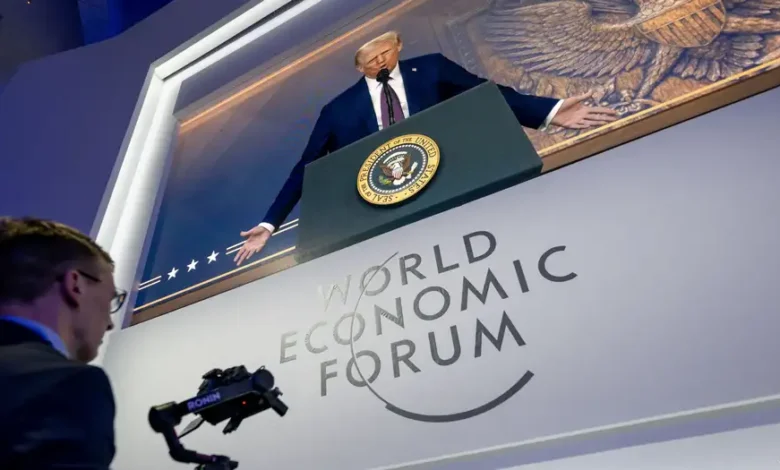
The Swiss alpine town of Davos is once again hosting the world’s political, economic and business elite as the World Economic Forum (WEF) convenes its annual meeting amid heightened global uncertainty and geopolitical strain.
This year’s gathering, running for five days from January 19 under the theme “A Spirit of Dialogue,” comes at a moment when the international order faces mounting pressure — much of it linked to the policies and actions of US President Donald Trump, whose presence is expected to dominate proceedings.
Trump returns to Davos six years after his last in-person appearance during his first term, and weeks after a series of moves that have unsettled allies and rivals alike. These include a military operation in Venezuela that resulted in the capture of its controversial leader, Nicolás Maduro, renewed threats to annex Greenland from NATO ally Denmark, and a broader rollback of international commitments, including withdrawal from the UN climate treaty, DW.COM reports.
In the days leading up to the forum, Trump escalated tensions further by threatening to impose tariffs on eight NATO allies — among them Germany, France and the United Kingdom — unless they support his bid to take control of Greenland. European leaders responded with sharp criticism, underscoring widening transatlantic strains.
The repercussions of Trump’s challenge to post-World War II global rules — and its impact on international peace, politics and the global economy — are expected to feature prominently in discussions throughout the week.
“Dialogue is not a luxury in times of uncertainty; it is an urgent necessity,” said WEF President and CEO Børge Brende, describing this year’s meeting as one of the most consequential in recent history amid sweeping geoeconomic and technological change.
More than 60 heads of state and government are attending the forum, including German Chancellor Friedrich Merz, Canadian Prime Minister Mark Carney, Argentine President Javier Milei, European Commission President Ursula von der Leyen, China’s Vice Premier He Lifeng, Pakistani Prime Minister Shehbaz Sharif and Syrian leader Ahmad al-Sharaa.
Trump is leading the largest US delegation ever to Davos, with five cabinet secretaries and senior officials in attendance. Among them are Secretary of State Marco Rubio, special envoy Steve Witkoff and presidential adviser Jared Kushner. Their presence sets the stage for high-level talks on Ukraine, Venezuela, Gaza and Iran.
On the sidelines of the forum, Trump is expected to meet Ukrainian President Volodymyr Zelenskyy and leaders from Kyiv’s G7 partners to discuss potential US security guarantees following any future peace agreement with Russia. European officials are also expected to press Trump on Greenland and urge him to withdraw his tariff threats.
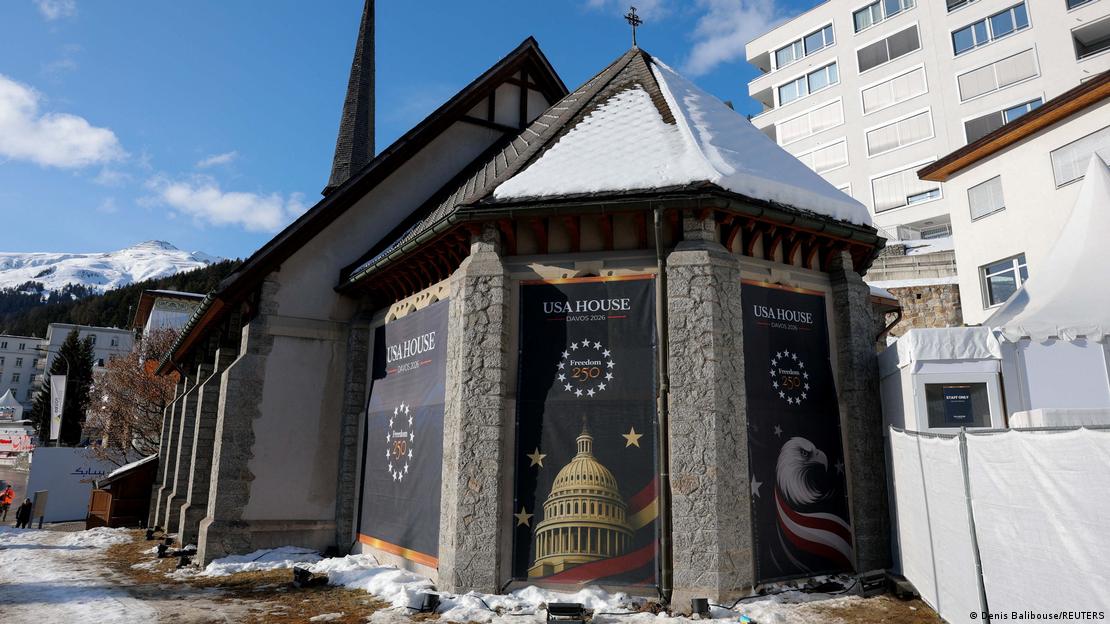
Highlighting the expanded US footprint at the forum, Davos is hosting its first-ever “USA House” — a networking and event space located in a church on the town’s main promenade.
Beyond geopolitics, economic uncertainty remains a central concern. While the global economy has shown resilience despite trade tensions — buoyed in part by heavy US investment in artificial intelligence — growth projections for 2026 remain modest at 3.1%. At the same time, global debt has surged to levels unseen since World War II, with the IMF warning of particularly severe risks in several African economies.
Protectionist measures, including unilateral tariffs, tighter investment rules and competition over critical minerals, continue to weigh on global trade. Economic confrontation between nations topped the WEF’s annual Global Risks Report, reinforcing concerns that geopolitical rivalry may increasingly spill into economic warfare.