Capital Markets Authority opens door to settlements in trading violation cases
. . . sets seven key requirements for accepting reconciliation requests, in line with approved procedures
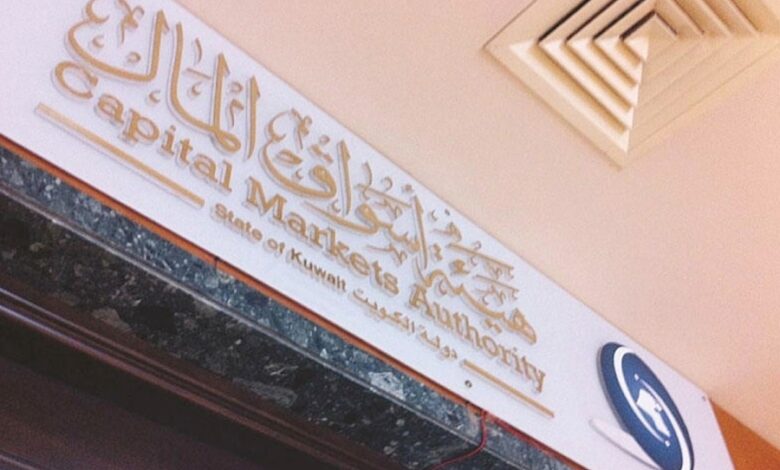
The Capital Markets Authority (CMA) confirmed that the regulator is prepared to reach settlements with individuals and companies involved in violations of trading rules on the Kuwait Stock Exchange, provided specific conditions are met.
The settlement requests will be considered as long as the violation is not linked to other criminal cases and the party involved agrees to return the financial benefit gained or bear the value of losses avoided as a result of the breach, reports Al-Rai daily quoting CMA sources.
They revealed that the Authority has already approved several reconciliation requests in complex and sensitive cases involving breaches of regulatory frameworks, with recovered amounts totaling millions of dinars.
According to the sources, the CMA has set seven key requirements for accepting reconciliation requests, in line with approved procedures:
- Submission of the indictment along with the reconciliation request.
- A certificate indicating the procedural status of the case, confirming that no final judgment has been issued.
- Full repayment of the financial benefit gained or the value of losses avoided, regardless of the amount, for violations stipulated under Articles 122, 124, 126 and 127 of the law.
- Reconciliation is not permitted if the violation is linked to other criminal cases.
- Reconciliation is rejected if the violation relates to decisions issued by the Capital Markets Authority.
- The applicant must fulfill all outstanding financial obligations imposed on them.
- The settlement amount must fall within the minimum and maximum fines prescribed by law, in addition to the repayment of benefits gained or losses avoided.
Violations eligible for reconciliation include practices such as artificially inflating share prices to induce others to buy, as well as engaging in real or fictitious trading activities designed to mislead investors into buying or selling securities.
The sources stressed that the CMA aims to exercise its supervisory role within a framework of flexibility that improves overall market conditions without compromising regulatory controls. This approach allows for constructive engagement on issues raised by relevant authorities while maintaining market integrity.
In this context, the Authority recently issued a decision amending reconciliation provisions for crimes covered under Law No. 7 of 2010, as amended. The amendment introduces a new annex to the third book of the law’s executive regulations, outlining the reconciliation request form, required documents, and applicable conditions.
Under the revised rules, applicants must pay a KD 500 fee when submitting a reconciliation request. This amount is later deducted from the settlement fee if the Authority approves the request.
Investment sources believe that the CMA’s flexible approach to handling trading violations — particularly in cases where no final court rulings have been issued — will contribute to a healthier investment climate, strengthen confidence among capital owners, and help reduce practices that undermine market stability.