Where faith meets history: Ahmadi Church enters a new era as the Gulf’s first Minor Basilica
The Times Kuwait Report
In a moment of profound spiritual and historical significance, the Church of Our Lady of Arabia in Ahmadi entered a new chapter in its distinguished legacy with its elevation to the rank of Minor Basilica on 28 June 2025. The honor, bestowed by His Holiness Pope Leo XIV, recognizes the church’s exceptional pastoral role, its enduring witness of faith, and its importance as a spiritual home for generations of Catholics in Kuwait and the wider Gulf.
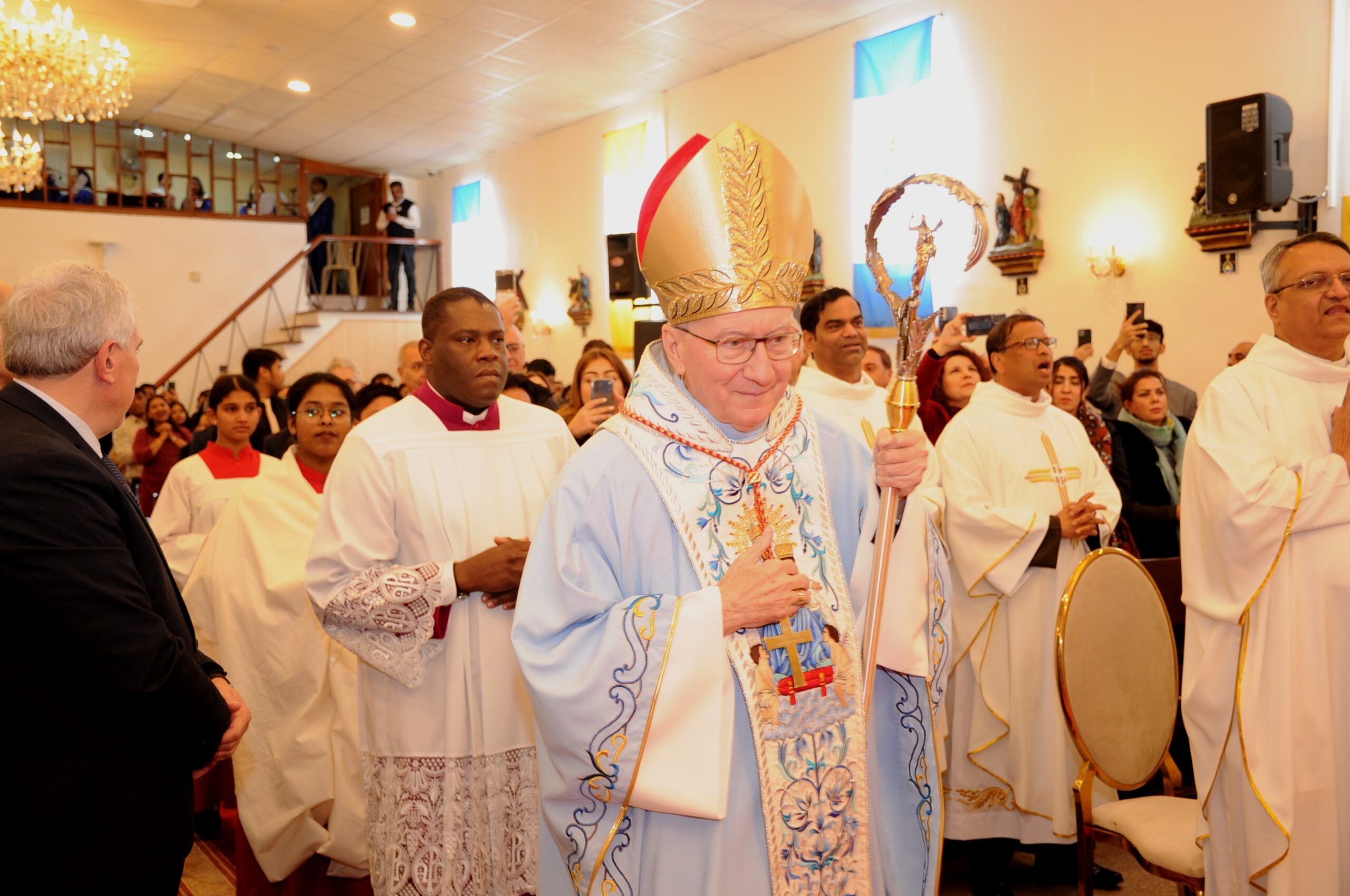
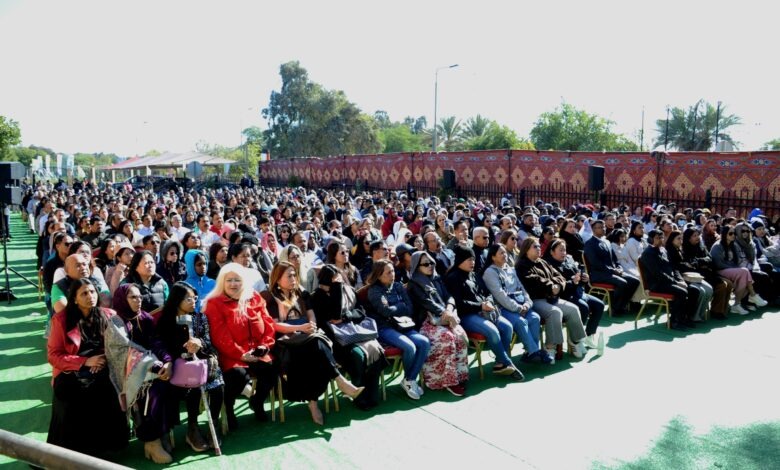
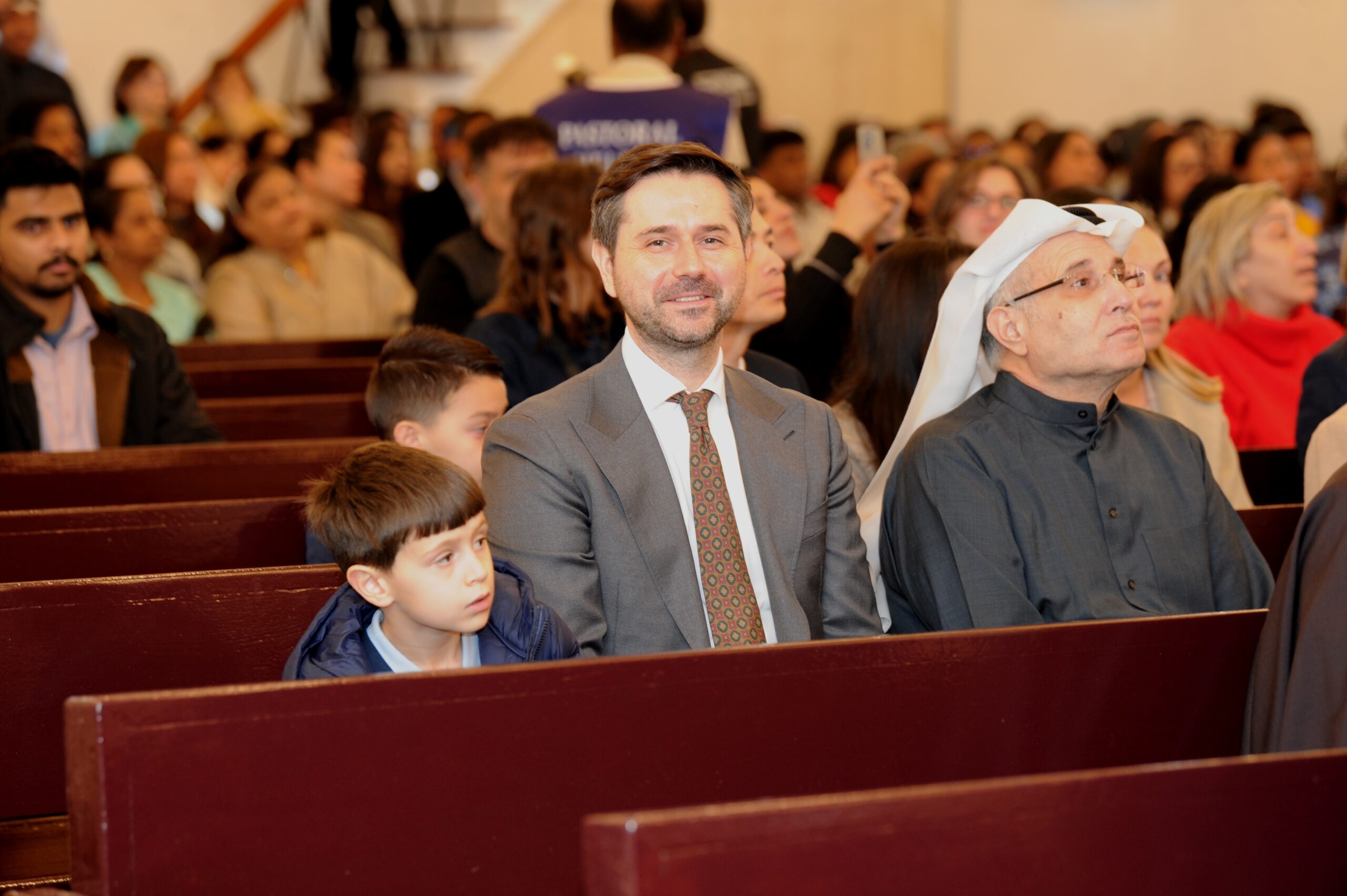
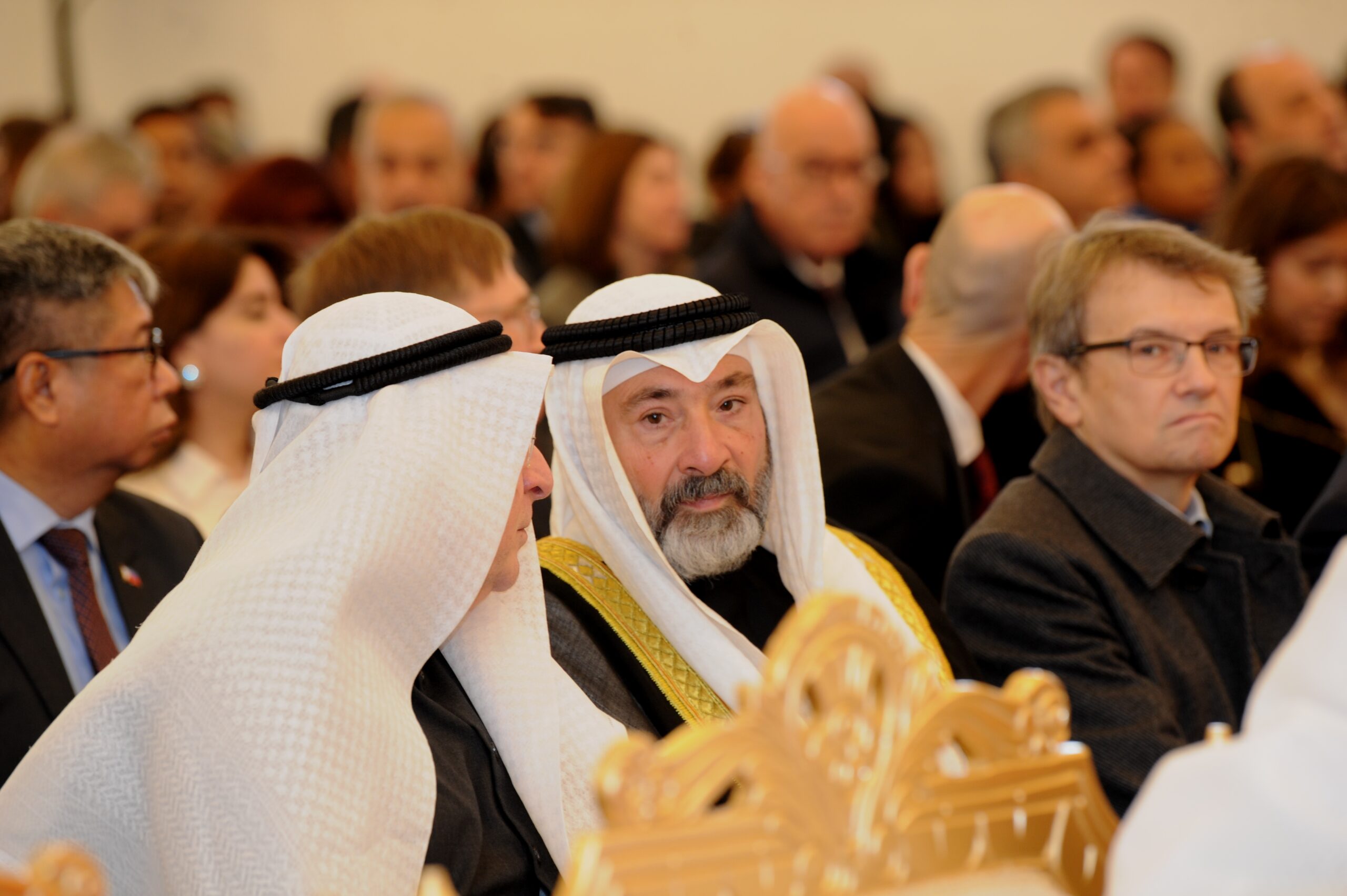
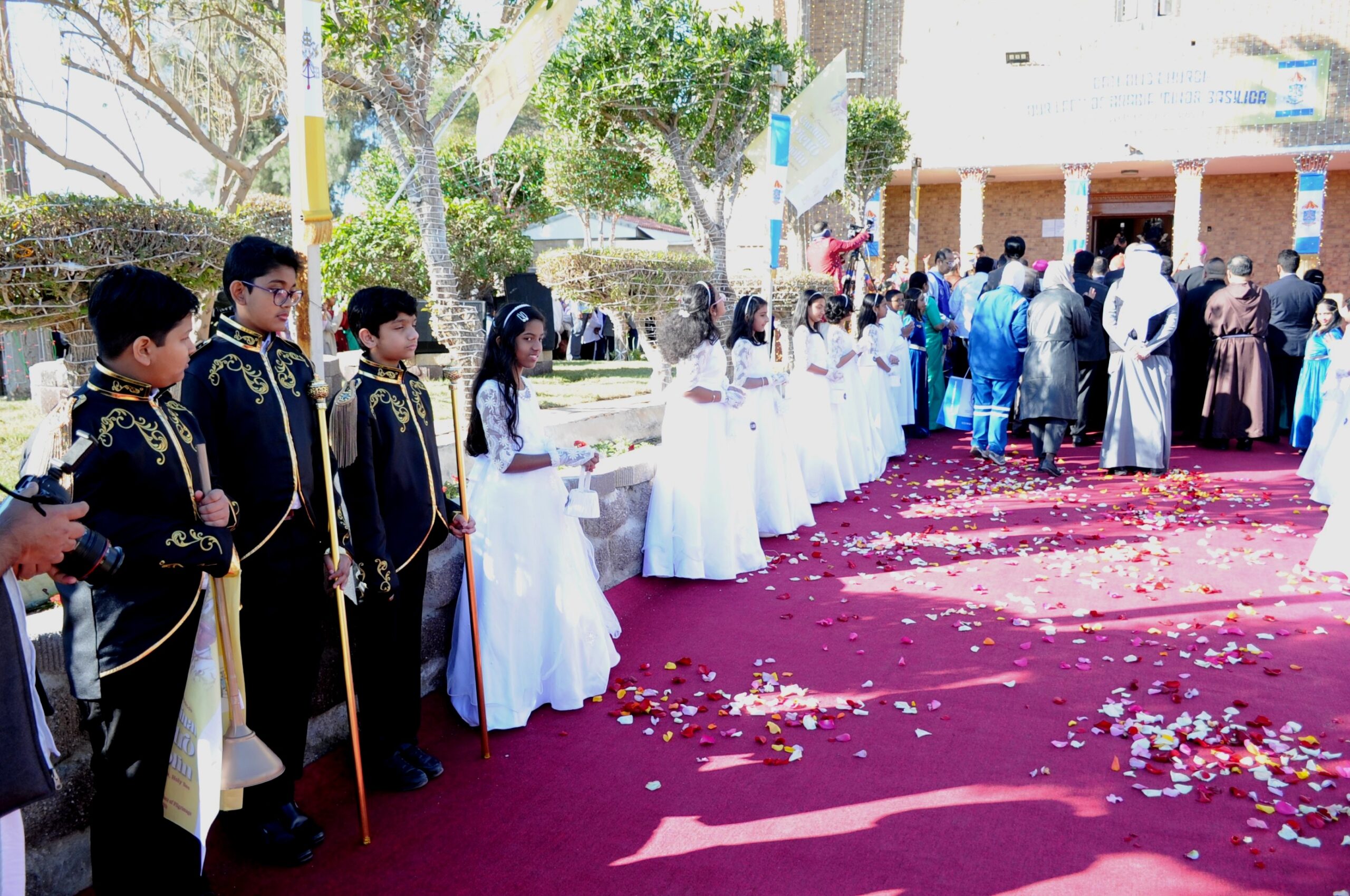
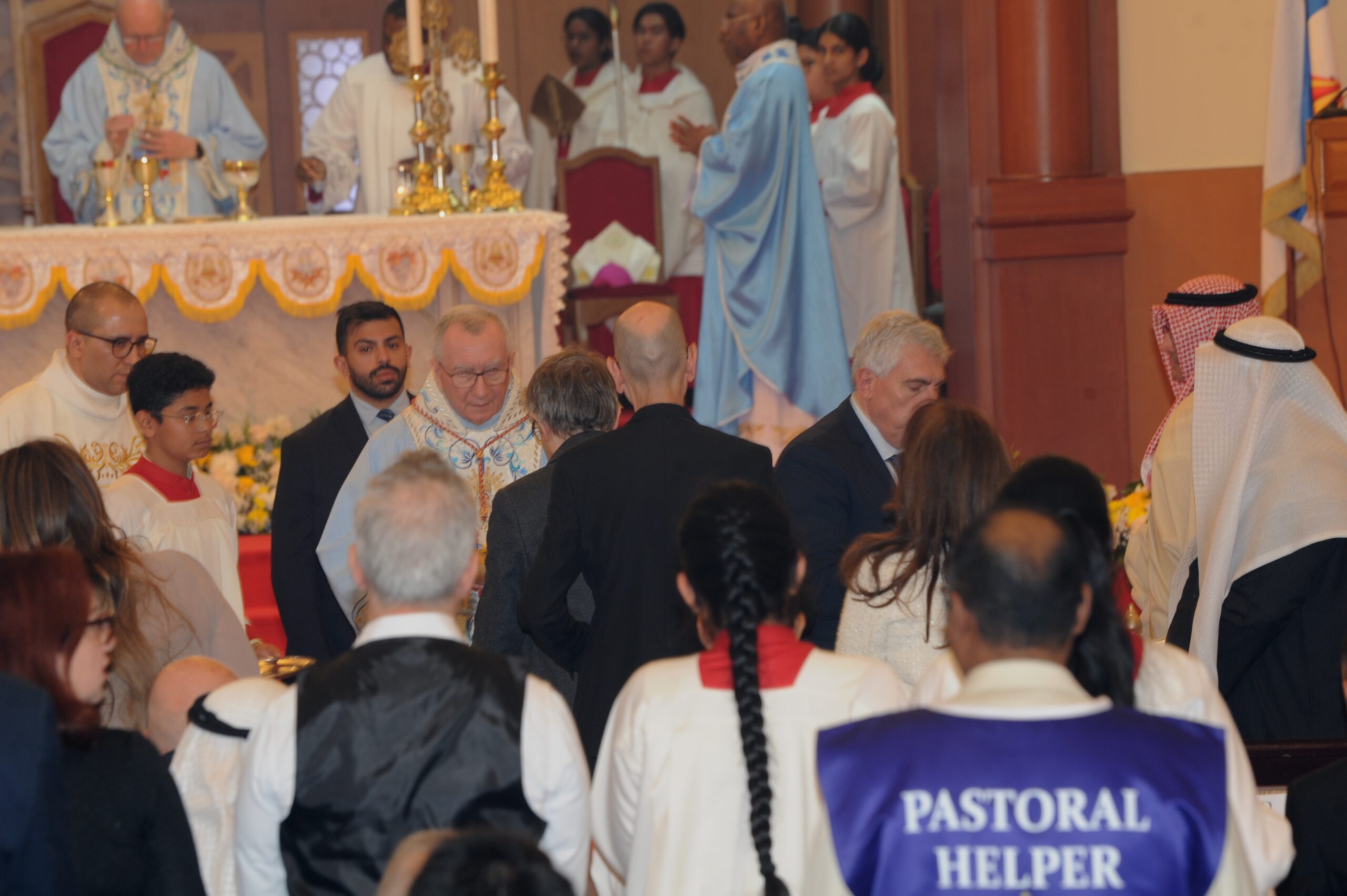
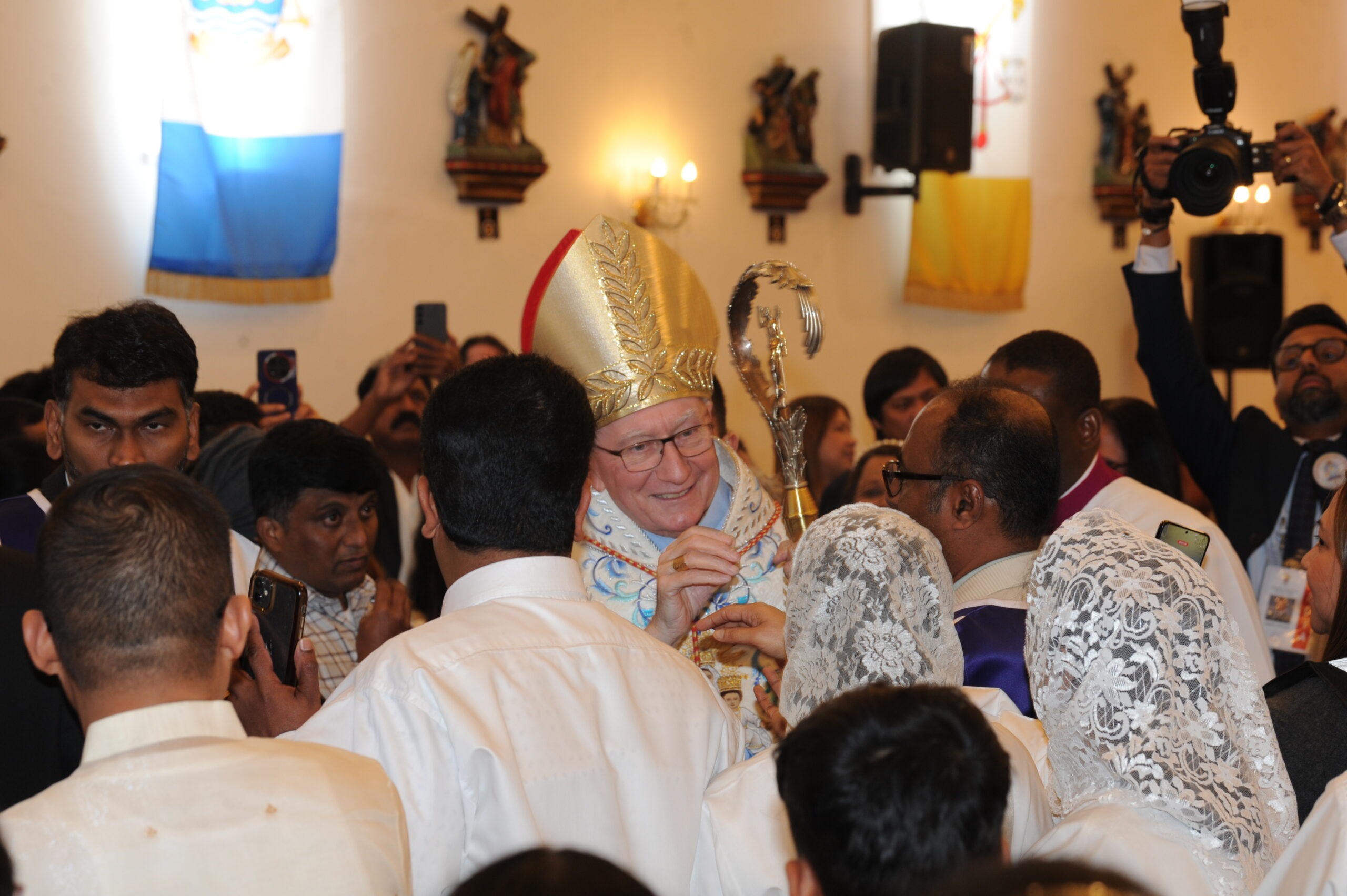
The formal proclamation of the elevated status was made during a solemn declaration at the Minor Basilica in Ahmadi on 16 January, by His Eminence Cardinal Secretary of State Pietro Parolin during an official two-day visit to Kuwait. The honor of becoming the first Catholic church in the Gulf region to be elevated as a Minor Basilica is an unprecedented milestone for the Catholic community in the region and further cements Kuwait’s unique standing in the landscape of religious coexistence.
As the Vatican’s highest-ranking diplomat, Cardinal Parolin’s presence underscores both the spiritual weight of the occasion and the depth of relations between the Holy See and the State of Kuwait. During his visit, the Vatican’s Secretary of State held high-level meetings with senior Kuwaiti officials, reaffirming mutual respect, interfaith dialogue and longstanding friendship.
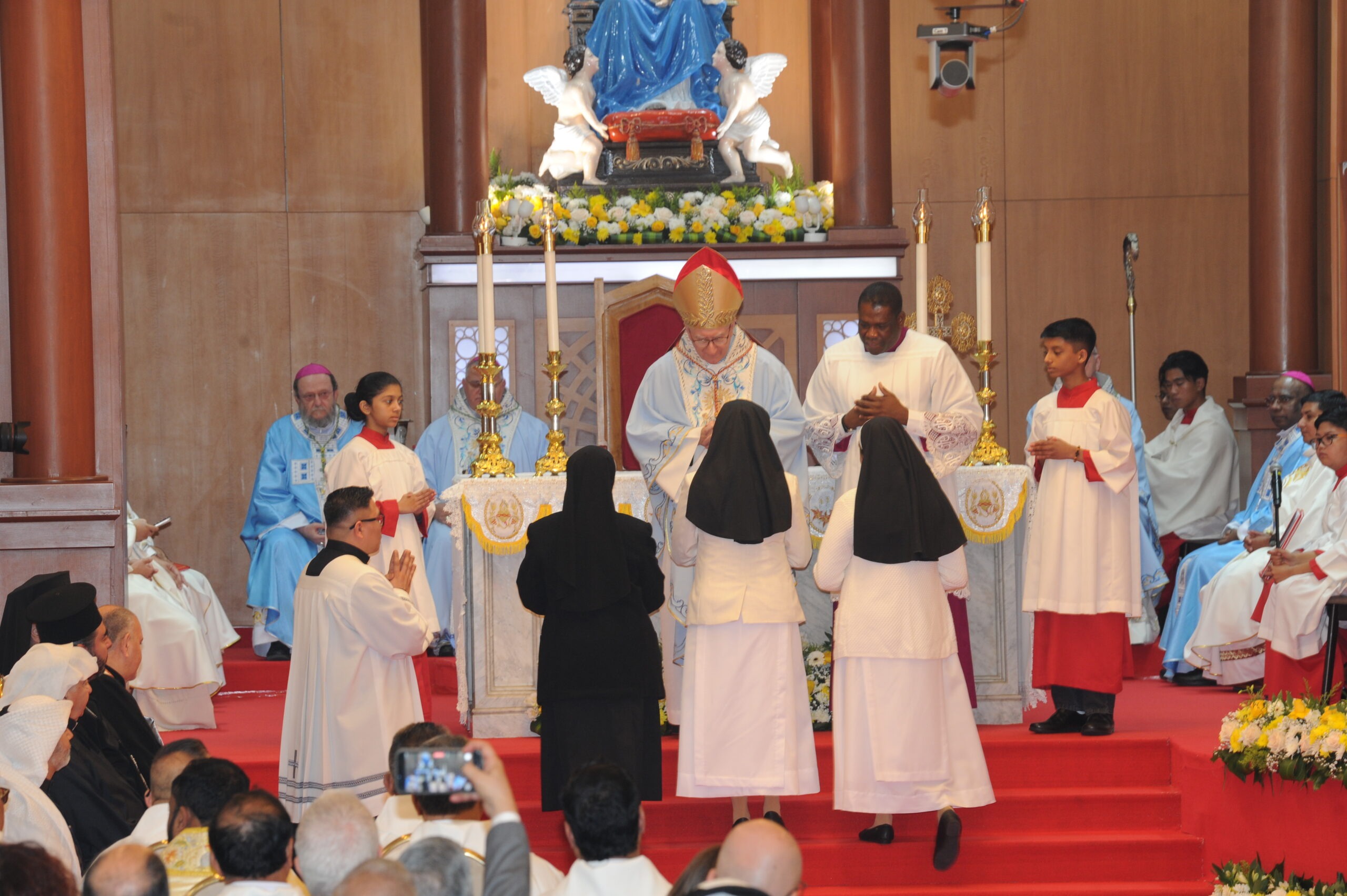
The visit sent a powerful message of gratitude and hope, highlighting Kuwait’s respected role as a beacon of tolerance in the region, and also affirming that Catholics in Kuwait and the Gulf remain an integral and cherished part of the universal Church.
Located in the heart of Kuwait’s Ahmadi Governorate—an area deeply entwined with the nation’s oil heritage and early modernization—the Church of Our Lady of Arabia stands tall as the oldest church in the Apostolic Vicariate of Northern Arabia, and one of the most significant Christian institutions in the region.
Origins of the Ahmadi Church trace back to the pivotal decades following the discovery of oil in the late 1930s and the rapid expansions that followed in the 1940s and 1950s to develop the modern State of Kuwait. As the Kuwait Oil Company (KOC) developed Ahmadi into a planned township for its growing workforce, the area became home to expatriates from Europe, the Middle East and South Asia. With this demographic shift came the need for organized Christian worship.
In a landmark decision that reflected Kuwait’s pragmatic and tolerant approach, the Kuwait authorities granted land for a Christian place of worship in Ahmadi. The decision not only addressed the spiritual needs of expatriates but also set a precedent for religious accommodation in the region.This move led to the foundations for the Ahmadi Church being laid in 1956, making it one of the earliest officially recognized Christian institutions in the Gulf.
Over the years, the Ahmadi Church has stood witness to Kuwait’s journey from a small oil-producing state to a modern nation. Also with the State, the Church endured everything from political upheavals to national trials, including the Iraqi invasion of the country in 1990. In the aftermath of liberation, as expatriates returned to rebuild their lives, the church reopened its doors as a place of prayer, comfort and renewal.
The uninterrupted presence of the Church is a testament to both institutional resilience and the enduring trust placed in it by the community it serves. Operating under the Apostolic Vicariate of Northern Arabia, the Ahmadi Church serves Catholic communities across Kuwait, Bahrain, Qatar and Saudi Arabia.
In the absence of traditional diocesan structures, the Vicariate provides pastoral governance directly under the Holy See, ensuring that the Catholic practice is adapted to the region’s unique religious and legal environment. The Church remains a spiritual cornerstone, hosting daily and weekly Masses, administering sacraments such as baptism and marriage, and marking major liturgical seasons including the Advent, the Lent, the Easter and the Christmas.
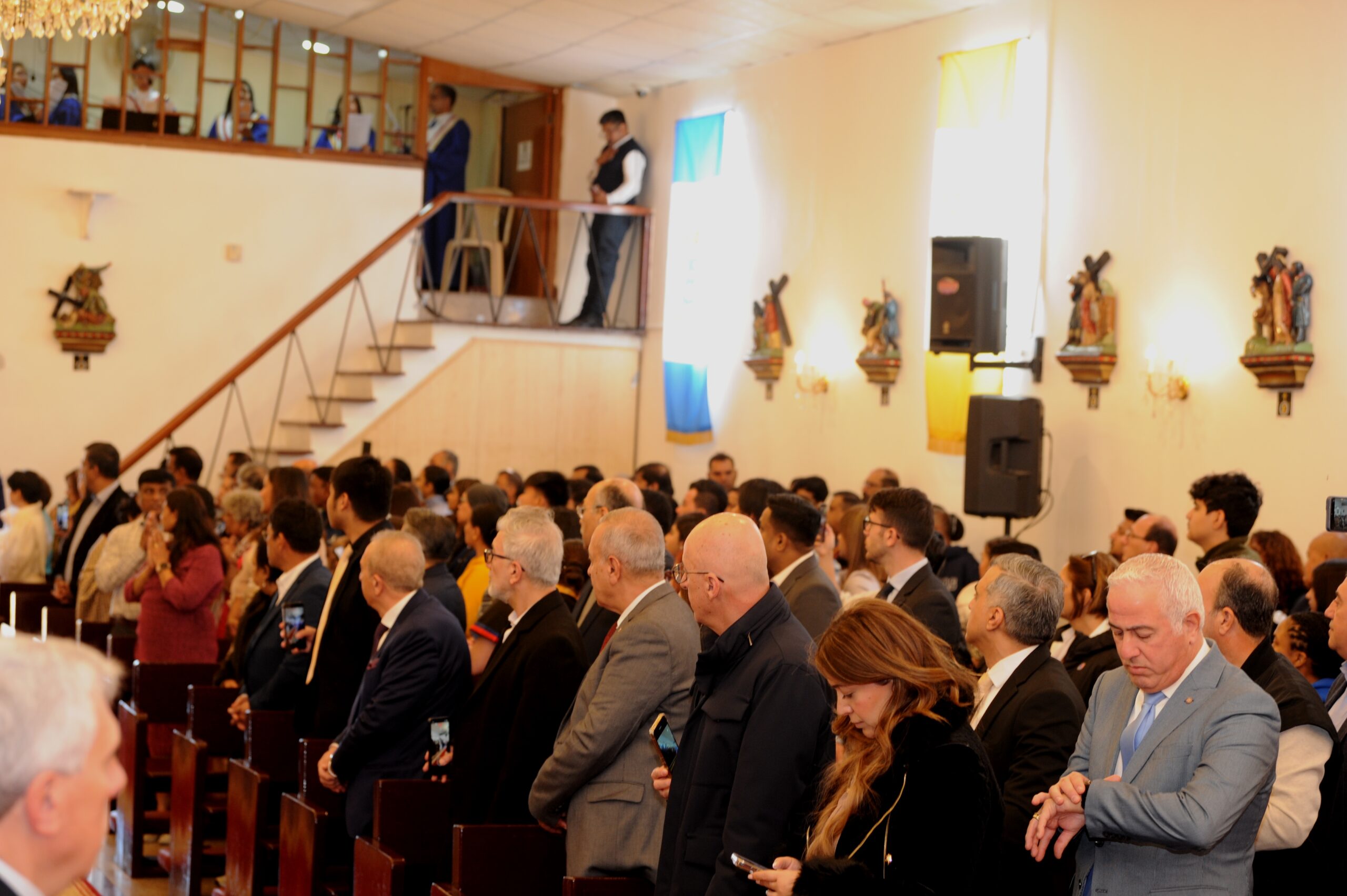
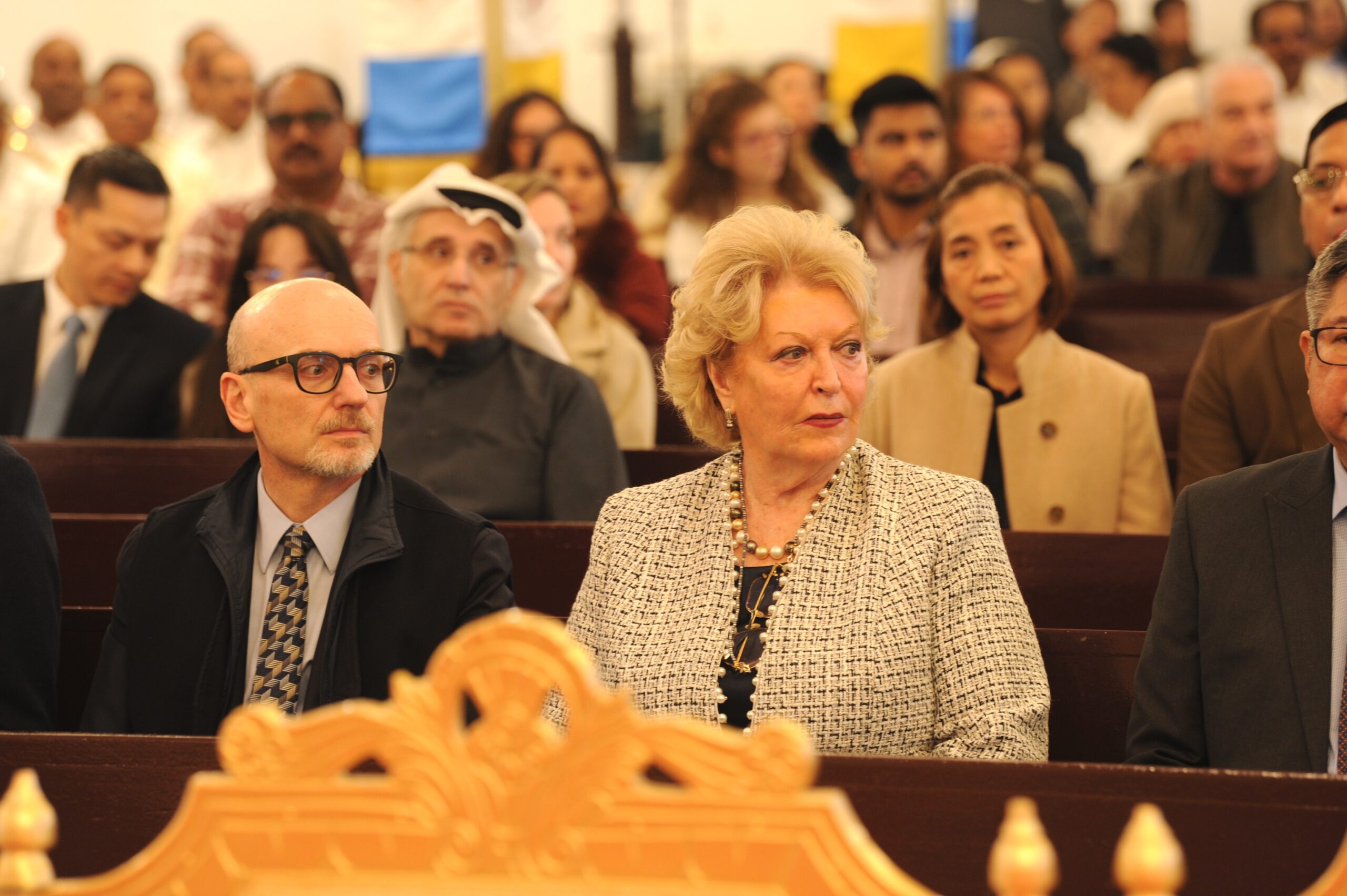
For thousands of Catholics, many of them migrant workers far from home, the Church offers continuity with their faith, traditions, and brings a vital sense of stability. Few places in Kuwait reflect global diversity as vividly as the Ahmadi Church. Its services are conducted in multiple languages, including English, Arabic, Malayalam, Tamil and Tagalog, ensuring that worship is accessible to believers from across continents. This multilingual approach has transformed the church into a unifying space where different cultures converge in shared faith, reinforcing its role as a bridge between communities.
Beyond religious services, the Ahmadi Church has long functioned as a social and cultural hub for the Christian expatriate community. For families living far from their countries of origin, it offers emotional support, cultural familiarity and a sense of belonging. Its activities extend to catechism classes for children, youth and family programs, marriage preparation, pastoral counselling and charitable outreach.
These initiatives have helped generations of expatriates navigate life in Kuwait while preserving their religious and cultural identity. In doing so, the church has played a quiet yet vital role in strengthening social cohesion within a diverse population.
During periods of national or personal hardship, whether war, economic uncertainty or the COVID-19 pandemic, the Ahmadi Church has served as a source of reassurance and solidarity. Through prayer, guidance and community support, it has offered comfort to those facing anxiety and loss, reaffirming its importance beyond routine worship.
The Ahmadi Church stands as a visible reminder of Kuwait’s long-standing tradition of measured religious tolerance. While Islam is the state religion, the country has historically permitted recognized Christian denominations to practice their faith openly within established legal frameworks.
The respectful coexistence between the Church and its surrounding Muslim community reflects a broader social compact grounded in mutual respect and cultural sensitivity. Its continued operation illustrates how religious minorities can preserve their identity while honoring local laws and traditions, and serves as-an example often cited in discussions of religious pluralism in the Gulf.
Today, the Ahmadi Church remains a cornerstone of Christian life in Kuwait. As migration patterns evolve and congregations grow, the church continues to adapt while staying true to its founding mission. Its legacy is not merely architectural or institutional; it is deeply human, embedded in the lives of thousands who have found faith, comfort and community within its walls.
From its beginnings in Kuwait’s oil-era development to its role as a center of multicultural worship and community life, Ahmadi Church stands as a powerful testament to faith’s ability to transcend borders. In Kuwait’s diverse social fabric, it remains an enduring symbol of spiritual continuity, communal resilience and respectful religious coexistence—a quiet landmark where history, faith and humanity meet.
Now officially known as the Minor Basilica of Our Lady of Arabia, the Church holds the distinction as one of the select group of Catholic institutions worldwide recognized for their exceptional spiritual, historical and pastoral importance. While many churches serve their communities faithfully, only a small number are elevated to the rank of Minor Basilica, a title that carries deep religious significance and a direct link to the Vatican.
Minor Basilica is a Catholic church that has been granted special status by the Pope in recognition of its importance. The title is not architectural alone; it reflects the church’s spiritual influence, pastoral service, historical role and connection to the wider Catholic world. In essence, all basilicas are churches, but not all churches are basilicas.
There are only four Major Basilicas in the world, all located in Rome. Every other basilica, regardless of size or location, is classified as a Minor Basilica. These churches remain local parish centers, but enjoy special recognition from the Holy See, a strong symbolic connection to the Pope, and certain liturgical privileges, including unique feast days, ceremonies and insignia. Many also become destinations of pilgrimage for the faithful.
For the faithful, the basilica is more than a building; it is a symbol of continuity, belonging and spiritual refuge. For Kuwait, it represents a longstanding tradition of freedom of religion and coexistence. While Islam is the state religion, Kuwait has historically allowed recognized Christian denominations to practice their faith openly, within established legal frameworks.
Today, the Basilica of Our Lady of Arabia continues to welcome worshippers from all walks of life. Its elevation to Minor Basilica status has not changed its mission, but has strengthened its role as a spiritual landmark and a point of connection between the local faithful and the universal Church. In a region defined by rapid change, the Ahmadi Basilica stands as a quiet constant—a place where faith transcends borders, cultures meet in prayer, and history continues to unfold.