Qahwah Arabiya: A Timeless Ritual of Hospitality in the Arabian Peninsula
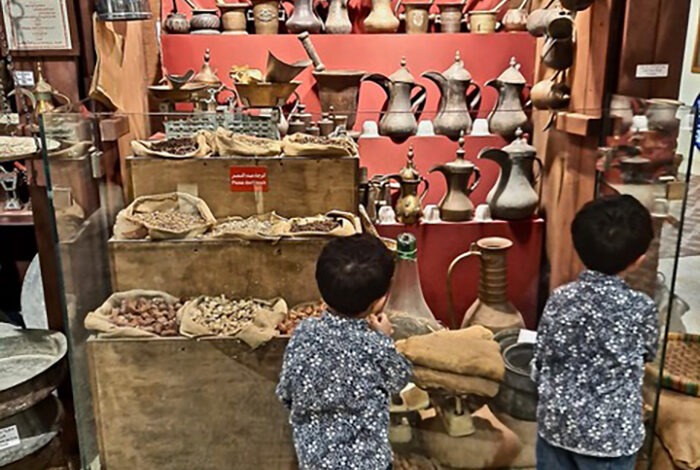
“All over Arabia the elaborate ceremony of coffee making is the sign the guest is welcome and honored above all men by his host. From the highest to the lowest this making and offering of coffee is the first duty of a householder, whether he be a town- or tent-dweller, when entertaining a stranger or an acquaintance.”

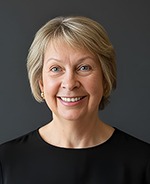
By Claudia Farkas Al Rashoud
Special to The Times Kuwait
So wrote Colonel H.R.P. Dickson of the social importance of Arabian coffee in in his famous book, “The Arab of the Desert.” Colonel Dickson came to Kuwait as British Political Agent in 1929. While the pre-oil era Kuwait that he describes in his book has changed beyond recognition, an age-old custom still widely practiced today is the ceremonial serving of Arabian coffee.
The bitter brew originated in North Yemen, where coffee is grown on terraced slopes. In the sizzling temperatures, people discovered that drinking small cups of hot coffee was a more effective thirst quencher than cold liquids. Arabian coffee, or Qahwah Arabiya, is also known to have a soothing effect on the stomach after heavy or greasy food. It’s always flavored with cardamom and sometimes also with cloves, and it’s a mild blend, much lighter than Turkish coffee.
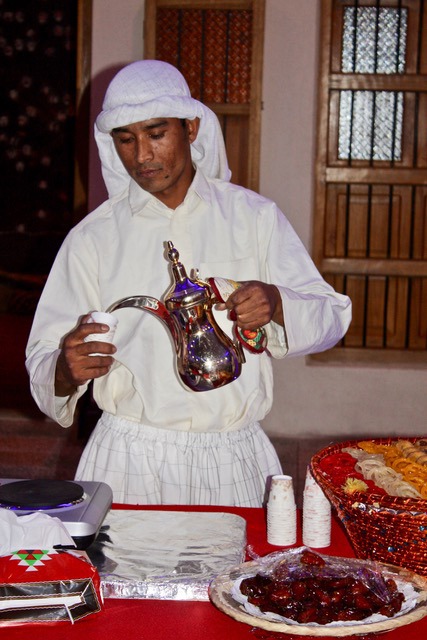
The coffee serving ritual is still conducted in much the same time-honored way, whether the guests are being served in a Kuwaiti home, a bedouin tent, a shop or office, at a conference, reception, or other official venue. The traditional serving vessel is a brass pot with a long, beak-like spout, which the server carries in his left hand.
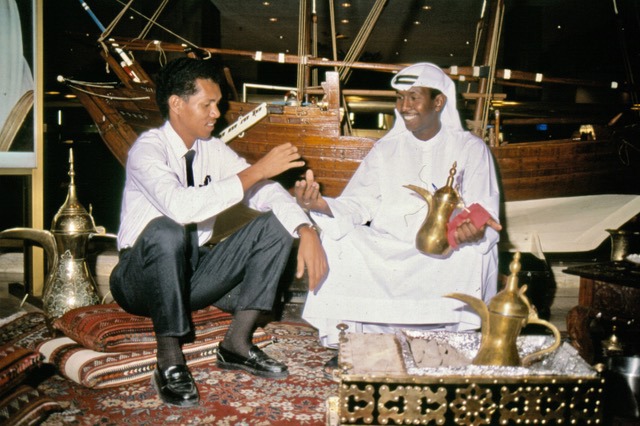
Nowadays, a thermos of the same shape is also sometimes used. In his right hand the coffee server carries a stack of tiny china cups. He goes to every person in the room pouring about three sips of coffee in each cup. He will continue to refill the cup until the guest jiggles it from side to side indicating he has had enough. Arabian coffee is often preceded by small cups of strong, sweet tea, and is usually the signal that it’s time for the guest to leave.
At ladies wedding receptions however, tiny cups of coffee are served throughout the evening to fortify the guests during the long, late night party. Dates are the traditional accompaniment to Qahwah Arabia, but at weddings and other special occasions, chocolates, and other bite-sized sweets are also offered. Serving coffee is traditionally a male role, but at the segregated wedding celebrations a coffee lady serves the female guests.
The ceremonial preparation of Arabian coffee was of particular importance to the bedouins of the Arabian Peninsula in the days when they practiced a traditional nomadic lifestyle. At the end of a long day’s toil in the desert, the coffee fire served as an important gathering place, where visitors were received and news, gossip, and the events of the day discussed.
Dame Violet Dickson, the wife of Colonel Dickson, often accompanied her husband on his extended sojourns with Kuwait’s bedouins and was intimately acquainted with their customs. She wrote a book titled “Forty Years in Kuwait” in which she described the preparation of coffee at the tent of some Murra tribesmen.
“The menfolk were now glad to take a rest and sat round the coffee fire. As the fire blazed up, the coffee-maker called to the women beyond the divide, ‘Atini qahwa’ (‘Give me coffee’) and after a little while, ‘gudua’ which means dish of sweet dates… Mubarak’s son, Mohammad, began preparing the coffee over the glowing camel-dung fire and, having roasted the beans, he made the brass of the mortar (hawan] ring as he pounded the coffee, a sign to passers-by or neighbors that coffee was being prepared and that they were welcome.”
In his book, Colonel Dickson gave a much more lengthy account of the ancient coffee making and serving ritual. He described the pounding of freshly roasted coffee beans in mortar and pestle as being performed with intricate musical rhythm, with the ringing sound the embodiment of traditional bedouin hospitality.
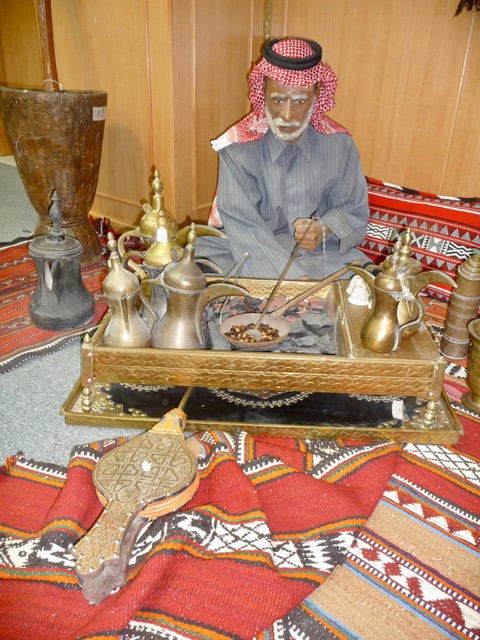
He noted that, “A man famous among his fellows for his hospitality practically never allows this ‘ting ting’ of the pestle and mortar to die down, and the Badawin who hears this music, be he ever so far off, will at once make for the joyful sound, sure of his welcome. So-and-so makes coffee from morn till night…is a nice way of saying that So-and-so is a generous and hospitable man: and no greater praise can be bestowed in Arabia on any man.”
Those who prepare Qahwah Arabiya today have a number of options. They can buy ready mixed coffee or have it mixed and ground according to their taste at one of the many mills that also sell nuts, dried fruits, and other delicacies. There’s even an instant version sold in small individual pouches that only need to be mixed into boiling water.
For those who’d like to try making it, here’s the recipe for Arabian coffee.
Either buy a ready blend or ask for Qahwah Arabia at a mill and have it custom mixed and ground. You can choose from lighter or darker roasted beans, request more or less cardamom, and opt whether or not to add cloves. Put one half cup of coffee in a pot with four cups of water and bring to the boil.
When the coffee has boiled, reduce the temperature and leave the pot simmering for at least fifteen minutes, so the coffee ground settles on the bottom. Serve without sugar in small handleless cups about one third full.
Photographs courtesy Claudia Farkas Al Rashoud
By Claudia Farkas Al Rashoud
Originally from California, Claudia Farkas Al Rashoud has enjoyed working in Kuwait since 1979, when she became the first professional female photojournalist for the Arab Times newspaper. She has written five books, with photographs, about Kuwait. Working as a freelance photographer for London-based picture libraries, her articles and photographs have appeared in many publications. She also serves as an ethnographic researcher and consultant. Claudia has also worked in the field of animal welfare in Kuwait for many years. All proceeds from her books and other work benefit Touch of Hope Kuwait, the largest animal shelter in the country. As a founding board member of the Kuwait Society for Animal Welfare and director of the education program, she gives presentations on animal welfare for schools, universities and community groups. She also speaks on other subjects including Kuwait’s history, heritage, natural history and environment, journalism and photography, and palliative care.
Please see @claudia_alrashoud @touch_of_hope_q8 @ksaw_q8