- As the dramatic arrest of Venezuelan President Nicolas Maduro sent shockwaves across global politics, oil markets reacted with caution rather than panic. With Venezuela holding the world’s largest proven oil reserves, traders and producers are now calculating whether the upheaval in Caracas could eventually reshape global supply—or remain a long-term, high-cost challenge with limited impact on prices.
- For now, the arrest of Maduro has shaken politics more than oil fundamentals. Venezuela’s reserves are vast, but unlocking them is neither quick nor cheap. Until infrastructure is rebuilt and heavy crude economics improve, global — and Gulf — oil markets remain cautiously secure, watching Caracas closely but not yet bracing for a flood.
While images of the United States’ arrest of Venezuelan President Nicolas Maduro and his wife dominated global headlines, oil markets were quietly bracing for the real test: determining how this geopolitical shock could affect global oil prices in the short-, medium-, and long-term.
The concern is rooted in Venezuela’s sheer scale. The country holds the world’s largest proven oil reserves, exceeding 303 billion barrels, representing nearly 18 percent of total global reserves. Any meaningful shift in its production capacity could alter the delicate balance between supply and demand.
Oil prices fell by more than 1 percent following the U.S. operation, reflecting short-term uncertainty rather than a definitive shift in fundamentals, reports Al-Rai daily.
Traders are now assessing whether Venezuela’s transition — from a sanctions-hit producer to a country potentially open to U.S.-led management and investment — could trigger a future supply glut.
Speculation has intensified that if Venezuelan production is revived at aggressive rates, global oil markets could come under downward price pressure, particularly over the long term.
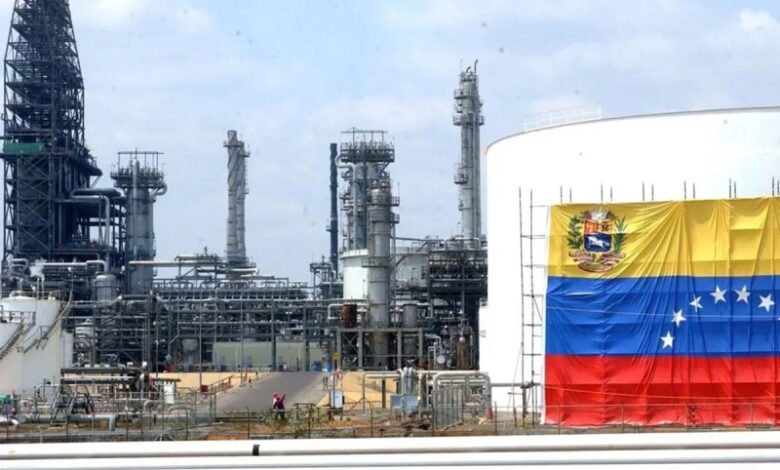
Despite these concerns, energy specialists have largely sought to reassure markets. Analysts note that Venezuela’s oil infrastructure has suffered years of neglect, requiring extensive rehabilitation before production can be significantly increased.
As a result, experts broadly agree that Gulf oil markets, including Kuwait’s, are insulated from the immediate effects of the Venezuelan crisis, at least in the short and medium term.
Heavy oil, hard reality
Independent oil analyst Kamel Al-Harmi ruled out any tangible pressure on global oil prices in the foreseeable future, even under worst-case assumptions.
He told Al-Rai that global supply levels are unlikely to change meaningfully anytime soon, explaining that Venezuelan crude is extremely heavy, making extraction technically complex and time-consuming. While the necessary technology exists—primarily in the United States—the timeline for restoring production remains uncertain.
For his part, Dr. Mubarak Al-Hajri emphasized that Venezuelan oil differs fundamentally from Gulf crude, particularly Kuwaiti oil, which is classified as light crude.
Heavy oil, he explained, accounts for only 20 percent of global oil production, and demand for it is currently rising due to geopolitical tensions and supply disruptions elsewhere.
Al-Hajri believes Venezuela’s situation could eventually have a significant impact on oil markets if U.S. management succeeds in lifting output while OPEC maintains production discipline.
He noted that American involvement could raise Venezuela’s production capacity from its current level of around one million barrels per day toward its true technical potential—fueling speculation about future global supply volumes.
What tempers fears among oil producers is the reality that Venezuelan oil is among the most expensive in the world to extract and refine. Its heavy composition, combined with the urgent need for advanced infrastructure and technology, significantly reduces its competitiveness compared with Gulf and Kuwaiti crude.
Historically, Venezuela produced around 3.5 million barrels per day three decades ago. Reaching anything close to that level would require massive investment and time—limiting the risk of sudden oversupply.
Kuwait’s position
Informed sources told Al-Rai that Kuwait’s customers are unlikely to be affected in the short or medium term. Existing supply contracts typically cover several months of demand, providing stability.
They added that Venezuelan production remains subject to OPEC quotas, which may be adjusted depending on Washington’s future policy direction—but not unilaterally unleashed into the market.
International economists remain cautious. Mohamed El-Erian, chief economic advisor at Allianz, told Al-Arabiya that the economic and financial repercussions of the U.S. operation in Venezuela are still unclear, warning of potential volatility in oil and gold markets amid heightened geopolitical risk.
Meanwhile, Saul Cavonic, head of energy research at MST Marquee, told CNBC Arabia that oil prices may rise in the short term due to supply risk premiums. However, he expects prices to decline in the medium term if a new Venezuelan government is formed, sanctions are lifted, and foreign investment returns.
Cavonic warned that up to 800,000 barrels per day of supply could be immediately at risk if Venezuelan exports are disrupted by ongoing instability.
For now, the arrest of Maduro has shaken politics more than oil fundamentals. Venezuela’s reserves are vast, but unlocking them is neither quick nor cheap. Until infrastructure is rebuilt and heavy crude economics improve, global — and Gulf — oil markets remain cautiously secure, watching Caracas closely but not yet bracing for a flood.