



















The plastic that refuses to go away: How Europe’s ban is being ignored, bent and bypassed
From beaches to takeaway counters, the quiet failure of Europe’s single-use plastic crackdown

Single-use plastic was supposed to be a problem Europe left behind. Four years after the European Union outlawed plastic straws, cutlery, plates and Styrofoam food containers, the items remain a routine sight on takeaway counters and café trays from Berlin to beyond. What was framed as a decisive environmental turning point has instead exposed the limits of legislation without compliance.
The ban introduced by EU, in 2021, was driven by alarming data — 85 per cent of waste ‘decorating’ European coastlines was plastic, nearly half of it disposable food and drink items. The objective appeared straightforward — eliminate the worst offenders from production, sale and import, and plastic pollution would decline.
That assumption has not held. Investigations carried out in 2024 by Environmental Action Germany (DUH) revealed that roughly 70 per cent of takeaway restaurants surveyed in Berlin were still offering prohibited plastic products.
A broader report compiled by five environmental NGOs the same year found similar violations across much of Europe, suggesting the problem is systemic rather than local, DW.COM reports.
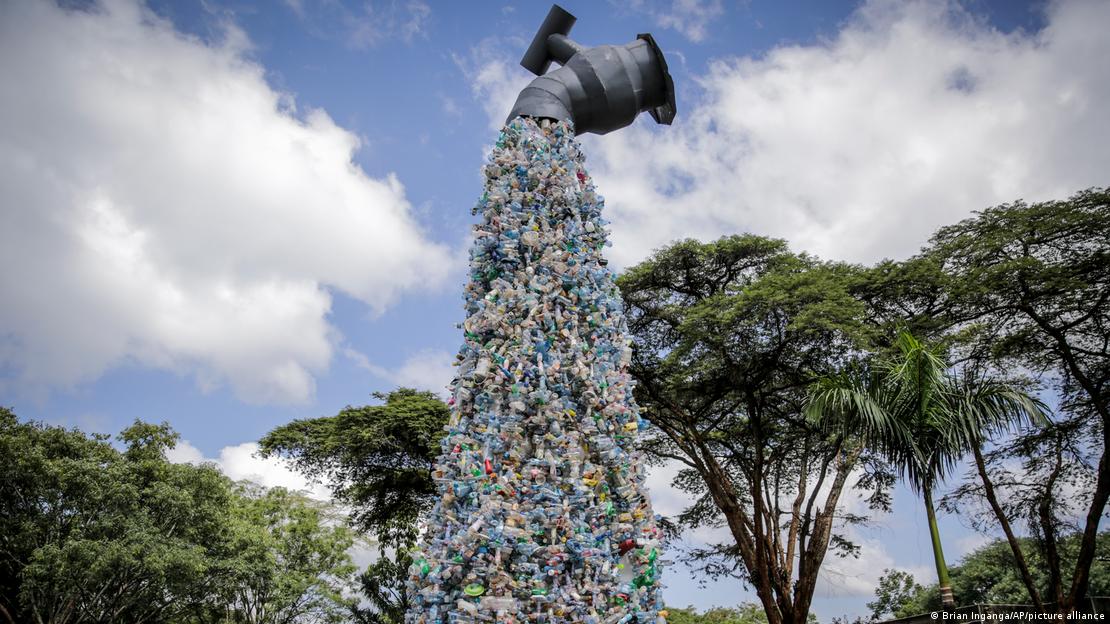
The stakes are far higher than untidy streets and polluted beaches. Discarded plastics break down into microplastics and release hazardous chemicals that seep into ecosystems and human bodies, potentially increasing risks of cancer, hormonal disruption and infertility.
Despite these dangers, global plastic production continues to accelerate, now exceeding 400 million metric tons annually — around 50 kilograms per person worldwide.
Some businesses argue the persistence of banned items can be traced back to leftover stockpiles from the COVID-19 pandemic, when takeaway orders surged amid lockdowns. But consumer protection experts say that explanation no longer fits the timeline.
“The ban came into force in 2021,” said Britta Schautz of Berlin’s consumer watchdog, who has worked on plastic reduction for more than a decade. Restaurants, she noted, would struggle to store food containers safely for years, especially as plastic degrades and becomes porous over time. In her view, weak compliance — not old inventory — is the real culprit.
Cost pressures have also played a role. Small restaurant owners who switched to paper or aluminum alternatives report higher expenses and supply difficulties. Some describe the transition as financially painful, while others admit to emotional attachment to familiar plastic items — a sentiment that offers little protection under the law.

In Germany, businesses caught violating the ban can face fines of up to €100,000. In practice, however, enforcement has been largely symbolic. When questioned by journalists, authorities in several major German cities were unable to cite a single issued fine. Monitoring often depends on customer complaints or occasional spot checks.
Thomas Fischer, who heads circular economy policy at DUH, argues that inconsistent enforcement undermines the law’s deterrent effect. He likens the situation to fare evasion on public transport: if penalties are rare or invisible, violations become routine.
Elsewhere, governments have taken a far tougher stance. Kenya banned plastic bags in 2017, backing the move with fines of up to 4 million Kenyan shillings (about $31,000) or prison sentences of up to four years.
Within two years, authorities had recorded hundreds of arrests and prosecutions, including cases involving small fruit vendors — a clear signal that the ban was not optional.
Even Europe’s regulatory net contains holes. Online marketplaces have emerged as a major loophole, with banned plastic items readily available on platforms such as Temu, eBay and Fruugo. Many of these products are manufactured outside the EU, where producers are not bound by European law.
Within the bloc itself, some manufacturers have found ways to skirt restrictions by making disposable items slightly thicker and marketing them as “reusable.” Researchers warn this semantic shift does little to reduce waste.
“Reusable does not mean reused,” said Nathalie Gontard of France’s National Research Institute for Agriculture, Food and Environment, noting that the tactic has, in some cases, increased plastic consumption.
The problem is compounded by a fragmented global approach. At least 90 countries have introduced plastic ban, but the scope and definitions vary widely.
In Germany, only plastic bags between 15 and 50 micrometers thick are banned — yet 87 per cent of bags distributed in 2022 fell into that range, underscoring widespread confusion.
Even in Kenya, often cited as a success story, progress has slowed as plastic bags enter the country from neighboring states without similar restrictions.
Lagos, Nigeria, banned single-use plastics in 2025, but residents report that poor enforcement and limited alternatives have blunted the policy’s impact.
Research from the United States suggests that large-scale or nationwide bans are more effective than piecemeal measures. Environmental law experts argue that tackling plastic country by country has become futile in a globally connected supply chain.
“We’re playing whack-a-mole,” said Ximena Banegas of the Center for International Environmental Law. She and other advocates are calling for global caps on plastic production — an idea debated at UN treaty talks as recently as August 2025.
Those negotiations exposed deep divisions.
A coalition led by Iran, Saudi Arabia, China and Russia favored national-level action focused on waste management, while Norway, Rwanda, Canada and more than 70 other countries pushed for binding global limits on production.
With positions far apart, no consensus was reached — despite the fact that about 98 per cent of plastic is derived from fossil fuels.
For scientists like Gontard, delay is no longer an option. Even modest reductions, she argues, would represent progress. “If we manage a 10 per cent cut in plastic consumption over the next decade,” she said, “that alone would be a victory.”